The significance of using natural honeycomb pieces of varying ages—specifically new, old, and very old—lies in the necessity to create experimental conditions that accurately replicate the real-world state of apiary storage. Because older honeycombs are biologically distinct, containing accumulated pollen residue and larval molts, they offer superior nutritional support and attractiveness to pests; testing across this spectrum ensures that control methods are evaluated against the true range of pest pressures found in practical beekeeping.
By simulating the diverse environment of a working apiary, researchers avoid the "lab vacuum" effect. Comparing mortality rates across substrates of different ages confirms whether a pesticide is robust enough to protect the most vulnerable and attractive parts of the hive, rather than just the pristine new wax that pests often ignore.
Replicating Apiary Realities
Mirroring Storage Conditions
In a functional apiary, beekeepers store equipment that spans years of use. This inventory naturally includes a mix of pristine new frames and darkened, heavily used combs.
Experiments that strictly use one type of substrate fail to capture this complexity. To understand how a control method will perform in the field, the test environment must simulate the actual mix of consumables found in storage.
The Composition of Old Comb
"Old" honeycomb is not simply aged wax; it is physically and chemically different from new comb. Over time, these combs accumulate pollen residue and larval molts (cocoons left behind by developing bees).
These accumulations fundamentally change the substrate from a simple structure into a complex biological resource.
The Biological Impact on Pests
Nutritional Value and Attractiveness
The Greater Wax Moth, a primary pest of stored combs, does not view all wax equally. The accumulated residues in older combs provide significantly higher nutritional support.
Because of this added protein and nutrition, older combs are far more attractive to the moth larvae. They allow the pests to grow faster and stronger compared to larvae feeding on clean, new wax.
The "Worst-Case" Scenario
By using very old honeycomb, researchers are effectively testing their control methods against a "worst-case" scenario.
If a pest has access to optimal nutrition (old comb), it is generally more resilient. Therefore, the substrate acts as a variable to test the limit of the pesticide's efficacy.
Evaluating Protection Efficacy
Comparing Mortality Rates
The core scientific value of this method is the ability to compare pest mortality across different substrates. Researchers can observe how a specific concentration of pesticide performs on very old honeycomb versus new honeycomb.
Identifying Weaknesses in Protection
A pesticide might show 100% efficacy on new wax (where the moth struggles to thrive) but only 60% efficacy on old wax (where the moth is vigorous).
Identifying this discrepancy is vital. It allows for a more comprehensive evaluation of how the product will serve a beekeeper managing a diverse stock of equipment.
Common Pitfalls to Avoid
The Danger of Uniform Substrates
If an experiment utilizes only new honeycomb, the results are likely to be skewed. The data may suggest a treatment is highly effective, when in reality, the pests may have died partly due to a lack of proper nutrition.
False Confidence
Relying on data derived solely from new substrates can lead to false confidence in a management strategy. When that strategy is applied to a real storage room full of old, nutrient-rich combs, the protection may fail because the pests are more robust than the test subjects were.
Making the Right Choice for Your Goal
To ensure your wax moth control strategies are grounded in reality, consider the age of the comb as a primary variable.
- If your primary focus is Scientific Accuracy: Ensure your test groups include a gradient of comb ages to prove your solution works even when pest nutrition is optimal.
- If your primary focus is Practical Management: Prioritize the protection of your oldest, darkest combs, as these are the most attractive targets for infestation and the hardest to protect.
Real-world efficacy is defined by how well a solution protects the most vulnerable resources, not the pristine ones.
Summary Table:
| Honeycomb Type | Physical Composition | Pest Attractiveness | Nutritional Value | Research Significance |
|---|---|---|---|---|
| New Comb | Pristine wax, no residues | Low | Low | Baseline control; shows lower pest resilience |
| Old Comb | Includes pollen & larval molts | Moderate | Moderate | Replicates standard functional apiary conditions |
| Very Old | Heavily darkened, dense residues | High | High | "Worst-case" scenario to test pesticide limits |
Maximize Your Apiary Productivity with HONESTBEE
Protecting your valuable honeycomb inventory requires more than just basic tools—it requires industry-leading expertise. HONESTBEE caters to commercial apiaries and distributors with a comprehensive wholesale offering designed to streamline your operations and safeguard your yield.
From hive-making and honey-filling machinery to a full spectrum of beekeeping tools and essential consumables, we provide the hardware and support you need to manage a professional apiary. Whether you are scaling a commercial business or sourcing for a distribution network, our portfolio delivers the durability and precision required for the modern beekeeping industry.
Ready to elevate your equipment standards?
References
- Huda H. Elbehery, Nadia Z. Dimetry. Management of the Greater Wax Moth <i>Galleria mellonella</i> with Neem Azal- T/S, in the Laboratory and under Semi-Field Conditions. DOI: 10.1515/jas-2016-0018
This article is also based on technical information from HonestBee Knowledge Base .
Related Products
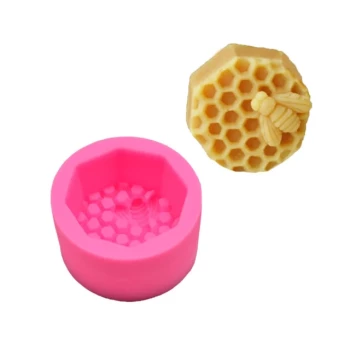
- Hexagonal Bee Honeycomb Silicone Soap Mold by HONESTBEE
- Professional Wide Blade Honey Scraper for Beekeeping and Honey Processing
- Honey Bee Lifecycle Model: A Detailed Honeycomb Display of Bee Development
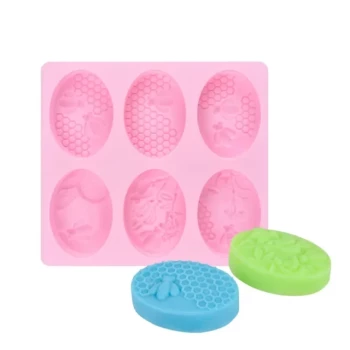
- Premium 6-Cavity Bee and Floral Themed Silicone Soap Mold
- Heavy Duty Castellated Iron Frame Spacer for Honey Supers
People Also Ask
- What are the advantages of silicone molds for queen cell cups? Upgrade Your Queen Rearing Precision
- What should be considered when selecting combs of honey for extraction? | Key Steps for Quality Honey
- What do bees use combs for? The Hive's Essential Pantry and Nursery
- How are Honeycombs utilized as a standardized testing platform in the assessment of honeybee hygienic cleaning? Guide
- How does removing entire honeycombs impact Varroa mites? Master Mechanical Mite Control for Healthier Hives