The adoption of standardized honey harvesting equipment and sensory testing procedures is the foundation of transparency and trust in the stingless bee industry. By implementing consistent operational workflows alongside on-site sensory evaluations, producers provide immediate, verifiable proof of honey purity and unique regional characteristics. This rigorous approach effectively validates product quality, fostering the confidence necessary for international exchange and the promotion of specific regional varieties like kela-kela honey.
The integration of standardized tools and sensory evaluation transforms stingless bee honey from a variable agricultural output into a trusted, premium commodity. It bridges the gap between production and the consumer, ensuring that the product's quality is not just claimed, but rigorously demonstrated and preserved.
Establishing Trust Through Transparency
The Power of Sensory Verification
Standardized harvesting is not merely about collection; it is a communication tool. When combined with on-site sensory testing, these procedures offer a direct demonstration of the honey's quality. This is particularly vital for international promotion, where buyers require tangible proof of authenticity before committing to partnerships.
Validating Regional Uniqueness
Stingless bee honey often possesses distinct regional profiles. Standardized procedures ensure these unique characteristics are preserved without alteration. This consistency allows producers to build strong brand recognition for specific local varieties, distinguishing them in a crowded marketplace.
Optimizing Production and Hygiene
Precision Extraction Techniques
Specialized tools, such as sterile pipettes and vacuum suction devices, are critical for species like Heterotrigona itama and Geniotrigona thoracica. Because these bees store honey in cerumen pots, these tools allow for hygienic extraction without introducing external contaminants. This precision ensures the honey remains pure from the hive to the container.
Managing High Water Content
Stingless bee honey naturally has a high water content, making it prone to fermentation. Professional honey-filling machines are essential to manage this risk. By utilizing precise quantitative filling and efficient sealing, these machines maintain hygiene standards and significantly extend the product's shelf life.
Meeting High-End Market Standards
To enter premium health product markets, brand-level consistency is non-negotiable. Automated filling and labeling equipment allow for seamless, enclosed packaging operations. This ensures accurate weight (e.g., 300g, 500g, 1kg) and minimizes the waste of this high-value raw material, ensuring traceability and safety.
Ecological Stewardship and Sustainability
Protecting Colony Structure
Traditional harvesting can be destructive, but standardized tools like non-destructive opening devices preserve the brood chambers and honey pots. This approach minimizes the stress response in the colony. Maintaining the biological integrity of the hive is essential for the long-term viability of the apiary.
Increasing Harvest Frequency
By reducing physical damage to the hive, standardized equipment shortens the colony's recovery period. This efficiency allows apiaries to achieve three or more harvests per year. Standardized wooden hives further support this by providing a stable, engineered environment that regulates temperature and humidity.
Understanding the Trade-offs
Higher Initial Capital Expenditure
Transitioning from traditional methods to standardized operations requires significant investment. Industrial filling machines, specialized vacuum extractors, and engineered wooden hives represent a higher upfront cost compared to wild harvesting techniques.
Operational Complexity
Standardization introduces a layer of technical complexity. Operators must be trained not only in beekeeping but also in the maintenance of sterile equipment and the calibration of automated machinery. This shifts the operational focus from simple agrarian gathering to technical process management.
Making the Right Choice for Your Goal
To maximize the benefits of standardization, align your equipment choices with your primary business objective:
- If your primary focus is International Market Access: Prioritize automated filling and labeling machines alongside sensory testing protocols to ensure hygiene, traceability, and brand consistency.
- If your primary focus is Yield and Sustainability: Invest in specialized vacuum extraction tools and standardized wooden hives to maximize harvest frequency while protecting colony health.
Standardizing your workflow is not just about upgrading equipment; it is the strategic move that secures the biological future of your apiary and the commercial integrity of your brand.
Summary Table:
| Aspect | Key Significance | Core Equipment/Procedures |
|---|---|---|
| Quality Assurance | Ensures purity and preserves regional profiles | On-site sensory testing & sterile pipettes |
| Hygiene & Safety | Prevents fermentation and external contamination | Vacuum suction & honey-filling machines |
| Sustainability | Protects hive structure and colony health | Non-destructive openers & engineered hives |
| Market Readiness | Meets international standards for traceability | Automated filling, labeling, and weighing |
| Economic Yield | Increases harvest frequency (3+ times/year) | Standardized wooden hives & recovery tools |
Elevate Your Apiary with HONESTBEE Professional Solutions
At HONESTBEE, we empower commercial apiaries and distributors to transition from traditional methods to high-standard industrial operations. Our comprehensive wholesale portfolio includes everything from specialized vacuum extraction tools and engineered hives to precision honey-filling and labeling machinery.
Whether you are looking to scale your production of rare stingless bee honey or enter premium international markets, we provide the hardware and industry consumables needed to ensure purity, hygiene, and brand consistency. Partner with us today to secure your apiary's future and gain access to the world-class equipment your honey brand deserves.
References
- I Gede Pasek Mangku, Mia Bella R. Fresnido. Strengthening Capacity Of “Sarining Trigona Pertiwi” Beekeeper Through International Networking. DOI: 10.29165/ajarcde.v9i1.338
This article is also based on technical information from HonestBee Knowledge Base .
Related Products
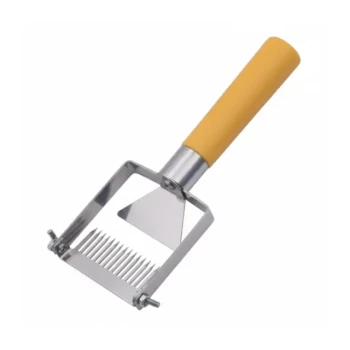
- Adjustable Stainless Steel Honey Uncapping Fork with Plastic Handle for Beekeeping
- All-Stainless Steel Pivoting Honey Uncapping Fork for Beekeeping
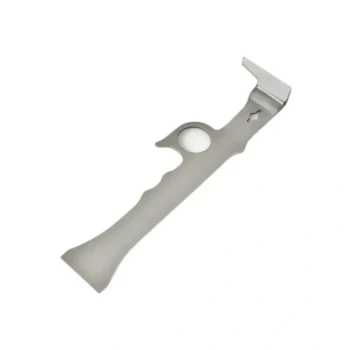
- Professional Stainless Steel Pry-Bar Hive Tool
- Plastic Handle Single Row Artificial Fiber Bee Brush
- Stainless Steel Pivoting Honey Uncapping Fork with Plastic Handle
People Also Ask
- What is the design purpose of honey uncapping forks and honey uncapping tanks? Maximize Your Harvest Efficiency
- How does a honey uncapping fork supplement the use of an uncapping knife? Boost Your Honey Yield and Extraction Efficiency
- What are the essential tools for uncapping honey frames? Choose the Right Tool for Your Apiary
- What other tools are available for honey uncapping besides knives? Find the Right Tool for Your Apiary's Scale
- What tools are used for honey uncapping? Choose the Right Knife for Your Harvest