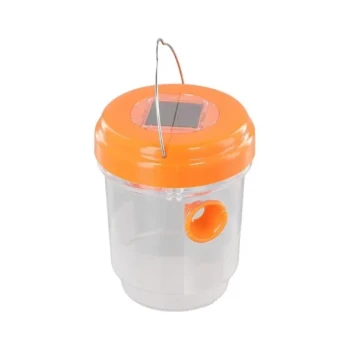
Precision placement is the foundation of effective apiary protection. Installing hornet traps at a height of 80 to 100 centimeters is a technical strategy designed to intercept yellow-legged hornets during their primary predatory phase. This height corresponds specifically to the hovering zone where hornets target honeybees near the hive entrance, ensuring attractant odors are dispersed directly into their flight path for maximum capture efficiency.
The technical justification for the 80-100 cm height is based on matching the biological flight patterns of predatory hornets. By positioning equipment within this active "kill zone," professionals can significantly increase capture rates and reduce colony stress through scientific optimization.
The Biological Basis for Height Optimization
Matching Predatory Hovering Patterns
Yellow-legged hornets exhibit a specific hunting behavior known as "hawking," where they hover at a fixed height to snatch foraging bees. Technical research confirms that this activity typically occurs between 80 and 100 centimeters above the ground.
By placing traps at this exact elevation, you ensure the equipment is physically located where the hornet's attention is already focused. This alignment between trap position and natural behavior is critical for high-volume capture.
Optimizing Attractant Odor Dispersal
For a trap to be effective, its chemical signals must reach the target's sensory receptors. At the 80-100 cm level, attractant odors are released directly into the primary flight corridors of the hornets.
This localized concentration of scents ensures that hornets are diverted from the hive toward the trap. For distributors, offering equipment that supports this precision allows for a more reliable, data-backed solution for end-users.
Strategic Benefits for Hive Health
Reducing Defensive Stress and Absconding
When hornets hover near a hive, they create a high-stress environment that can cause bees to cease foraging. Technical deployment at the 80-100 cm mark effectively thins out the predatory population, minimizing the risk of colony absconding.
Reducing this environmental pressure is essential for maintaining the productivity of the apiary. Our professional-grade solutions are designed to address these deep ecological needs through expert-level engineering.
Supporting Full-Spectrum Apiary Management
Distributors benefit from understanding these technical nuances to provide a comprehensive product portfolio. Accurate placement advice transforms a simple commodity into a high-performance technical tool.
By focusing on these biological justifications, B2B partners can demonstrate deep industry expertise. This builds trust with commercial beekeepers who require fast, efficient results to protect their investments.
Understanding the Trade-offs
Site-Specific Variable vs. Standardized Height
While the 80-100 cm height is optimal for active predation zones, it may not be the universal answer for every stage of hornet management. For example, some strategies involve mounting traps at 3 to 5 meters to maximize visibility and wider territory scouting.
Higher placement focuses on odor dispersion over a larger area and visibility for incoming hornets from a distance. However, for direct hive protection, the lower 80-100 cm range remains the industry standard for tactical defense.
Environmental and Visual Interference
Placing traps lower to the ground can sometimes lead to increased interference from ground-level vegetation. It is critical to ensure that the area around the trap is clear to maintain the visual cues that hornets rely on.
In contrast, higher placements (3-5 meters) reduce environmental interference but may miss the hornets that have already locked onto the hive's location. Finding the balance between these two strategies is key to a robust defense.
How to Apply This to Your Project
Recommendations for Professional Deployment
Strategic trap placement should be based on the specific goals of the beekeeping operation and the current level of hornet activity.
- If your primary focus is immediate hive protection: Install traps at 80 to 100 centimeters directly in the flight path to intercept hornets actively preying on bees.
- If your primary focus is territory-wide monitoring: Deploy traps at a height of 3 to 5 meters in open areas to maximize scent range and attract scouting hornets.
- If your primary focus is minimizing colony stress: Ensure traps are placed near hive entrances but oriented to avoid interfering with the honeybees' own flight lanes.
Our commitment to technical excellence and rapid order fulfillment ensures that your clients have the precise tools they need to defend their apiaries with confidence.
Summary Table:
| Placement Height | Strategic Focus | Primary Technical Benefit |
|---|---|---|
| 80 - 100 Centimeters | Direct Hive Protection | Intercepts hornets in the "hovering/hawking" zone |
| 3 - 5 Meters | Territory Monitoring | Maximizes attractant odor dispersal and visibility |
| Flight Path Alignment | Capture Efficiency | Releases scents directly into predator flight corridors |
| Low-Level Clearance | Visual Cues | Ensures vegetation doesn't obstruct trap visibility |
Scale Your Business with HONESTBEE’s Expert Beekeeping Solutions
At HONESTBEE, we provide more than just equipment; we deliver technical excellence and a comprehensive wholesale offering designed for distributors, wholesalers, and B2B resellers. Whether you need high-efficiency hornet traps, specialized honey-filling machinery, or essential industry consumables, our one-stop sourcing model ensures you stay ahead of the competition.
The HONESTBEE Advantage for B2B Partners:
- Comprehensive Portfolio: From hive-making hardware to honey-themed cultural merchandise.
- Optimized Profit Margins: Premium trading services with OEM/ODM support and reliable certifications.
- Rapid Fulfillment: Ultra-fast delivery and efficient order fulfillment to meet seasonal demands.
- Industry Expertise: Deep professional knowledge to support your customers' technical needs.
Contact HONESTBEE Today to Secure Your Supply Chain
References
- Jong-Eun Lee, Myeong Hyeon Nam. Effect of the new attractive compositions for mass capture of the yellow-legged hornet, Vespa velutina nigrithorax (Hymenoptera: Vespidae). DOI: 10.7744/kjoas.510414
This article is also based on technical information from HonestBee Knowledge Base .
Related Products
- Compact Multi-Funnel Hanging Wasp Trap
- HONESTBEE Professional Telescopic Pole Bee Swarm Catcher
- HONESTBEE Collapsible Tiered Bee Swarm Catcher for Beekeeping
- Reusable Aluminium Beetle Trap for Small Hive Beetles Silver Bullet
- Reusable Clear Small Hive Beetle Traps for Beehives Beetle Trapping Tools
People Also Ask
- What are the practical advantages of using professional wasp traps and protective equipment in apiary management? Scale Up
- Why replace sugar syrup bait in wasp traps every three days? Ensure Maximum Attraction and Catch Rates
- What is the importance of deploying hornet traps around an apiary for maintaining colony stability? Protect Your Yields.
- What are the advantages of placing hornet traps on the tops of beehives? Maximize Hive Defense Against Predators
- What trapping methods and equipment setups protect commercial apiaries against seasonal hornet predation?