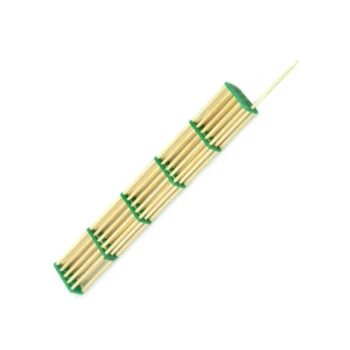
The technical logic relies entirely on morphological size exclusion. A precision sieve with a 1 x 1 mm mesh size acts as a strictly physical gatekeeper. This specific aperture is calibrated to be smaller than the honey bee, retaining the host, while remaining large enough to allow detached Varroa mites to pass through with the liquid flow.
Core Takeaway Precision sieving utilizes a defined aperture—specifically 1 x 1 mm—to exploit the physical size disparity between host and parasite. This mechanical filtration ensures that only detached mites pass into the collection vessel, establishing the physical baseline required for accurate infestation density calculations.
The Mechanics of Morphological Separation
Defining the Aperture Limit
The selection of a 1 x 1 mm mesh is not arbitrary; it is derived from the comparative anatomy of the two species. The mesh serves as a binary filter.
It effectively blocks the passage of adult honey bees, keeping the "noise" (the bee bodies) contained within the sieve. Simultaneously, it offers zero resistance to the smaller Varroa mites once they are detached, allowing them to exit the sample chamber.
The Role of Fluid Dynamics
While the mesh provides the barrier, the separation process relies on fluid shear force. Agitating the sample in a liquid eluent (often an ethanol solution) generates the mechanical energy needed to dislodge the mites.
The liquid acts as a carrier medium. As the solution flows through the mesh, it carries the smaller, suspended mites through the 1 x 1 mm openings, leaving the washed bees behind.
Establishing Quantitative Baselines
The ultimate goal of this physical separation is to calculate an infestation rate per hundred bees. By mechanically isolating the mites, you transform a biological observation into a quantifiable data point.
This distinct separation allows for a precise headcount of the parasite, which is then divided by the estimated sample size to derive the infestation percentage.
Optimizing Visual Detection
The Importance of Contrast
Once the mites have passed through the sieve, visual confirmation is the next critical step. Using white containers for collection creates a high-contrast background.
The reddish-brown color of the Varroa mite stands out sharply against white plastic. This reduces the likelihood of human error during the counting phase, ensuring that every mite separated by the mesh is actually recorded.
Standardization of Sample Size
The accuracy of the mesh separation depends on the consistency of the input. Standardized sampling, such as using a half-cup measure to collect approximately 350 bees, ensures that the density calculation is statistically valid.
Without a consistent volume of bees, the efficiency of the sieve becomes irrelevant because the denominator of your infestation calculation would be unknown.
Understanding the Trade-offs
Detachment vs. Separation
The mesh can only separate mites that have already been detached. If the agitation is insufficient or the chemical solution is too weak to dislodge the phoretic mites, the sieve will yield a false low count. The mesh sorts; it does not detach.
Potential for Clogging
While the 1 x 1 mm size is precise, it leaves little margin for error regarding debris. Pollen balls or bee parts resulting from vigorous shaking can occasionally obscure the mesh openings.
If the mesh becomes occluded, liquid flow is restricted, potentially trapping mites inside the sieve alongside the bees.
Ensuring Scientific Rigor in Mite Counts
To achieve the most accurate data for pest management decisions, apply the following principles:
- If your primary focus is Absolute Accuracy: Ensure your sieve adheres to the 1 x 1 mm specification to prevent any bee debris from contaminating the count while allowing free passage of mites.
- If your primary focus is Visual Verification: Pair your sieve with a white collection basin to maximize the contrast of the brownish mites against the background.
- If your primary focus is Data Consistency: Always combine the precision sieve with a standardized sample volume (e.g., 350 bees) to make your infestation calculations comparable over time.
The mesh size is the physical constant that turns a chaotic biological sample into a precise, actionable metric.
Summary Table:
| Feature | Technical Specification | Logic/Purpose |
|---|---|---|
| Mesh Aperture | 1 x 1 mm | Blocks bee bodies while allowing smaller mites to pass. |
| Carrier Medium | Liquid Eluent (e.g., Ethanol) | Provides shear force to dislodge phoretic mites. |
| Collection Background | High-Contrast White | Enhances visibility of reddish-brown mites for counting. |
| Sample Volume | ~350 Bees (0.5 Cup) | Establishes a consistent denominator for density calculation. |
Scale Your Varroa Monitoring with HONESTBEE
Precise infestation data is the backbone of any successful commercial apiary or distribution network. At HONESTBEE, we specialize in empowering large-scale operations with the professional tools and machinery needed to maintain colony health and productivity.
From precision-engineered sieves and specialized beekeeping hardware to advanced honey-processing machinery, we offer a comprehensive wholesale portfolio designed for durability and accuracy. Whether you are a distributor seeking high-quality consumables or a commercial keeper optimizing your pest management workflow, our team is ready to deliver tailored solutions and industry-leading expertise.
Enhance your operational efficiency today—contact our wholesale specialists now!
References
- Occurrence of most important Western honey bee (Apis mellifera) parasites (Nosema spp. and Varroa destructor) in Latvia. DOI: 10.22364/eeb.15.25
This article is also based on technical information from HonestBee Knowledge Base .
Related Products
- Compact Circular Bee Mite Treatment Dispenser
- Varroa Easy Check Mite Tester Kit Counter Alcohol Wash Jar
- Professional Bamboo Queen Isolation Cage
- Stainless Steel Triangle Support Honey Strainer and Filters
- Langstroth Screen Bottom Board for Beekeeping Wholesale
People Also Ask
- What is the function of specialized prevention consumables? Protect Hives from Varroa Mites & European Foulbrood
- What is the function of specialized application devices for Varroa? Precision Control for Healthier Bee Colonies
- What technical factors influence chemical Varroa treatments? Optimize Your Hive Health with Precise Timing
- How do different application forms of oxalic acid or formic acid affect Varroa mite treatments? Maximize Your Hive Efficacy
- What is the primary purpose of organic acids and synthetic acaricides in honeybee colony management? Varroa Control Guide