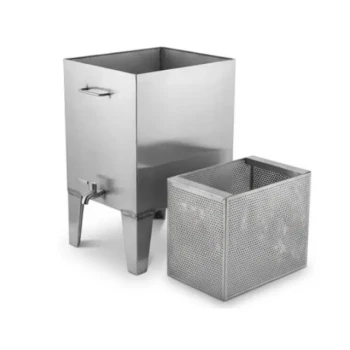
Controlled liquefaction and mild heating are critical for transforming raw, crystallized honey into a stable, flowable product suitable for commercial distribution. These processes reduce viscosity to enable fine filtration, eliminate fermentation-causing yeasts, and decrystallize the honey while strictly preserving its delicate bio-active enzymes and nutritional profile within a specific temperature range of 40°C to 55°C.
The core technical objective of mild heating is to balance industrial throughput with product integrity. By maintaining precise temperature controls, processors ensure honey is shelf-stable, visually appealing, and compliant with international quality standards.
Enhancing Industrial Flow and Bottling Efficiency
Reducing Viscosity for Precision Filtration
Industrial honey is often too thick or crystallized to pass through fine filters in its raw state. Mild heating reduces the viscosity, allowing the honey to flow easily through professional straining equipment to remove wax, pollen, and natural debris.
Streamlining the Bottling Process
High-speed filling lines require honey to be in a consistent, pourable liquid state. Controlled liquefaction restores crystallized honey to a transparent liquid, ensuring rapid response times in production and preventing mechanical strain on bottling machinery.
Maintaining Texture Consistency
Honey is a supersaturated sugar solution that naturally tends to layer or harden. Moisture control and moderate heating stabilize this state, ensuring the final product has a uniform texture that meets the high expectations of your B2B clients.
Protecting Biological Integrity and Market Value
Preserving Diastase and Natural Enzymes
The quality grade of honey is often determined by its "diastase activity," which is highly sensitive to heat. Professional heating equipment provides uniform heat distribution to prevent "hot spots" that would otherwise destroy these valuable biological markers.
Eliminating Fermentation Risks
Raw honey contains wild yeast cells that can cause fermentation and spoilage during storage. Heating honey to 40-55°C destroys these yeast cells, ensuring that the product remains commercially stable and safe for long-term warehousing and global distribution.
Preventing Color and Flavor Degradation
Excessive heat causes honey to undergo caramelization, leading to an undesirable darkening and a "burnt" flavor profile. Precision temperature regulation preserves the delicate aromatic compounds and the natural golden hue that defines premium honey varieties.
Understanding the Trade-offs and Risks
The Risk of HMF Formation
When honey is overheated, a chemical called 5-Hydroxymethylfurfural (HMF) begins to form. High HMF levels are a primary indicator of poor quality and can lead to the rejection of shipments in international markets where limits are typically capped at 40 mg/kg.
Localized Overheating vs. Uniform Heating
Using substandard heating methods can lead to localized "over-boiling" while other parts of the honey remain crystallized. Industrial constant-temperature equipment is essential to ensure the entire batch reaches the required state without degrading the heat-sensitive vitamins and antioxidants.
Balancing Shelf Life and Raw Attributes
While high-heat pasteurization extends shelf life significantly, it can strip honey of its "raw" status. Mild, controlled liquefaction serves as a middle ground, providing the stability needed for retail while maintaining the nutritional profile demanded by health-conscious consumers.
How to Evaluate Your Honey Sourcing Partner
When selecting a wholesale partner or refining your sourcing strategy, the technical precision of their processing facility is your greatest safeguard for quality.
- If your primary focus is International Compliance: Ensure your supplier uses high-precision equipment that keeps HMF levels below 40 mg/kg and preserves diastase activity.
- If your primary focus is Supply Chain Reliability: Prioritize partners with advanced liquefaction capabilities that allow for ultra-fast delivery and efficient order fulfillment without compromising product clarity.
- If your primary focus is Premium Brand Positioning: Look for "full-spectrum" processors who emphasize mild heating (below 55°C) to guarantee the preservation of natural aromatic compounds and biological activity.
Superior honey processing turns a raw agricultural product into a high-value, shelf-ready asset through the precise application of science and technology.
Summary Table:
| Technical Objective | Process Action | Impact on Final Product |
|---|---|---|
| Viscosity Control | Mild heating to 40-55°C | Enables precision filtration and rapid bottling efficiency. |
| Biological Stability | Targeted yeast elimination | Prevents fermentation and ensures a stable commercial shelf life. |
| Quality Preservation | Uniform heat distribution | Protects diastase activity and prevents HMF formation/darkening. |
| Texture Management | Controlled liquefaction | Eliminates crystallization for a clear, premium liquid state. |
Scale Your Honey Business with HONESTBEE’s Professional Solutions
At HONESTBEE, we understand that maintaining honey integrity while maximizing industrial throughput is the key to B2B success. We cater specifically to commercial apiaries, distributors, and wholesalers with a comprehensive one-stop sourcing offering.
Why partner with us?
- Full-Spectrum Portfolio: From high-precision honey-filling and hive-making machines to essential industry consumables and cultural merchandise.
- Supply Chain Excellence: Benefit from ultra-fast delivery, efficient order fulfillment, and dedicated OEM/ODM support to maximize your profit margins.
- Industry Expertise: Our rapid response times and deep professional knowledge ensure your products consistently meet international quality standards.
Ready to enhance your supply reliability and product quality? Contact us today to explore our wholesale opportunities!
References
- António Paulino, Isac Cláudio Minisso. Apicultura em Moçambique: um olhar sobre a situação actual e seu potencial como oportunidade de desenvolvimento social e economico sustentável. DOI: 10.55034/smrv6n2-013
This article is also based on technical information from HonestBee Knowledge Base .
Related Products
- HONESTBEE Commercial Upright Honey Melter
- Double Wall Honey Heating Stirring Homogenizer Mixing Machine with Various Capacity
- Professional Thermostatic Conical Honey Melter
- Stainless Steel Heated Honey Tank Warming Heating Tank
- 0.5T Capacity Honey Dehumidifier Dryer with Vacuum Heating and Thickening Filtering Machine
People Also Ask
- What is melter honey used for? A Low-Cost Ingredient for Bakers and Brewers
- How do you melt a bucket of honey? Safely Reliquefy Crystallized Honey Without Damage
- How does a honey melter address the issue of crystallized honey in storage? Restore Flow and Quality Efficiently
- When is a honey melter necessary? Optimize Your Facility's Workflow for Crystallized Honey
- What methods are used to heat honey, and what precaution should be taken? Expert Guide to Safe Honey Liquefaction