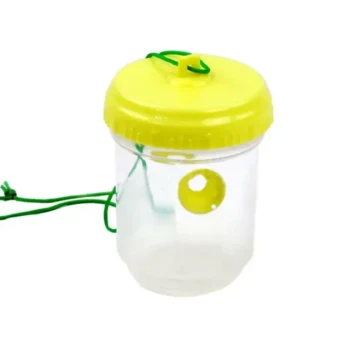
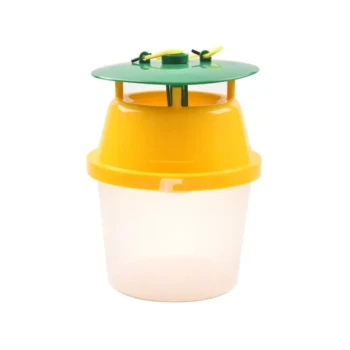
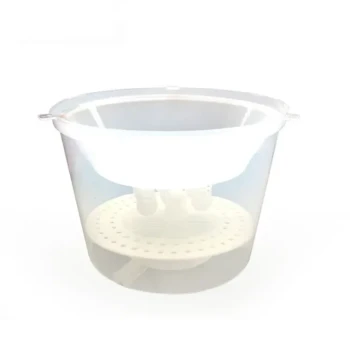
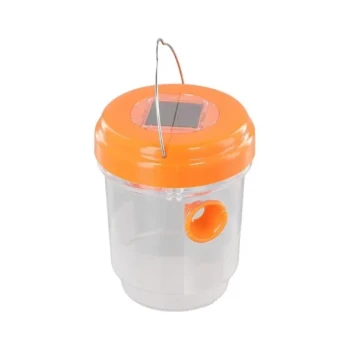
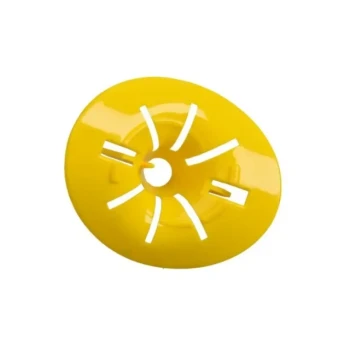
The inclusion of expanded clay balls or plastic support rods serves a critical mechanical function within hornet traps by creating a physical interface between the insect and the liquid attractant. Technically, these components provide a dry climbing surface that prevents immediate drowning. This allows the trap to function not merely as a killing device, but as a selective filter that preserves biological data and protects local biodiversity.
By preventing immediate submersion, these internal structures transform a standard trap into a selective instrument. They ensure target specimens remain intact for laboratory analysis while simultaneously creating an escape route for non-target species.
The Mechanics of Selectivity and Preservation
The use of solid supports inside the trap addresses two fundamental challenges in insect monitoring: specimen degradation and ecological collateral damage.
Preserving Specimen Integrity
When insects fall directly into a liquid solution, decomposition and saturation begin immediately.
This makes physical characteristics difficult to discern under a microscope.
By introducing expanded clay balls or plastic rods, you provide a landing zone that keeps the insect dry. This preserves the specimen's physical structure, ensuring that subsequent laboratory identification is accurate and reliable.
Facilitating Non-Target Escape
A trap without internal structure is a "dead end" for any insect that enters.
However, many insects entering the trap are not the intended target (such as the hornet).
The rods or clay balls act as a ladder, providing a physical path that connects the liquid surface to the trap's escape holes. This architecture allows smaller, non-target species to climb out, optimizing the selective performance of the equipment.
Understanding the Trade-offs
While these components enhance the scientific value of the trap, they introduce specific operational requirements regarding liquid management.
Dependency on Liquid Levels
The system relies entirely on the supports remaining dry.
If the trap is overfilled with attractant, or if rainwater raises the liquid level above the clay balls or rods, the "safety zone" disappears.
In this scenario, the selective mechanism fails, resulting in the immediate drowning of all entrants and the loss of escape routes for non-target species.
Making the Right Choice for Your Goal
To maximize the efficacy of your trapping campaign, consider how you configure these internal supports.
- If your primary focus is Scientific Research: Prioritize using enough clay balls or rods to ensure a large dry surface area, guaranteeing pristine specimens for identification.
- If your primary focus is Ecological Protection: Verify that the internal supports extend high enough to provide a clear, accessible bridge to the specific elevation of the escape holes.
Correctly positioned supports change the trap from a passive container into an active ecological filter.
Summary Table:
| Component | Technical Function | Key Benefit |
|---|---|---|
| Expanded Clay Balls | Provides a dry landing interface | Preserves specimen integrity for laboratory analysis |
| Plastic Support Rods | Creates a physical escape path | Enables non-target species to exit the trap |
| Dry Surface Area | Prevents immediate submersion | Reduces decomposition and saturation of insects |
| Escape Architecture | Connects liquid to exit holes | Optimizes selective performance and ecological safety |
Elevate Your Commercial Apiary with HONESTBEE
Are you a distributor or a commercial apiary looking to modernize your operation? At HONESTBEE, we specialize in empowering the beekeeping industry with more than just tools—we provide precision-engineered solutions. From high-capacity honey-filling and hive-making machinery to professional-grade hornet traps and essential consumables, our comprehensive wholesale catalog is designed to optimize your productivity.
Partner with HONESTBEE to access:
- Advanced Equipment: Durable machinery and specialized hardware for large-scale production.
- Total Consumables: A one-stop shop for all industry-standard beekeeping supplies.
- Expert Support: Tailored solutions for distributors looking to expand their portfolio with quality honey-themed cultural merchandise.
Ready to scale your business? Contact us today to request a quote or catalog and see the difference professional equipment makes!
References
- Sandra V. Rojas‐Nossa, Josefina Garrido. Comparison of Effectiveness and Selectiveness of Baited Traps for the Capture of the Invasive Hornet Vespa velutina. DOI: 10.3390/ani14010129
This article is also based on technical information from HonestBee Knowledge Base .
Related Products
- Compact Multi-Funnel Hanging Wasp Trap
- Reusable Aluminium Beetle Trap for Small Hive Beetles Silver Bullet
- Removable Washable Hive Beetle Trap Attractants for Small Hive Beetles
- HONESTBEE Professional Telescopic Pole Bee Swarm Catcher
- HONESTBEE Collapsible Tiered Bee Swarm Catcher for Beekeeping
People Also Ask
- What are the practical advantages of using professional wasp traps and protective equipment in apiary management? Scale Up
- Why replace sugar syrup bait in wasp traps every three days? Ensure Maximum Attraction and Catch Rates
- What is the importance of deploying hornet traps around an apiary for maintaining colony stability? Protect Your Yields.
- What are the advantages of placing hornet traps on the tops of beehives? Maximize Hive Defense Against Predators
- What trapping methods and equipment setups protect commercial apiaries against seasonal hornet predation?