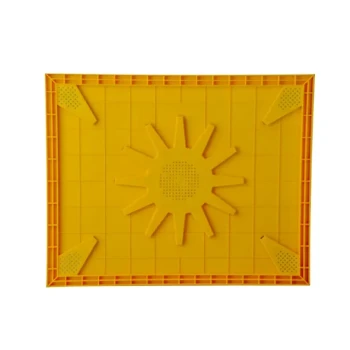
The technical purpose of sticky boards in this specific context is to generate the longitudinal data necessary to calculate Varroa mite population dynamics over time. By capturing the natural mite drop during critical windows in spring and summer, these devices allow breeders to determine the exact proportion of mite increase, which is the definitive metric used to categorize honeybee strains as either Low Varroa Growth (LVG) or High Varroa Growth (HVG).
Sticky boards transform biological observation into a quantitative selection metric. By measuring the rate of mite population growth rather than just static numbers, breeders can objectively identify and propagate honeybee colonies that possess natural resistance mechanisms.
Quantifying Resistance Traits
Capturing Natural Mite Drop
Sticky boards are inserted at the bottom of the beehive to intercept debris falling from the colony.
In the context of screening for resistance, their specific function is to collect the natural drop of Varroa mites. This provides a non-invasive way to sample the mite population without destroying the bees or disrupting the colony structure.
Calculating the Rate of Increase
A single mite count provides limited value for genetic selection.
The true technical utility of the sticky board lies in its use across two specific timeframes: spring and summer. By comparing the data collected during these two periods, beekeepers can calculate the proportion of mite increase.
Differentiating LVG from HVG
This calculated growth rate serves as the dividing line between strain types.
Colonies that demonstrate a low rate of increase on the sticky boards are classified as Low Varroa Growth (LVG). Conversely, colonies showing rapid population expansion are labeled High Varroa Growth (HVG), identifying them as susceptible strains.
Enabling Precise Breeding Programs
Moving Beyond Anecdote
Sticky boards provide a standardized, quantitative method for assessment.
This removes subjective guesswork from the selection process. Instead of relying on visual inspections of bee health, breeders utilize the mathematical data from the boards to assess the colony's actual resistance level.
Selecting Superior Populations
The ultimate goal of using sticky boards is the precise selection of breeding stock.
By isolating the LVG colonies identified through this screening process, breeders can focus their efforts on superior honeybee populations. This data-driven approach ensures that future generations are bred specifically from stock that has proven its ability to suppress mite reproduction.
Operational Considerations and Trade-offs
The Necessity of Longitudinal Data
This method is not effective as a single "snapshot" measurement.
Because the screening relies on calculating the proportion of increase, it strictly requires data points from both spring and summer. Missing one of these seasonal windows renders the calculation of growth traits impossible.
Passive vs. Active Collection
Sticky boards rely on natural drop, which is a passive collection method.
While less invasive than other methods, it requires precise timing and consistent evaluation protocols to ensure the count accurately reflects the colony's internal mite load dynamics.
Making the Right Choice for Your Goal
To effectively utilize sticky boards for genetic screening, align your approach with your specific objectives:
- If your primary focus is identifying breeder queens: Prioritize colonies that consistently show the lowest calculated proportion of mite increase between spring and summer measurements.
- If your primary focus is culling susceptible stock: Use the summer data to identify HVG colonies with exponential mite growth and remove them from your breeding pool immediately.
By rigorously applying this measurement, you convert raw data into a sustainable genetic advantage for your apiary.
Summary Table:
| Feature | Low Varroa Growth (LVG) | High Varroa Growth (HVG) |
|---|---|---|
| Mite Increase Rate | Low/Slow | High/Rapid |
| Resistance Level | High Natural Resistance | Low Resistance (Susceptible) |
| Selection Action | Retain for Breeding Stock | Cull from Breeding Pool |
| Data Requirement | Longitudinal (Spring & Summer) | Longitudinal (Spring & Summer) |
| Technical Purpose | Identify superior genetics | Identify colony vulnerability |
Elevate Your Apiary Genetics with HONESTBEE
At HONESTBEE, we empower commercial apiaries and distributors with the precision tools needed for advanced genetic selection. From high-quality sticky boards for Varroa screening to sophisticated honey-filling and hive-making machinery, we supply the full spectrum of beekeeping equipment and consumables.
Whether you are scaling a commercial operation or supplying the industry, our wholesale solutions are designed to enhance your efficiency and promote sustainable honeybee health. Contact us today to discover how our comprehensive portfolio can bring professional-grade value to your business.
References
- Nuria Morfín, Ernesto Guzmán‐Novoa. Breeding honey bees (Apis mellifera L.) for low and high Varroa destructor population growth: Gene expression of bees performing grooming behavior. DOI: 10.3389/finsc.2023.951447
This article is also based on technical information from HonestBee Knowledge Base .
Related Products
- Langstroth Solid Bottom Board for Beekeeping
- Solid Bottom Board Australian Pine Wood Langstroth Bottom Board for Wholesale
- Langstroth Screen Bottom Board for Beekeeping Wholesale
- HONESTBEE Multi Exit Plastic Bee Escape Board for Efficient Honey Harvesting
- Australian Pine Wood Langstroth Screen Bottom Board for Wholesale
People Also Ask
- What are the functions of solid bottom boards for a beehive? Essential Thermal Protection and Winter Survival Tips
- What is the purpose of a solid bottom board for bee hives? Enhance Hive Health and Winter Survival
- How does climate influence the choice between a solid and screened bottom board? Optimize Your Hive for Local Weather
- What is the primary function of a bottom board in a modern modified beehive system? Essential Foundation Guide
- What are the characteristics of a solid bottom board for a beehive? Boost Colony Health and Thermal Insulation