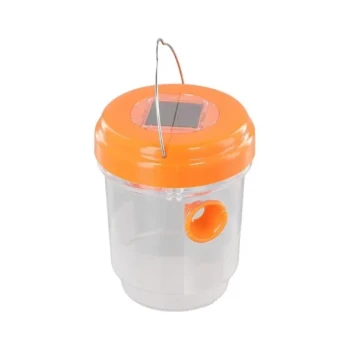
Strategic trap placement is a science of biological alignment and fluid dynamics. Mounting hornet traps at a height of 3 to 5 meters facing open areas optimizes the visibility of the unit and the dispersion of attractants within the insects' natural flight corridors. This specific configuration ensures that bait odors reach a wider radius while minimizing physical obstructions that could deter hornets from entering the trap.
Core Takeaway: To maximize capture rates and ensure consistent performance across diverse sites, professional deployment must prioritize the 3-5 meter height range and open-area orientation to align with hornet flight zones and maximize scent plume reach.
The Technical Rationale for Elevated Placement
High-Altitude Flight Corridors
The 3 to 5-meter range corresponds directly with the primary flight zones of hornets as they survey a territory. By placing the trap at this elevation, you are positioning the attractant directly within their natural "cruising altitude" for foraging and patrolling.
Optimized Olfactory Dispersion
Attractant odors rely on air currents to travel; placing traps higher and facing open ground allows for unimpeded wind flow. This creates a broader scent plume that can draw hornets from a significant distance, whereas ground-level placement often results in "trapped" odors blocked by low-lying vegetation.
Standardizing Visual Cues
Orienting the traps toward open ground reduces environmental interference with the hornets' vision. In an open field of view, the trap stands out as a clear object of interest, allowing the hornet to lock onto the target and approach without navigating complex obstacles like dense foliage.
Understanding the Trade-offs and Site Specifics
General Territory vs. Hive Protection
While the 3-5 meter height is the standard for general territory control, specific scenarios require tactical adjustments. For example, when protecting honeybee hives from yellow-legged hornets, a lower placement of 80 to 100 centimeters may be necessary to intercept hornets hovering near hive entrances.
Environmental Obstructions
Placing a trap at 5 meters in a heavily forested area may be counterproductive if the canopy is too dense, as it may hide the trap from sunlight. Thermal activation of certain baits is often required, meaning a balance must be struck between height and sun exposure to ensure the attractant remains volatile.
Maintenance Accessibility
For distributors and service providers, it is important to remember that higher placement requires specialized equipment for servicing. While 5 meters is technically superior for capture rates, the logistics of refilling bait at this height must be factored into the overall operational cost and safety protocol.
Providing Value-Added Expertise to Your Clients
As a sourcing partner, your ability to provide technical guidance on deployment is as critical as the quality of the hardware itself. We recommend tailoring your recommendations based on the specific end-use case of your B2B clients.
- If your primary focus is large-scale agricultural or park management: Recommend the standard 3-5 meter height to maximize the area of coverage and reduce the total number of units required per hectare.
- If your primary focus is specialized apiary and beekeeping supply: Advise clients to utilize a dual-height strategy, combining 3-5 meter perimeter traps with 80-100 cm traps placed directly near hive stands.
- If your primary focus is rapid deployment in residential areas: Suggest lower heights (2-3 meters) to balance efficacy with ease of maintenance for homeowners, ensuring the trap remains facing an open yard or lawn.
Expertly placed hardware transforms a simple product into a high-performance pest management solution.
Summary Table:
| Technical Factor | Rationale | Key Benefit |
|---|---|---|
| 3-5m Elevation | Aligns with hornet cruising altitudes | Higher capture rates during foraging |
| Open Orientation | Maximizes wind flow & visibility | Wider scent plume and easier target lock-on |
| Thermal Exposure | Promotes bait volatility | Ensures consistent attractant release |
| Site Strategy | Minimizes physical obstructions | Reduces navigation effort for the insect |
Partner with HONESTBEE for Professional Beekeeping & Pest Management Solutions
At HONESTBEE, we specialize in empowering distributors, wholesalers, and B2B resellers with more than just hardware. Our comprehensive wholesale offering includes everything from high-performance hornet traps and beekeeping tools to specialized hive-making and honey-filling machinery.
By partnering with us, you gain access to:
- Deep Industry Expertise: Technical guidance to help your clients achieve maximum results.
- One-Stop Sourcing: A full-spectrum product portfolio including essential consumables and cultural merchandise.
- Reliable Fulfillment: Ultra-fast delivery and rapid response times to keep your inventory moving.
- Premium Trading Services: Dedicated support designed to enhance your profit margins and market reputation.
Ready to elevate your product lineup? Contact us today to request a quote or catalog and see how our professional-grade equipment can grow your business.
References
- Jouni Sorvari. Yellow does not improve the efficiency of traps for capturing wasps of the genera Vespula and Dolichovespula (Hymenoptera: Vespidae). DOI: 10.14411/eje.2019.027
This article is also based on technical information from HonestBee Knowledge Base .
Related Products
- Compact Multi-Funnel Hanging Wasp Trap
- HONESTBEE Professional Telescopic Pole Bee Swarm Catcher
- Reusable Aluminium Beetle Trap for Small Hive Beetles Silver Bullet
- HONESTBEE Collapsible Tiered Bee Swarm Catcher for Beekeeping
- Reusable Clear Small Hive Beetle Traps for Beehives Beetle Trapping Tools
People Also Ask
- What are the practical advantages of using professional wasp traps and protective equipment in apiary management? Scale Up
- Why replace sugar syrup bait in wasp traps every three days? Ensure Maximum Attraction and Catch Rates
- What is the importance of deploying hornet traps around an apiary for maintaining colony stability? Protect Your Yields.
- What are the advantages of placing hornet traps on the tops of beehives? Maximize Hive Defense Against Predators
- What is the technical purpose of placing expanded clay balls in a hornet trap? Optimize Your Apiary Monitoring