The typical workflow for processing raw honey is a sequence designed to clean and stabilize the product without compromising its chemical integrity. This process typically moves through extraction and uncapping, followed by preheating, agitation, coarse filtration, low-temperature concentration, and finally, filling.
The central challenge in honey processing is purification without degradation; while filtration and concentration ensure a clean, stable product, strictly controlling temperature is essential to preserve the natural enzymes, pollen, and amino acids that distinguish raw honey.
Phase 1: Extraction and Preparation
Assessing Moisture Content
Before processing begins, the honeyframes must be evaluated for readiness.
The moisture content is verified to ensure it is under 18.5%. This natural limit is critical for preventing fermentation and ensuring the honey remains stable during storage.
Uncapping the Cells
Beekeepers or automated machinery must remove the wax "caps" that seal the honeycomb cells.
This exposes the liquid honey inside. The wax cappings are often collected separately to be processed into beeswax products.
Centrifugal Extraction
Once uncapped, the frames are placed into a honey extractor.
This machine spins the frames at high speed. Centrifugal force pulls the honey out of the comb without destroying the structure of the wax cells.
Phase 2: Refining and Stabilization
Preheating and Agitation
The extracted honey is often too viscous to flow efficiently through filtration systems.
It undergoes preheating to improve flow and agitation to ensure consistency. To maintain "raw" status and nutrient density, this temperature should generally not exceed 110°F.
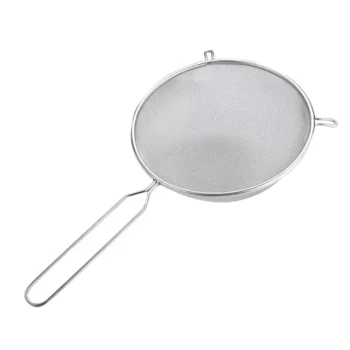
Coarse Filtration
The honey is passed through a strainer or filter system.
The goal here is coarse filtration—removing macroscopic impurities like bits of wax, bee parts, or large debris. Unlike industrial ultra-filtration, this step leaves microscopic pollen grains intact.
Low-Temperature Concentration
Excess moisture can cause honey to spoil, while proper density ensures a good shelf life.
The honey undergoes low-temperature concentration. This adjusts the consistency and moisture levels using methods that avoid the high heat associated with pasteurization.
Filling and Packaging
The final step is moving the processed honey into retail containers.
This "filling" stage must be done cleanly to prevent re-contamination. The result is a sealed product ready for distribution.
Understanding the Trade-offs
Crystallization vs. Preservation
Raw honey contains natural glucose and particles that serve as nucleation sites, causing it to crystallize (harden) relatively quickly.
Industrial processing often uses higher heat to delay crystallization and keep the honey liquid on the shelf. However, this aesthetic benefit comes at the cost of destroying fragile enzymes and yeasts.
Clarity vs. Nutrition
Heavily processed honey is often filtered to extreme levels to achieve a clear, glowing look.
While visually appealing, this removes bee pollen and propolis. Coarse filtration looks less "perfect" but retains the complete nutritional profile of the honey.
Making the Right Choice for Your Goal
When evaluating honey processing workflows or selecting a product, the "best" method depends entirely on the desired outcome.
- If your primary focus is nutritional value: Prioritize workflows that specify coarse filtration and temperature caps of 110°F, as these retain enzymes and pollen.
- If your primary focus is shelf stability and aesthetics: Look for standard processing that utilizes heat and finer filtration to prevent crystallization and ensure a smooth, clear liquid.
True raw honey processing is an exercise in restraint—doing just enough to clean the product, but not enough to change it.
Summary Table:
| Stage | Process Step | Key Objective | Critical Parameter |
|---|---|---|---|
| Phase 1 | Extraction & Uncapping | Remove honey from wax frames | Moisture < 18.5% |
| Phase 2 | Preheating & Agitation | Improve viscosity and flow | Temp < 110°F |
| Phase 3 | Coarse Filtration | Remove wax and debris | Retain pollen grains |
| Phase 4 | Low-Temp Concentration | Stabilize moisture levels | Preserve enzymes |
| Phase 5 | Filling & Packaging | Seal for retail distribution | Prevent contamination |
Scale Your Honey Production with HONESTBEE
Are you looking to optimize your honey processing workflow or expand your commercial apiary? HONESTBEE specializes in providing commercial apiaries and distributors with premium, wholesale beekeeping solutions. From high-capacity honey-filling machines and automated hive-making hardware to a full spectrum of essential tools and industry consumables, we deliver the equipment you need to maintain product integrity and increase efficiency.
Partner with HONESTBEE to enhance your production capabilities.
Contact Our Technical Team Today
Related Products
- Heavy Duty Stainless Steel Honey Processing Machine Decrystallizing Tank
- Double Wall Honey Heating Stirring Homogenizer Mixing Machine with Various Capacity
- Economy Honey Homogenizer Mixer and Melting Machine for Beekeeping
- Honey Concentrating and Filtering Dehumidifier Machine 2T Capacity for Honey
- Electric Double Wall Honey Filtering Machine Purifier Equipment for Honey Processing Plant
People Also Ask
- What are the features of the processing tanks offered? Engineered for Purity and Efficiency
- What types of stainless steel processing tanks are used for honey? Essential Equipment for Quality Honey Production
- What design options are available for honey processing tanks? Optimize Efficiency with Custom Geometries
- What types of stainless steel are used for honey processing? Ensure Food Safety with 304 & 316 Grade Equipment
- Why is industrial-grade stainless steel processing equipment required for honey harvesting? Ensure Purity & Compliance