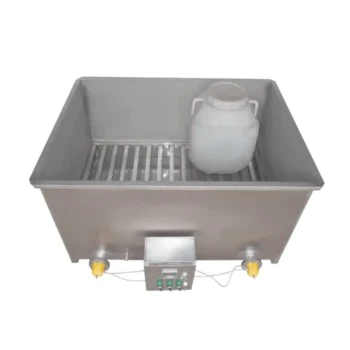
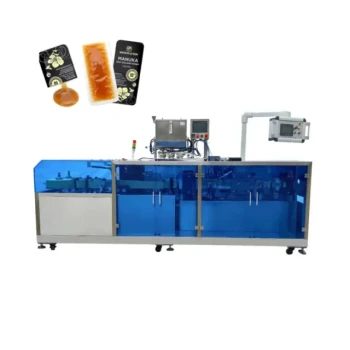
The unique role of industrial honey processing machines lies in their ability to utilize vacuum low-temperature concentration technology. This specific mechanism allows for the efficient removal of excess water from honey without subjecting the product to the high temperatures that typically destroy heat-sensitive nutrients like enzymes.
Core Takeaway: The definitive value of this technology is not just dehydration, but dehydration without degradation. By operating under a vacuum, these machines lower the boiling point of water, enabling moisture reduction at temperatures that preserve the honey’s biological activity and aromatic profile, ensuring compliance with strict export standards.
The Mechanics of Vacuum Dehydration
Lowering the Boiling Point
The primary mechanism employed is the creation of a vacuum within the processing chamber. By lowering the atmospheric pressure, the machine significantly reduces the temperature required to evaporate water.
Protecting Heat-Sensitive Enzymes
Traditional heating methods can "cook" the honey, destroying vital enzymes and volatile aromatics. Vacuum low-temperature concentration removes moisture while keeping the honey cool enough to retain these delicate biological components.
Stabilizing Volatile Aromatics
Beyond enzymes, honey contains volatile substances that give it unique floral flavors. This technology ensures these compounds remain in the honey rather than evaporating away with the water, preserving the product's premium sensory profile.
Overcoming Environmental Constraints
Solving High-Humidity Challenges
In regions with high environmental humidity, bees are often physically unable to dehydrate honey to safe levels naturally. Industrial machines provide a critical intervention, forcibly reducing moisture regardless of the ambient weather conditions.
Processing Immature Honey
Beekeepers may sometimes harvest honey before it is fully cured (immature honey). Industrial equipment can standardize this raw material, reducing moisture from elevated levels down to the precise percentages required for stability.
Understanding the Trade-offs
The Heat vs. Quality Balance
While supplementary data indicates that higher processing temperatures (e.g., 80°C) reduce moisture content more effectively than lower temperatures (e.g., 60°C), this comes at a cost. Excessive heat degrades quality.
The Risk of Traditional Heating
Relying solely on thermal heating without a vacuum to drive off moisture is a common pitfall. This often results in the loss of bioactivity and can increase Hydroxymethylfurfural (HMF) levels, which serves as a marker of heat damage and creates a lower-value product.
Standardization and Shelf Stability
Preventing Fermentation
Moisture content is the single biggest factor in honey spoilage. By precisely reducing water levels below the fermentation threshold, these machines ensure the honey remains chemically stable during long-term storage.
Meeting Export Requirements
International markets demand strict moisture limits (often below 18-20%). Industrial processing ensures every batch meets these rigid specifications, acting as a gateway for local producers to access global high-end markets.
Making the Right Choice for Your Goal
When integrating industrial processing into your operation, consider your primary objective:
- If your primary focus is Premium Export Quality: Prioritize vacuum low-temperature equipment to meet moisture standards while preserving enzyme activity and flavor profiles.
- If your primary focus is Bulk Stability in Humid Climates: Use these machines as a mandatory post-harvest step to prevent immediate fermentation, as natural drying will be insufficient.
Industrial processing transforms variable raw materials into a standardized, stable, and commercially viable product without sacrificing its natural integrity.
Summary Table:
| Feature | Vacuum Low-Temp Processing | Traditional Thermal Heating |
|---|---|---|
| Mechanism | Lower boiling point via vacuum | High-temperature evaporation |
| Enzyme Preservation | High (Maintains bioactivity) | Low (Heat destroys enzymes) |
| Aromatic Profile | Preserved floral volatiles | Lost or altered flavors |
| Moisture Control | Precise & standardized | Variable & risky |
| Export Readiness | Meets global quality standards | Risk of high HMF levels |
Elevate Your Honey Quality with HONESTBEE
At HONESTBEE, we understand that for commercial apiaries and distributors, the difference between bulk honey and premium export-grade product lies in the processing. Our advanced vacuum low-temperature concentration machinery allows you to reduce moisture content with precision, ensuring your honey retains its vital enzymes, delicate aromatics, and biological integrity.
Whether you are looking for specialized hive-making equipment, honey-filling machines, or the latest in dehydration technology, HONESTBEE provides a comprehensive wholesale offering of beekeeping tools and industrial consumables. Partner with us to standardize your production and access high-end global markets.
Contact our team today to find the perfect equipment solution for your operation.
References
- Naniram Dulal, Ranjana Singh. Value chain analysis of honeybee (Apis cerena) products in Jajarkot district, Nepal. DOI: 10.33545/26180723.2024.v7.i2f.355
This article is also based on technical information from HonestBee Knowledge Base .
Related Products
- Fully Automatic Honey Filling Packaging Machine for Processing Line
- Heavy Duty Stainless Steel Honey Processing Machine Decrystallizing Tank
- Electric Double Wall Honey Filtering Machine Purifier Equipment for Honey Processing Plant
- Economy Honey Homogenizer Mixer and Melting Machine for Beekeeping
- Double Wall Honey Heating Stirring Homogenizer Mixing Machine with Various Capacity
People Also Ask
- Why are fully automatic honey filling and packaging lines essential? Boost Your Honey's Market Value and Quality
- What is a fully-automatic honey filler? Streamline Your Production with High-Precision Automation
- How do automated honey filling and packaging machines affect profitability? Boost Margins with HONESTBEE Technology
- How do automated honey filling and packaging machines contribute to the market value of honey products? Maximize Your ROI
- How do industrial-grade automated honey filling and packaging machines mitigate the risk of physical contamination?