A bucket honey press is a mechanical extraction device designed to separate honey from beeswax using direct compression rather than centrifugal force. Its fundamental architecture consists of a dual-bucket system—a perforated inner "sieve" bucket to hold the honeycomb and a solid outer bucket to catch the flow—powered by a manual screw mechanism that drives a pressure plate downward to crush the comb.
The bucket honey press is a low-tech, high-pressure solution ideal for processing uncappings and burr comb, prioritizing the preservation of natural honey flavors over speed or volume.
The Mechanical Anatomy of a Bucket Press
The Dual-Bucket System
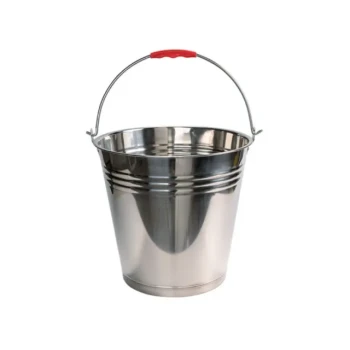
The core of the device involves two stainless steel containers nested together. The inner bucket is perforated, functioning as a sieve to hold the raw honeycomb and wax.
The outer bucket is solid and slightly larger, designed to catch the honey as it is squeezed out of the inner chamber. This outer vessel typically features a molded spout or gate to facilitate the final pouring of the extracted honey into storage jars.
The Compression Assembly
Rising from the base is a sturdy metal frame that supports a top bar positioned directly over the buckets. This top bar houses a threaded screw mechanism.
One end of this screw connects to a heavy pressure plate located inside the sieve bucket. The other end features a T-shaped handle or hand crank, which provides the leverage necessary to generate significant downward force.
Construction Materials
Most modern bucket presses are constructed from stainless steel. This material choice ensures the device is durable, easy to clean, and hygienic for food processing.
How the Extraction Process Works
Loading the Chamber
The process begins by placing cut pieces of honeycomb, uncappings, or beeswax directly into the inner sieving bucket. The operator then positions the pressure plate above the wax.
Applying Mechanical Force
The user rotates the T-shaped handle in a clockwise motion. This action drives the threaded screw downward, forcing the pressure plate against the honeycomb.
Separation via Crushing
As the pressure plate descends, it crushes the comb structure, physically squeezing the honey out of the wax cells. The honey flows through the perforations of the inner bucket and collects in the outer bucket, driven by both the applied pressure and gravity.
Understanding the Trade-offs
Labor and Efficiency
This is a strictly manual process that can be labor-intensive and time-consuming. It is designed for small quantities; attempting to process large harvests with this method is generally inefficient compared to centrifugal extractors.
Comb Destruction
Unlike spinning extractors that leave the comb intact for reuse by the bees, a press destroys the honeycomb. This makes it the preferred tool for "waste" products like uncappings (wax caps sliced off frames) or burr comb (stray comb built in the hive), rather than for primary frame extraction.
Quality of the Yield
While slower, this method is highly regarded for preserving flavor. Because it does not aerate the honey as much as spinning, many hobbyists believe it retains more of the honey's authentic, natural characteristics.
Making the Right Choice for Your Apiary
To determine if a bucket honey press aligns with your beekeeping goals, consider the following:
- If your primary focus is processing byproducts: This tool is essential for extracting the maximum yield from uncappings and burr comb that cannot be put in a standard extractor.
- If your primary focus is preserving natural quality: The press minimizes oxidation and aeration, making it ideal for small-batch, artisanal honey production where flavor nuances are paramount.
- If your primary focus is high-volume efficiency: You should avoid this as your main extraction method, as the manual cranking and small capacity will create a significant bottleneck.
The bucket honey press remains a reliable, compact powerhouse for the beekeeper who values thorough extraction and material quality over industrial speed.
Summary Table:
| Feature | Description | Benefit |
|---|---|---|
| Dual-Bucket System | Perforated inner sieve and solid outer bucket | Efficiently separates honey from wax while containing mess |
| Manual Screw Mechanism | Threaded rod with T-handle/crank | Provides high mechanical leverage for maximum honey yield |
| Stainless Steel Build | Food-grade, durable metal construction | Ensures hygiene, easy cleaning, and long-term durability |
| Compression Plate | Heavy-duty plate driven by the screw | Crushes honeycomb to release honey without high-speed aeration |
Elevate Your Apiary's Efficiency with HONESTBEE
Whether you are a commercial apiary looking to maximize byproduct yield or a distributor sourcing the finest beekeeping equipment, HONESTBEE is your trusted partner. We provide a full spectrum of professional tools—from specialized bucket presses and hive-making machinery to honey-themed cultural merchandise.
Why partner with HONESTBEE?
- Comprehensive Wholesale Offering: A one-stop shop for all beekeeping hardware and consumables.
- Industrial-Grade Machinery: Reliable honey-filling and processing equipment built for scale.
- Tailored Solutions: Dedicated support for commercial operations and global distributors.
Ready to upgrade your beekeeping operations? Contact HONESTBEE today to explore our wholesale catalog and discover how our equipment can drive your success.
Related Products
- Stainless Steel Honey Press Wax Press with Tank
- Stainless Steel Manual Honey Press with Guard for Pressing Honey and Wax
- Electric Honey Press Machine for Squeezing Honey Comb Press Equipment
- Food Grade Plastic Honey Bucket Pail for Beekeeping
- Easy Use Manual Stainless Steel Honey Press for Honey Comb
People Also Ask
- What is the procedure for pressing honey? A Simple, Low-Cost Method for Small-Scale Beekeepers
- What other functions can a honey press serve besides honey extraction? Discover Versatile Multi-Purpose Uses
- What are the fundamental differences between manual honey presses and centrifugal honey extractors? A Guide for Pros
- What features contribute to the portability of a honey press? Compact Designs for Mobile Beekeeping
- What is the procedure for extracting honey using a honey press? A Guide to Maximum Yield