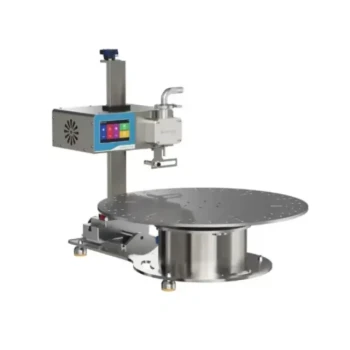
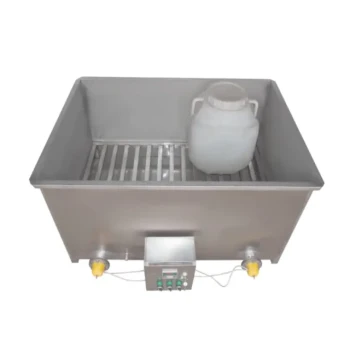
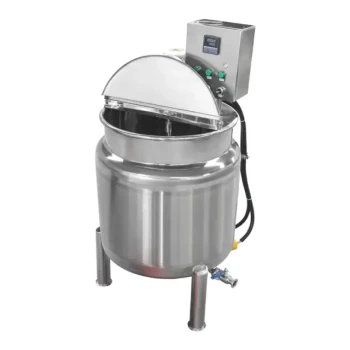
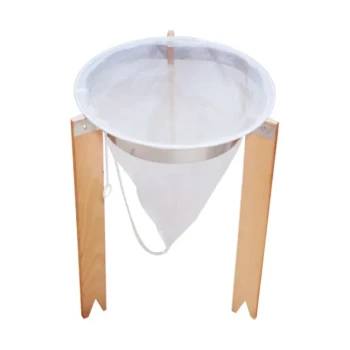
Efficient honey distribution depends on a controlled workflow from comb removal to sealed, labeled packaging. The essential stages are harvesting and uncapping the frames, centrifugal extraction, straining or filtration, settling and viscosity management, hygienic storage, precision filling, labeling, and order-ready packing. The core equipment includes uncapping tools or machinery, centrifugal extractors, stainless-steel strainers, settling tanks, storage tanks, heating cabinets where needed, filling machines, and labeling equipment.
The most efficient honey-processing operation connects each stage into one hygienic, scalable line. Matching equipment capacity across extraction, filtration, storage, filling, and labeling prevents bottlenecks while protecting honey quality and delivering consistent retail units.
Build a Controlled Harvesting Workflow
Remove frames at the right stage
Harvesting begins with selecting frames containing properly ripened, capped honey. Frames should be handled cleanly and protected from debris or unnecessary exposure during transport from the apiary to the processing area.
Dedicated harvesting tools help maintain an orderly workflow before the frames enter the extraction line. The objective is to preserve the comb structure and prevent contamination before processing begins.
Uncap the honeycomb
Wax cappings seal the honey inside the comb and must be removed before extraction. Small operations may use uncapping forks, knives, or electrically heated knives.
Higher-throughput facilities benefit from uncapping trays and automated uncapping machinery. These systems improve speed, collect removed wax, and provide a more consistent preparation stage for the extractor.
Recover the beeswax
Removed cappings contain honey and valuable beeswax. A wax melter or cappings recovery system can separate and collect the wax for additional products while reducing waste.
This equipment is particularly useful for commercial operations seeking to increase yield from the same harvest and maintain a cleaner processing area.
Extract Honey Without Damaging the Comb
Use centrifugal extraction
After uncapping, frames are placed in a centrifugal honey extractor. The extractor uses centrifugal force to remove liquid honey from the cells while leaving the comb largely intact.
Manual extractors can suit small apiaries, while electric or automated models support higher production volumes and reduce operator effort during peak harvest periods.
Match extractor capacity to demand
Extractor capacity should align with the number of frames entering the line and the filling volume required for market orders. An undersized extractor can delay the entire process, while excessive capacity may increase capital and maintenance costs without improving utilization.
For distributors and wholesalers, equipment should be evaluated against expected seasonal throughput, batch sizes, and required delivery schedules rather than purchase price alone.
Transfer honey hygienically
Honey should move from the extractor into food-grade containers, strainers, or tanks through a controlled path. Food-grade stainless steel is widely suited to this environment because it supports sanitation, resists corrosion, and integrates with commercial processing equipment.
Open transfers and unsuitable materials create avoidable contamination risks and make cleaning more difficult.
Filter, Settle, and Store the Honey
Remove residual particles
Extracted honey can contain wax fragments, wood particles, and other debris. A fine-mesh sieve or dedicated stainless-steel strainer removes these solids before the honey reaches storage or filling equipment.
Commercial lines may use multi-stage filtration when a more consistent appearance and cleaner final product are required. Filtration should remove unwanted material without unnecessarily altering the honey’s natural characteristics.
Allow the honey to settle
After straining, honey is commonly held in a settling tank. This gives remaining air bubbles and fine particles time to separate before the product is transferred for bottling.
Settling tanks also help operators consolidate batches, monitor product condition, and maintain a more consistent filling process.
Manage viscosity carefully
Honey viscosity affects pumping, filtration, and filling speed. Heating cabinets or temperature-controlled tanks can help manage flow when conditions make the honey too thick for efficient processing.
Temperature management must be controlled carefully because excessive heat can affect honey quality. The equipment should support the required flow rate without treating heating as a substitute for good process design.
Store in suitable tanks
Once processed, honey should be held in clean, covered stainless-steel storage tanks sized for the operation’s batch and order requirements. Tanks should connect efficiently to filtration, transfer, and filling equipment.
Covered storage protects the product while reducing unnecessary handling between processing and bottling.
Fill and Package Consistently
Use precision filling equipment
A honey-filling machine dispenses measured quantities into jars or other approved containers. Semi-automatic machines can support growing apiaries, while automated fillers are better suited to high-volume commercial production.
Precision filling provides consistent net quantities, reduces product loss, and speeds packaging during peak harvest periods.
Select the right level of automation
Filling machinery should reflect production volume, container formats, viscosity, and labor availability. Manual filling may work for limited batches, but it becomes a bottleneck when wholesale or distributor orders increase.
Automated or semi-automated systems also reduce repeated product handling, supporting a more hygienic and repeatable operation.
Apply compliant labels
After filling and sealing, labeling equipment applies the required commercial and legal information. Labels commonly include producer details, net weight, and date codes, subject to the rules of the destination market.
Labeling should be integrated into the line or organized as a defined downstream stage so finished units remain traceable and ready for order fulfillment.
Prepare finished units for distribution
Bottles should be inspected for fill consistency, secure closures, clean surfaces, and correctly applied labels before packing. Finished cases should be organized by product type, package size, batch, and destination.
This final control point supports faster warehouse handling and reduces errors when fulfilling distributor, wholesaler, or reseller orders.
Design the Line Around Hygiene and Flow
Use food-grade construction
Commercial honey-processing equipment should use food-grade stainless steel wherever the product contacts machinery. Stainless steel supports sanitation, offers corrosion resistance, and provides long service life when properly maintained.
Equipment surfaces should be accessible for cleaning, with minimal points where honey, wax, or debris can accumulate.
Minimize unnecessary handling
A connected workflow reduces transfers between open containers and lowers the opportunity for contamination. The preferred sequence is:
- Uncapping
- Centrifugal extraction
- Straining or filtration
- Settling or controlled storage
- Filling
- Sealing and labeling
- Inspection and case packing
This sequence also makes production easier to monitor because each stage has a clear input, output, and quality checkpoint.
Plan for cleaning and maintenance
Sanitation is an operational requirement, not a final inspection step. Equipment should be cleaned between relevant batches and maintained according to manufacturer requirements.
Regular inspection of pumps, filters, filling heads, seals, heating systems, and labeling components helps prevent unplanned downtime during harvest peaks.
Understanding the Trade-offs
Manual equipment versus automation
Manual tools and extractors require less initial investment and may suit small apiaries with limited throughput. Their disadvantages are slower production, greater labor dependence, and more variation in filling and handling.
Automated equipment improves speed, consistency, and order capacity, but requires higher capital expenditure, operator training, maintenance, and appropriate facility infrastructure.
Filtration versus product character
Fine filtration improves visual clarity and removes unwanted particles. However, processing choices should remain aligned with the desired product specification and should not unnecessarily change the honey’s natural characteristics.
The correct filtration approach depends on market expectations, packaging requirements, and the product quality standard being sold.
Heating versus quality preservation
Controlled heating can improve flow and support efficient pumping, filtration, and filling. Excessive or poorly controlled heat can compromise the intended quality of the honey.
Heating systems should therefore be selected for precise viscosity management and used only as needed for the process.
Lowest price versus total operating value
The cheapest equipment may create higher labor costs, slower fulfillment, more product loss, or inconsistent packaging. Conversely, the largest available system may be uneconomical if demand does not justify its capacity.
A sound purchase decision considers throughput, sanitation, serviceability, spare parts, integration, delivery reliability, and the ability to expand with future orders.
Making the Right Choice for Your Goal
The best configuration depends on production volume, packaging formats, customer requirements, and the speed expected during the harvest season.
- If your primary focus is small-batch production: Use uncapping forks or knives, a manual or compact electric extractor, stainless-steel strainers, settling containers, and a semi-automatic filling machine.
- If your primary focus is wholesale growth: Use powered uncapping and extraction equipment, multi-stage filtration, settling and storage tanks, and automated filling and labeling systems sized for peak demand.
- If your primary focus is premium product consistency: Prioritize food-grade stainless-steel equipment, controlled filtration, careful viscosity management, precise filling, and strong batch traceability.
- If your primary focus is rapid distributor fulfillment: Build an integrated line with balanced capacities, reliable storage, automated filling, labeling, finished-goods inspection, and organized case packing.
- If your primary focus is maximum resource utilization: Add cappings recovery and wax-melting equipment while minimizing transfers and reusing intact comb wherever appropriate.
A properly matched honey-processing line turns harvested comb into consistent, hygienic, market-ready products while giving your operation the capacity to meet commercial demand with confidence.
Summary Table:
| Stage | Key Activities | Essential Equipment |
|---|---|---|
| Harvesting | Remove ripened frames, handle cleanly | Frame grips, bee brushes |
| Uncapping | Remove wax cappings | Uncapping fork, knife, or machine |
| Extraction | Centrifugally extract honey | Manual or electric extractor |
| Filtering | Remove particles | Strainers, sieves, or multi-stage filtration |
| Settling & Storage | Clarify and hold honey | Settling tanks, storage tanks |
| Filling | Dispense precise amounts | Semi-auto or automatic filling machine |
| Labeling | Apply labels | Labeling machine |
| Packing | Inspect and pack | Inspection tools, packing station |
Ready to optimize your honey processing line? At HONESTBEE, we provide a full spectrum of beekeeping equipment—from uncapping machines to filling lines—designed for commercial apiaries and distributors. Our OEM/ODM support, certifications, and reliable supply chain ensure you meet market demand. Contact us today for a tailored solution that boosts your efficiency and profitability. Contact us.
Related Products
- Manual Honey Filling Machine Bottling Machine for Honey
- Fully Automatic Honey Filling Packaging Machine for Processing Line
- Double Nozzle Small Honey Filling Machine Honey Sachet Packing Packaging Equipment
- Honey Gate Valve with Ergonomic Ball Handle Plastic Bee Honey Tap for Beekeeping Bottling and Honey Extractor Equipment
- Automatic Honey Filling and Filtering Machine for Beekeeping Bottle Filling
People Also Ask
- What is a manual honey filler and where is it used? The Essential Guide for Small-Scale Honey Bottling
- What is a manual filling machine? The Ultimate Guide for Small-Batch Producers
- What are the main differences between automated and manual honey filling? Scale Your Bottling Operation
- What types of filling mechanisms are used in honey filling machines? Find the Best Tech for Your Viscosity
- What technical advantages do honey filling and packaging machines provide? Optimize Your Large-Scale Production