Effective management of pollen-trapping colonies centers on maintaining a delicate balance between harvesting a surplus and ensuring the hive has sufficient protein for its own survival. You must utilize strong, active colonies headed by young queens and restrict trapping strictly to periods of pollen abundance. To prevent nutritional stress, you are required to provide periods of free flight for store replenishment and rotate traps among different hives if continuous production is required.
The cardinal rule of pollen trapping is that the colony's need for brood rearing always takes precedence over the harvest. Management is not about the mechanics of the trap, but about scheduling "free flight" intervals to ensure the population remains robust enough to sustain itself.
Selecting and Preparing the Colony
Prioritize Colony Vitality
You cannot effectively trap pollen from a weak hive. You must select active colonies that demonstrate high energy and foraging capacity.
The Importance of Young Queens
Success relies heavily on the reproductive engine of the hive. Ensure your trapping colonies are headed by young queens, as they typically maintain the vigorous brood rearing necessary to drive high pollen demand.
Maximizing Population
A larger workforce results in higher pollen yields. You should actively manipulate the brood to maximize the colony's population before and during the trapping season.
Managing the Trapping Schedule
Timing is Critical
Do not leave traps on indefinitely. You must activate pollen traps only during distinct periods of pollen abundance when resources in the field are plentiful.
Allowing Free Flight
When the natural intake of pollen begins to slow, you must intervene immediately. Allow the colony periods of free flight—removing or disabling the trap—so foragers can bring pollen directly into the hive.
Rotating for Continuous Production
If your goal is a continuous supply of pollen, do not rely on a single colony. Instead, rotate the traps to other hives to spread the burden and allow the initial colonies time to recover.
Understanding the Trade-offs
The Risk to Brood Rearing
Pollen is the primary protein source for raising new bees. The fundamental trade-off of trapping is that you are intercepting the resources required for brood rearing.
Monitoring Nutritional Stress
If you trap too aggressively during low-flow periods, the colony will not have enough pollen to feed its larvae. This management failure leads to a shrinking population and a subsequent collapse in future honey and pollen production.
Making the Right Choice for Your Goal
- If your primary focus is Maximum Yield: Implement a rotation schedule where traps are moved to fresh, strong hives every few days to maintain high intake without depleting a single colony.
- If your primary focus is Colony Sustainability: Restrict trapping strictly to peak bloom days and disable the trap immediately if you observe a drop in foraging activity.
Sustainable pollen trapping is strictly a part-time activity; prioritizing the colony's access to protein ensures the workforce remains strong enough to produce for you tomorrow.
Summary Table:
| Management Aspect | Key Requirement | Purpose |
|---|---|---|
| Colony Selection | Strong, active hives with young queens | Drives high foraging demand and vigorous brood rearing |
| Timing | Only during periods of pollen abundance | Prevents nutritional stress and ensures a harvestable surplus |
| Schedule | Regular "Free Flight" intervals | Allows foragers to bypass traps and replenish hive protein stores |
| Sustainability | Trap rotation among multiple hives | Spreads the burden and prevents the collapse of a single colony |
Maximize Your Apiary's Potential with HONESTBEE
At HONESTBEE, we understand that professional beekeeping requires the right balance of expertise and high-performance equipment. Whether you are managing commercial apiaries or supplying the industry as a distributor, our comprehensive wholesale range is designed to support your growth.
We provide everything from advanced hive-making and honey-filling machinery to essential consumables and specialized beekeeping tools. By partnering with us, you gain access to durable hardware and innovative solutions that streamline your production and enhance colony productivity.
Ready to scale your beekeeping operation?
Contact HONESTBEE Today to explore our wholesale catalog and discover how our premium equipment and industry-leading supplies can drive your success.
Related Products
- 30 cm Plastic Entrance Hole Bee Pollen Trap and Collector
- Removable Plastic Pollen Trap With Ventilated Tray for Bees Pollen Collector
- Plastic Bee Pollen Trap Strips Comb Catcher Collector
- High-Efficiency Diamond Maze Bee Escape for Clearing Supers
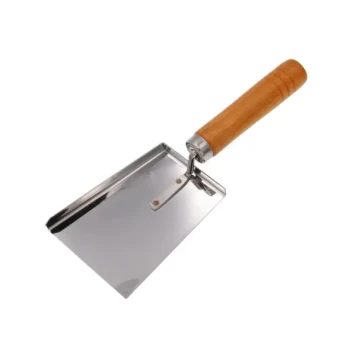
- Stainless Steel Pollen Shovel with Wooden Handle
People Also Ask
- What are the design principles and advantages of pollen traps in the collection of bee pollen? Boost Your Apiary Yield
- Why is frequent harvesting of bee pollen from traps necessary for quality control? Ensure Freshness and Prevent Mold.
- How often should bee pollen be harvested from a trap and why? Master Freshness and Prevent Spoilage
- What function do pollen traps serve in quantitative collection? Boost Your Apiary's Data & Production Efficiency
- What is the primary function of bee pollen traps? Optimize Your Pollen Harvest with Advanced Extraction Efficiency