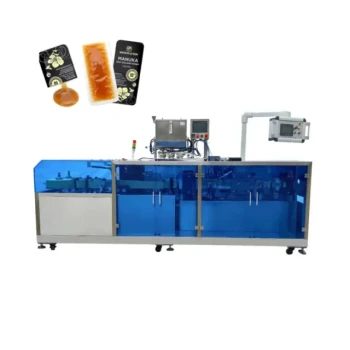
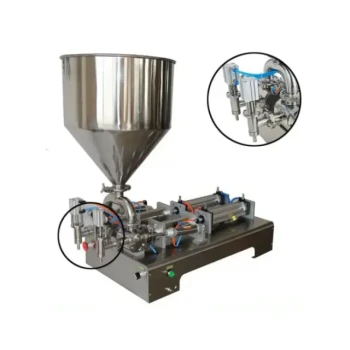
Automatic honey-filling machines serve as the critical infrastructure bridging raw agricultural production and the high-standard retail market. By executing precise measurement and packaging under strictly sterile conditions, these systems effectively eliminate the risk of secondary contamination. This ensures honey products meet rigorous international hygiene standards while generating the economic stability required to maintain long-term colony health.
By streamlining the transition from bulk harvest to retail-ready product, these machines do more than just package honey; they create the financial capacity for beekeepers to invest in vital ecosystem conservation and pollination services.
Elevating Product Standards Through Automation
Eliminating Contamination Risks
The primary technical function of automatic filling machines is to perform packaging under sterile conditions. This "closed-loop" operation is the most effective method for preventing secondary contamination, which often occurs during manual handling. By isolating the product from the external environment, the machinery safeguards the honey's purity from the apiary to the bottle.
Precision and Regulatory Compliance
High-precision fluid control technology allows for consistent volumetric filling across different batches. This level of accuracy is essential for meeting international hygiene and trade standards, which is a requirement for any region aiming to maintain a reputation as a high-quality honey exporter.
Preserving Nutritional Integrity
Beyond basic hygiene, automated systems are designed to maintain the specific physical and chemical properties of the honey. By minimizing exposure and handling time, the machinery preserves the natural flavor and nutritional integrity of the product. This ensures that the unique characteristics of specific floral sources or subspecies are not degraded during processing.
Driving Industry Sustainability
The Economic-Ecological Link
There is a direct correlation between processing efficiency and biological sustainability. The primary reference notes that by ensuring the economic sustainability of the operation through automation, beekeepers can allocate more resources toward colony health management. This shifts the focus from labor-intensive packaging to the care of the bees themselves.
Funding Pollination Services
Honey production acts as the primary economic engine for apiaries that maintain Western honeybees (Apis mellifera) for pollination. Efficient filling equipment accelerates the "cash flow" cycle by quickly converting raw inventory into market-ready goods. This revenue stream is critical for sustaining the operations that provide pollination services to the broader agricultural sector.
Creating a Conservation Loop
Automation transforms primary agricultural products into commercial goods with higher market premiums. This increased profitability creates an "economic loop" where commercial success directly drives conservation efforts. Beekeepers are financially incentivized to protect their bees and pollination environments because the processing infrastructure makes the venture viable.
Understanding the Trade-offs
Capital Intensity vs. Operational Efficiency
While automation reduces long-term labor costs, it requires a significant upfront capital investment in high-specification hardware. Smaller operations must weigh the cost of this technology against their current production volume to ensure the return on investment justifies the expenditure.
Maintenance of Sterile Environments
The benefits of preventing secondary contamination rely entirely on the proper maintenance of the machinery. These systems require strict cleaning protocols and technical oversight. If the "closed-loop" integrity is compromised due to poor maintenance, the hygiene advantages of the system are negated.
Making the Right Choice for Your Goal
To determine how this technology fits into your supply chain strategy, consider your immediate objectives:
- If your primary focus is Market Expansion: Prioritize machines with high-precision metering to ensure your product meets the strict international standards required for export.
- If your primary focus is Apiary Health: Focus on the efficiency gains of automation to free up capital and labor that can be redirected toward colony management and conservation.
- If your primary focus is Brand Premium: Utilize closed-loop systems to guarantee the preservation of nutritional integrity and flavor, justifying a higher price point for niche products.
Ultimately, automatic filling technology transforms honey production from a simple extraction process into a sustainable, eco-economic cycle that benefits both the producer and the pollinator.
Summary Table:
| Key Feature | Benefit to Quality | Impact on Sustainability |
|---|---|---|
| Sterile Closed-Loop | Eliminates secondary contamination | Ensures compliance for international trade |
| Precision Filling | Maintains consistent batch volume | Maximizes revenue through accurate inventory |
| Nutritional Preservation | Protects natural flavors and enzymes | Increases market premium for conservation funding |
| Automated Efficiency | Reduces human error and labor | Reallocates resources to colony health and pollination |
Scale Your Honey Production with HONESTBEE Precision Engineering
At HONESTBEE, we empower commercial apiaries and distributors to bridge the gap between raw honey production and premium retail standards. Our comprehensive wholesale catalog includes state-of-the-art honey-filling machines, hive-making hardware, and essential beekeeping consumables designed to maximize your efficiency and ensure product purity.
Whether you are looking to expand into international markets or optimize your supply chain, our expert team provides the machinery and cultural merchandise needed to drive your brand's growth. Transform your operation and invest in the future of beekeeping today—contact our specialists at HONESTBEE!
References
- Rémy Vandame, María Alejandra Palacio. Preserved honey bee health in Latin America: a fragile equilibrium due to low-intensity agriculture and beekeeping?. DOI: 10.1051/apido/2010025
This article is also based on technical information from HonestBee Knowledge Base .
Related Products
- Fully Automatic Honey Filling Packaging Machine for Processing Line
- Automatic Honey Filling and Filtering Machine for Beekeeping Bottle Filling
- Precision Durable Efficient HONESTBEE Rotary Honey Filling Machine
- Automatic Single-Dose Snap & Squeeze Honey Sachets Packing Machine
- Semi Automatic Small Honey Bottle Filling Machine Honey Filler
People Also Ask
- Why are fully automatic honey filling and packaging lines essential? Boost Your Honey's Market Value and Quality
- What is a fully-automatic honey filler? Streamline Your Production with High-Precision Automation
- How do automated honey filling and packaging machines affect profitability? Boost Margins with HONESTBEE Technology
- How do automated honey filling and packaging machines contribute to the market value of honey products? Maximize Your ROI
- How do industrial-grade automated honey filling and packaging machines mitigate the risk of physical contamination?