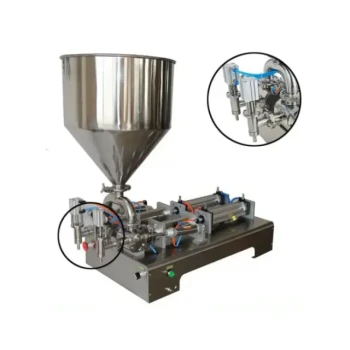
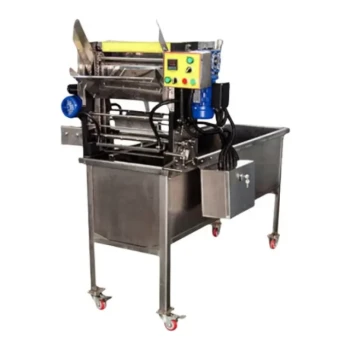
Automated honey-filling machines serve as the critical infrastructure enabling the transition from local beekeeping to industrial-scale commerce. These systems provide the high-precision quantitative filling and accelerated processing speeds necessary to meet the rigorous demands of large-scale distribution and global export markets.
By replacing manual labor with fully enclosed, automated metering systems, these machines solve the three primary hurdles of mass distribution: production speed, strict volumetric accuracy, and compliance with international food safety standards.
Enabling Large-Scale Commercial Supply
Increasing Production Throughput
To satisfy the volume requirements of supermarkets and export channels, producers must move beyond manual bottling. Automated filling machines significantly increase packaging speeds, allowing operations to process bulk raw materials into consumer-ready units at an industrial pace. This speed is the fundamental technical requirement for entering high-volume retail terminals.
Facilitating the Commercial Transition
The primary reference highlights that these machines facilitate the shift to a large-scale commercial supply model. They act as the operational bridge that converts apiary output into standardized inventory, ensuring that supply chains remain uninterrupted during peak demand periods.
Ensuring Precision and Product Quality
Accurate Metering and Weight Control
Commercial distribution requires that every unit sold meets specific net weight regulations. Automated machines utilize accurate metering systems to provide high-precision quantitative filling. This eliminates the variability and errors inherent in manual filling, ensuring that every jar meets commercial standards and labeling laws.
Consistency Across Batches
Large-scale buyers demand uniformity. Automation ensures that honey maintains consistent purity and fill volumes across different production batches. Whether processing low-viscosity acacia honey or thicker multi-flower varieties, these machines maintain production consistency, which is vital for building consumer trust and brand reliability.
Achieving Compliance and Safety
Enclosed Hygienic Designs
For export, food safety is non-negotiable. Automated machines feature fully enclosed hygienic designs that isolate the honey from the external environment during the bottling process. This significantly reduces the risk of cross-contamination compared to manual handling.
Meeting International Standards
The primary reference emphasizes that automation ensures honey complies with international food safety and quality standards. This capability is often the deciding factor in whether a producer can legally access strict foreign markets or secure contracts with major domestic retailers.
Common Pitfalls to Avoid
Managing Viscosity Variations
While these machines are capable of processing honeys with varying viscosities, operators must ensure proper calibration when switching between types. Failing to adjust settings for different flow rates can lead to inconsistent fill levels or mechanical strain, negating the benefits of precision metering.
Maintenance of Closed Systems
The "fully enclosed" nature of these machines guarantees hygiene only if the cleaning protocols are rigorously followed. Unlike manual equipment, an automated line requires a strict maintenance schedule to prevent residue buildup within the internal metering components, which could compromise the sanitary status of an entire batch.
Making the Right Choice for Your Goal
To leverage automation effectively, align your equipment choice with your specific commercial objective:
- If your primary focus is International Export: Prioritize machines with fully enclosed hygienic designs and verifiable cleaning systems to meet strict food safety and quarantine regulations.
- If your primary focus is Supermarket Distribution: Focus on high-speed throughput and precise volumetric control to ensure consistent shelf appearance and net-weight compliance.
- If your primary focus is Brand Reputation: Select equipment known for handling varying viscosities to maintain product texture and purity across different seasonal honey batches.
Automation is not just about speed; it is the mechanism that standardizes nature's variable product into a globally tradeable commodity.
Summary Table:
| Feature | Commercial Benefit | Impact on Distribution |
|---|---|---|
| High-Speed Throughput | Rapidly converts bulk raw honey into consumer units | Meets high-volume retail and supermarket demands |
| Precision Metering | Ensures consistent net weight and volumetric accuracy | Guarantees compliance with labeling laws and trade standards |
| Enclosed Design | Minimizes contamination and maintains hygiene | Satisfies strict international food safety and export regulations |
| Consistency Control | Uniform quality across different honey viscosities | Builds consumer trust and brand reliability in global markets |
Scale Your Apiary Operations with HONESTBEE
Transitioning from local beekeeping to global distribution requires industrial-grade reliability. HONESTBEE specializes in empowering commercial apiaries and distributors with the high-precision machinery needed to thrive in the international market.
Our comprehensive wholesale portfolio includes:
- Advanced Honey-Filling Machines: High-speed, hygienic systems for precise volumetric control.
- Complete Processing Lines: From hive-making machinery to industrial honey processing equipment.
- Essential Consumables: A full spectrum of professional beekeeping tools and hardware.
Whether you are expanding your production throughput or seeking to meet rigorous export standards, HONESTBEE provides the technical expertise and equipment to secure your supply chain.
Ready to elevate your production capacity? Contact our expert team today to discover how our tailored solutions can grow your business.
References
- Mariia Fedorіak, Р. А. Волков. Ukraine is Moving Forward from “Undiscovered Honey Land” to Active Participation in International Monitoring of Honey Bee Colony Losses. DOI: 10.1080/0005772x.2018.1554279
This article is also based on technical information from HonestBee Knowledge Base .
Related Products
- Fully Automatic Honey Filling Packaging Machine for Processing Line
- Automatic Honey Filling and Filtering Machine for Beekeeping Bottle Filling
- Precision Durable Efficient HONESTBEE Rotary Honey Filling Machine
- Precision Automated Packaging Turntable Honey Spoon Filling Sealing Packing Machine
- Semi Automatic Small Honey Bottle Filling Machine Honey Filler
People Also Ask
- Why are fully automatic honey filling and packaging lines essential? Boost Your Honey's Market Value and Quality
- What is a fully-automatic honey filler? Streamline Your Production with High-Precision Automation
- How do automated honey filling and packaging machines affect profitability? Boost Margins with HONESTBEE Technology
- How do automated honey filling and packaging machines contribute to the market value of honey products? Maximize Your ROI
- How do industrial-grade automated honey filling and packaging machines mitigate the risk of physical contamination?