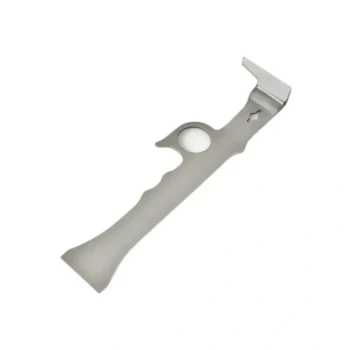
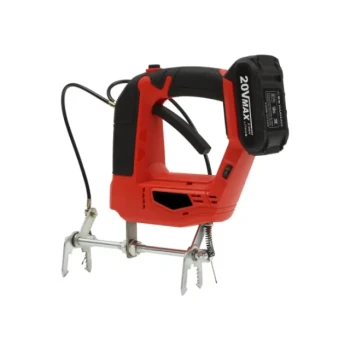
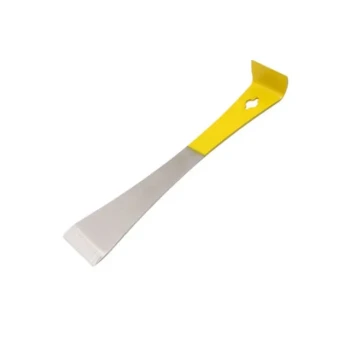
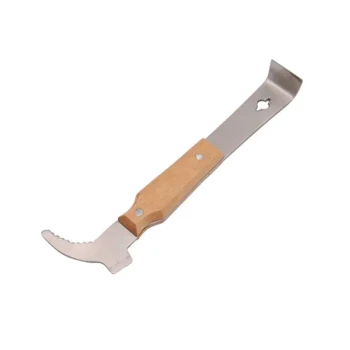
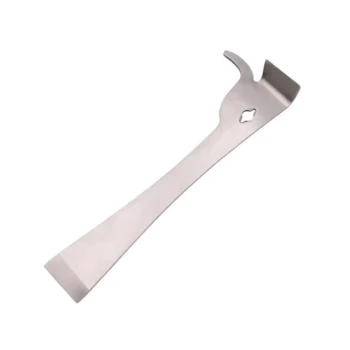
Dedicated stingless beekeeping tools are the critical interface between commercial viability and biological sustainability. These specialized instruments allow for the hygienic extraction of honey and the execution of routine inspections without destroying the colony's fragile internal nest structure. By enabling non-destructive management, these tools significantly improve production efficiency while ensuring the conservation of the bee resources.
Effective meliponiculture (stingless beekeeping) requires shifting focus from simply harvesting honey to preserving the hive's architecture. Specialized tools allow you to extract resources without dismantling the complex pot structures the bees work tirelessly to build.
Preserving Nest Integrity and Hygiene
The Importance of Non-Destructive Harvest
Unlike traditional honeybees that utilize durable combs, stingless bees often store honey in delicate pots made of cerumen. Dedicated tools are designed to extract honey without crushing these structures. This preservation is vital because it saves the colony the immense energy cost of rebuilding their nest after every harvest.
Maintaining High Sanitary Standards
The use of professional equipment is a key factor in ensuring honey purity. Proper tools allow for extraction that minimizes the risk of contaminating the honey with pollen, larval fluids, or debris from the nest walls. This precision is essential for meeting the high hygienic standards required for commercial honey products.
Increasing Operational Efficiency
Managing Routine Inspections
Regular monitoring is required to check for pests, diseases, and overall colony health. Specialized tools facilitate the opening and manipulation of controlled colonized hives with minimal disturbance. This allows the beekeeper to assess the queen's status and food stores quickly, reducing the stress placed on the colony.
Facilitating Supplemental Feeding
Dedicated tools play a major role in feeding management, which is crucial during dearth periods. Efficient feeding systems prevent starvation and maintain colony strength without inciting robbing behaviors from other insects. This intervention is critical for maintaining the stability required for consistent honey production.
Scaling Through Colony Multiplication
Because the annual yield of a single stingless bee hive is relatively low (typically around 4 kg), commercial success depends on increasing the number of colonies. Standardized equipment and tools allow for the safe division of hives. This capability is the primary method for expanding total production capacity efficiently.
Understanding the Trade-offs
The Risk of Improper Tool Usage
While supplementary references mention "frame lifters," one must exercise extreme caution when applying standard apiary tools to stingless bees. Stingless bee nests are often irregular and lack movable frames. Forcing standard tools into a delicate stingless hive can cause structural collapse and inadvertently kill the queen.
Investment vs. Return
Dedicated equipment often carries a higher initial cost compared to improvised tools. However, using improper tools increases the risk of colony loss or contamination. For a species with low individual hive yields, the loss of a single colony represents a significant setback in production capacity.
Making the Right Choice for Your Goal
To maximize the potential of your apiary, select tools based on your specific operational objectives.
- If your primary focus is Commercial Production: Prioritize tools that facilitate rapid, hygienic extraction and colony multiplication to compensate for low per-hive yields.
- If your primary focus is Conservation: Focus on inspection equipment that minimizes physical disturbance to the nest structure and ensures the long-term health of the colony.
The correct tools transform beekeeping from a destructive harvesting process into a sustainable system of resource management.
Summary Table:
| Feature | Dedicated Tools Impact | Traditional Tools Risk |
|---|---|---|
| Nest Structure | Preserves delicate cerumen pots | High risk of structural collapse |
| Honey Quality | Hygienic extraction; no contamination | Potential debris or larval fluid mixing |
| Colony Stress | Low; targeted inspections | High; invasive and disruptive |
| Yield Scaling | Facilitates safe colony division | Harder to scale without loss |
| Energy Cost | Bees save energy on rebuilding | Bees must rebuild destroyed pots |
Elevate Your Meliponiculture with HONESTBEE
Transitioning from traditional methods to professional stingless beekeeping requires precision equipment designed for delicate hive architectures. HONESTBEE specializes in supporting commercial apiaries and distributors with a comprehensive range of wholesale beekeeping solutions.
From hygienic extraction tools that preserve nest integrity to hive-making machinery and specialized consumables, we provide the hardware necessary to scale your production and maintain peak hive health. Whether you are expanding your colony count or optimizing honey purity, our expertise ensures your success in the competitive honey market.
Ready to scale your commercial apiary?
Contact HONESTBEE Today for Wholesale Equipment Solutions
References
- Rogério M.O. Alves, Wyratan S. Santos. Areas of natural occurrence of Melipona scutellaris Latreille, 1811 (Hymenoptera: Apidae) in the state of Bahia, Brazil. DOI: 10.1590/s0001-37652012000300010
This article is also based on technical information from HonestBee Knowledge Base .
Related Products
- Stainless Steel J Hook Hive Tool for Beekeeping
- HONESTBEE Advanced Ergonomic Stainless Steel Hive Tool for Beekeeping
- High Performance Cordless Electric Bee Shaker for Beekeeping
- Wooden Bee Brush with Triple Row Artificial Fiber for Beekeeping
- Professional Stainless Steel J-Hook Hive Tool
People Also Ask
- What specific challenges do beekeeping hive tools address during hive maintenance? Essential Solutions for Apiaries
- What is a J-hook hive tool and why is it favored by some beekeepers? Master Gentle Frame Handling
- What are the features of a J-hook hive tool? Effortlessly Lift Frames with Superior Leverage
- What is the purpose of the J-hook hive tool? Effortlessly Lift Frames with Superior Leverage
- How is a J-hook hive tool designed and what is its primary use? Master Effortless Hive Inspections