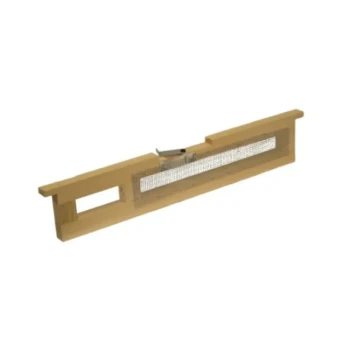
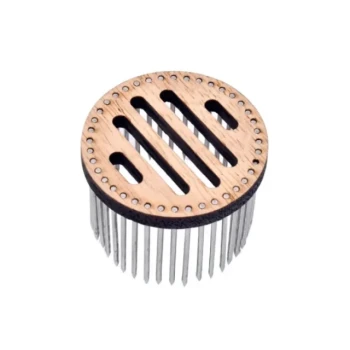
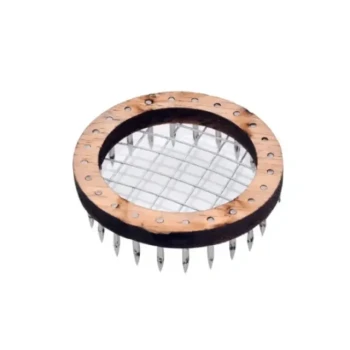
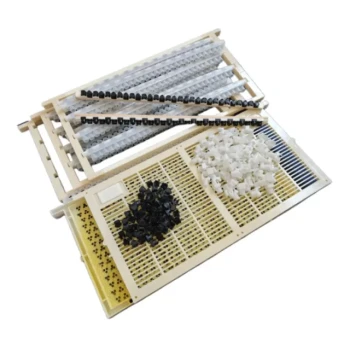
Industrial-grade wooden rearing boxes serve as the foundational apparatus for isolating honeybee colonies and virgin queens during in vitro ovary development studies. They create a controlled physical environment that simulates the necessary social crowding of a natural hive while facilitating precise laboratory observation.
By replicating the internal density and social structure of a hive within a manageable footprint, these boxes allow researchers to isolate specific physiological variables—like ovary development—from external environmental noise.
The Function of the Rearing Box
Simulating the Social Environment
Honeybee physiology is deeply tied to the colony's social structure. The primary function of these boxes is to simulate the internal crowding and social interactions found in a natural hive.
This crowding effect is essential. Without a realistic density of bees, the physiological processes associated with ovary development in virgin queens and workers may not proceed naturally in vitro.
Isolation from External Interference
In field studies, variables such as weather, predation, and wild forage availability are uncontrollable.
These industrial-grade boxes effectively isolate the subjects from these external factors. This ensures that observed changes in ovary development can be attributed to experimental variables (such as specific diets or treatments) rather than environmental fluctuations.
Facilitating Laboratory Observation
The boxes are sized specifically for laboratory movement. Unlike full-sized field hives, these units are designed to be handled, moved, and monitored within a controlled indoor setting.
This design allows researchers to conduct close-range behavioral observations and physiological assessments without disrupting the colony's containment.
Structural Advantages for Research
Stability and Natural Attachment
While the primary goal is containment, the material matters. The wooden structure provides a stable substrate for bees to attach and move naturally.
This stability reduces stress on the insects, which is critical; high stress levels can inhibit physiological development and skew experimental data.
Ventilation and Micro-environment Control
Successful rearing requires a delicate balance of air exchange and containment.
Supplementary data indicates that these boxes, often paired with mesh components, ensure excellent ventilation. This prevents moisture buildup and allows for the maintenance of precise humidity levels (often around 65%) and temperatures (25°C), creating a micro-environment conducive to survival and development.
Understanding the Trade-offs
The In Vitro Gap
While these boxes excel at simulation, they are not a perfect substitute for a natural colony. The confinement affects behavior.
The absence of flight opportunities and the limited population size mean that the complex pheromonal landscape of a full colony is simplified.
Material Considerations
Wood is porous. While it offers excellent traction for bees, it can be more difficult to sterilize than plastic or glass equivalents.
Researchers must ensure rigorous cleaning protocols between trials to prevent the transmission of pathogens like Nosema, which could compromise mortality statistics and physiological data.
Making the Right Choice for Your Goal
To maximize the utility of industrial-grade wooden rearing boxes, align their use with your specific research parameters:
- If your primary focus is physiological development: Ensure the box size allows for sufficient crowding density to trigger natural hormonal responses in virgin queens.
- If your primary focus is nutritional intake: Utilize boxes compatible with inverted conical feeders or glass faces to allow for precise weight-difference measurements without opening the unit.
- If your primary focus is longevity studies: Prioritize boxes with proven ventilation efficiency to prevent humidity-related mortality during long-term observation.
These boxes transform the chaotic complexity of a beehive into a controlled, measurable variable, providing the essential baseline for rigorous physiological research.
Summary Table:
| Feature | Function in Laboratory Research | Benefit to Study Results |
|---|---|---|
| Social Simulation | Replicates hive density and crowding | Triggers natural hormonal & physiological responses |
| Environmental Isolation | Shields subjects from weather and predation | Attributes changes solely to experimental variables |
| Material Stability | Provides a natural wooden substrate | Reduces insect stress to prevent skewed data |
| Micro-climate Control | Facilitates ventilation and humidity (65%) | Ensures high survival rates during long-term trials |
| Handleable Scale | Sized for indoor laboratory movement | Enables close-range observation without disruption |
Elevate Your Research and Operations with HONESTBEE
At HONESTBEE, we understand that precision in the lab and efficiency in the field are the pillars of a successful beekeeping enterprise. We cater specifically to commercial apiaries and distributors, providing a comprehensive wholesale catalog that spans from specialized industrial-grade rearing boxes and hive-making machinery to advanced honey-filling systems.
Whether you are conducting rigorous physiological studies or scaling up commercial production, our high-quality beekeeping tools and industry consumables are designed to meet the most demanding standards. Partner with us to access professional-grade hardware and honey-themed cultural merchandise that adds value to every stage of your business.
Ready to scale your colony management?
References
- Bruno Berger, Carminda da Cruz‐Landim. Ovary Development in Honeybee (Apis Mellifera L.) Workers Under Co<sub>2</sub> Narcosis, Caged Outside of the Colony. DOI: 10.1515/jas-2015-0004
This article is also based on technical information from HonestBee Knowledge Base .
Related Products
- 5 Frame Wooden Nuc Box for Beekeeping
- Twin Queen Styrofoam Honey Bee Nucs Mating and Breeding Box
- Professional Wooden Requeening Frame for Beekeeping
- Automatic Heat Preservation 6 Frame Pro Nuc Box for Honey Bee Queen Mating
- HONESTBEE Wired and Assembled Wooden Bee Frames Foundation for a Thriving Hive
People Also Ask
- What are the options for adding frames to a nuc after taking two frames from the parent colony?
- What frames should be moved into the queenless hive when requeening with a nuc? Ensure a Successful Queen Introduction
- What roles do five-frame nucleus boxes and ten-frame Langstroth hive boxes play in colony standardization?
- What is the primary function of five-frame nuclei boxes? Master Early Colony Establishment for Stronger Hives
- What is the typical composition of frames in a nuc? A 5-Frame Blueprint for a Thriving Hive