Laboratory mechanical stirring devices act as the kinetic driver for the cold maceration of propolis. They provide continuous power support to maintain agitation over extended periods, typically around 72 hours. By physically forcing interaction between the solvent and propolis particles, these devices accelerate mass transfer and ensure uniform extraction without the need for thermal processing.
By replacing passive soaking with active, continuous agitation, mechanical stirring breaks down diffusion barriers and prevents local solvent saturation. This ensures the maximum yield of heat-sensitive bioactives like phenolics and flavonoids while maintaining a uniform extract concentration.
The Mechanics of Enhanced Extraction
Accelerating Mass Transfer
The primary function of mechanical stirring is to accelerate the movement of solutes from the solid propolis matrix into the solvent (often 70% ethanol).
By providing continuous kinetic energy, the device creates forced convection. This increases the rate at which active ingredients diffuse out of the resin and into the liquid phase.
Eliminating Diffusion Layer Resistance
In a static environment, a stagnant layer of saturated solvent forms around each solid particle, blocking further extraction.
Continuous stirring increases the molecular collision frequency between the solvent and the raw material. This physical driving force effectively scours away this static "diffusion layer," exposing the particle to fresh, unsaturated solvent.
Maximizing Bioactive Yield
The ultimate goal of this kinetic input is to extract specific compounds, such as polyphenols and flavonoids.
Because the process relies on mechanical agitation rather than heat, it maximizes the dissolution of these compounds while preserving their chemical integrity. This is critical for cold maceration, where protecting heat-sensitive ingredients is the priority.
Ensuring Consistency and Quality
Preventing Local Saturation
Without agitation, the solvent immediately surrounding a propolis particle quickly becomes saturated with dissolved solids.
Mechanical stirring ensures the solvent is constantly mixed, preventing these localized pockets of saturation. This maintains a steep concentration gradient, which is necessary to keep the extraction process moving forward efficiently.
Maintaining Particle Suspension
Propolis powder and resin are prone to sedimentation, meaning they will settle at the bottom of the container if left undisturbed.
Stirring provides enough energy to keep these particles fully suspended and in dynamic contact with the solvent. This prevents the formation of sludge at the bottom and ensures that every particle is subjected to the extraction process equally.
Uniform Distribution
The result of this continuous mixing is a homogeneous extract.
By ensuring thorough contact and preventing stratification, mechanical stirring leads to a uniform distribution of active ingredient concentrations throughout the entire solvent volume.
Understanding the Trade-offs
While mechanical stirring is superior to static maceration, it introduces specific operational considerations.
Equipment Durability and Energy: The process often requires continuous operation for up to 72 hours. This demands robust equipment capable of sustaining consistent power output without overheating or mechanical failure.
Shear Force Management: While agitation is necessary, the physical shear force must be controlled. The goal is to facilitate contact, not to pulverize the matrix so finely that it becomes difficult to filter later or introduces unwanted micro-particulates.
Optimizing Your Extraction Strategy
To get the most out of mechanical stirring during cold maceration, align your approach with your specific extraction goals.
- If your primary focus is Maximum Yield: Ensure the device is set to run continuously for the full 72-hour cycle to fully exhaust the resin matrix.
- If your primary focus is Ingredient Stability: Verify that the mechanical action does not generate friction heat, strictly maintaining the "cold" maceration temperature profile.
- If your primary focus is Consistency: Prioritize equipment that guarantees uniform suspension to prevent sedimentation zones that lead to variable concentration batches.
Success in cold maceration lies in using mechanical energy to substitute for thermal energy, driving efficient extraction while preserving the delicate bioactivity of the propolis.
Summary Table:
| Function | Key Mechanism | Benefit to Extraction |
|---|---|---|
| Mass Transfer | Forced convection | Accelerates solute movement into solvent |
| Boundary Layer | Scouring diffusion layers | Eliminates local saturation around particles |
| Suspension | Kinetic energy | Prevents sedimentation and sludge formation |
| Consistency | Continuous mixing | Ensures uniform bioactive concentration |
| Quality Control | Mechanical vs Thermal | Preserves heat-sensitive phenolics & flavonoids |
Elevate Your Propolis Processing with HONESTBEE
Maximize your bioactive yield and ensure batch-to-batch consistency with professional-grade extraction solutions. At HONESTBEE, we specialize in supporting commercial apiaries and distributors with a comprehensive range of beekeeping tools, industrial machinery, and essential consumables.
Whether you need specialized honey-filling machines, robust hive-making hardware, or high-performance stirring equipment for propolis processing, our wholesale portfolio is designed to scale your operations. Partner with us to bring superior honey-themed products to the market.
Contact HONESTBEE Today to Discuss Your Equipment Needs
References
- Jelena Šuran, Josipa Vlainić. Nonaqueous Polyethylene Glycol as a Safer Alternative to Ethanolic Propolis Extracts with Comparable Antioxidant and Antimicrobial Activity. DOI: 10.3390/antiox10060978
This article is also based on technical information from HonestBee Knowledge Base .
Related Products
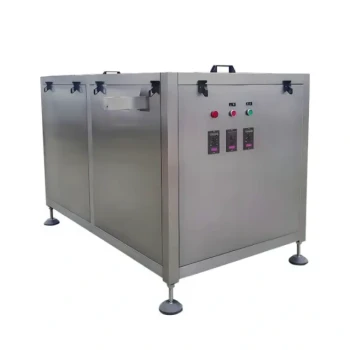
- Double Wall Honey Heating Stirring Homogenizer Mixing Machine with Various Capacity
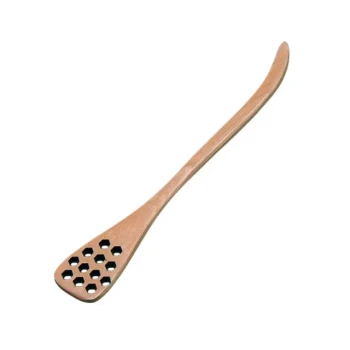
- Modern Honeycomb Pattern Wooden Honey Dipper for Stirring and Drizzling
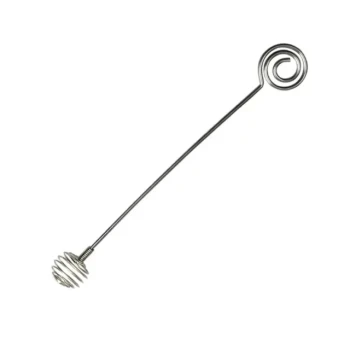
- Modern Stainless Steel Honey Dipper Stirrer
- Professional Plastic Honey Dipper for Easy Honey Drizzling
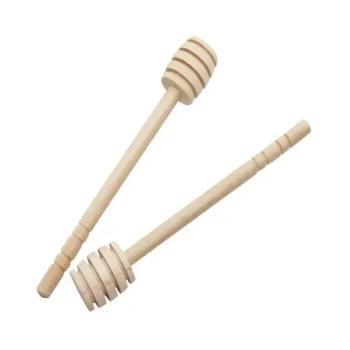
- Natural Wood Honey Dipper for Tea Coffee and Desserts
People Also Ask
- What impact do homogenizers or oscillating equipment have on honey microbial detection? Ensure Testing Accuracy
- Why is thorough mechanical stirring and homogenization emphasized in honey processing? Ensure Sample Accuracy
- How do heating equipment and homogenizers liquefy crystallized honey? Expert Guide to Professional Honey Processing
- How does the honey mixer handle different types of honey? Master Viscosity for Perfect Blends
- What are the main components of the honey mixer? Engineered for Gentle, Efficient Honey Processing