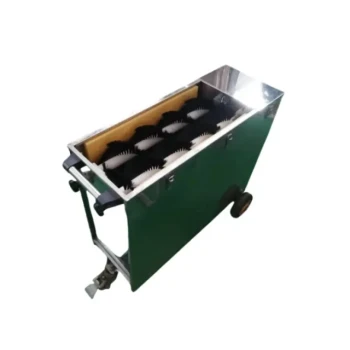
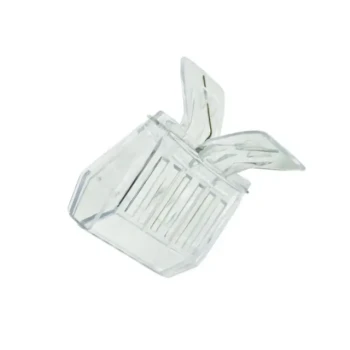
Professional bee colony capture and removal systems serve as the primary infrastructure for tracking honeybee population dynamics in urban settings.
These systems function as critical monitoring nodes rather than simple pest control services. By utilizing specialized collection tools to remove colonies and simultaneously recording their precise locations in real-time, these professionals generate the empirical data necessary to map expansion patterns. This process transforms a routine safety procedure into a comprehensive method for tracking how honeybee populations—particularly Africanized varieties—navigate and settle within complex city environments.
Core Insight:
The true value of these systems lies in their ability to correlate colony frequency with environmental stressors. They provide physical evidence of migration trends, specifically revealing how urban areas act as refuges for Africanized honeybees moving toward coastal regions during dry seasons.
Transforming Removal into Data
The Role of Monitoring Nodes
In an urban context, every call for colony removal acts as a distinct data point. Professional capture systems systematize this information, turning random encounters into a structured dataset.
By logging the exact location of every removal, researchers can visualize density and distribution. This creates a "heat map" of activity that highlights where colonies are successfully establishing themselves.
Tracking Seasonal Migration
The data collected by these systems reveals specific behavioral trends linked to climate.
Primary observations indicate a clear frequency of colony movement toward coastal regions during dry seasons. This suggests that as inland resources dry up, honeybees migrate toward the humidity and flora of the coast, using the city as a transit zone or destination.
Evaluating Urban Refuges
Data from capture systems allows experts to evaluate the effectiveness of the city as a habitat.
By analyzing where colonies are found—whether in building crevices or tree hollows—experts can determine how well the urban environment functions as a refuge for Africanized honeybees. This helps regarding the management of these defensive strains in high-density areas.
The Importance of Collection Methodology
Preserving "Physical Evidence"
For monitoring to be effective, the sample must be viable.
Specialized tools like bee vacuums and bait boxes are essential for this process. They allow for the efficient extraction of live honeybees and queens without destroying the colony structure.
Enabling Genetic and Health Analysis
Capturing live specimens is a prerequisite for understanding what is expanding.
Intact delivery of the colony allows for subsequent health assessments and genetic analysis. This confirms whether the expanding populations are indeed Africanized or European, and helps track the spread of specific genetic traits or pathogens.
Understanding the Trade-offs
Reactive vs. Proactive Data
It is important to recognize that capture systems are inherently reactive.
Data is only generated when a colony is discovered and reported by the public or property owners. This creates potential blind spots in areas with lower human foot traffic or where colonies are well-hidden.
The Cost of Equipment
Effective monitoring requires specialized, non-lethal equipment.
Standard extermination destroys the "evidence" required for study. Therefore, the higher cost of professional transport cages and vacuum systems is a necessary investment to ensure the biological integrity of the samples for research purposes.
Making the Right Choice for Your Goal
Whether you are managing municipal safety or conducting ecological research, the data derived from removal systems is vital.
- If your primary focus is Ecological Research: Prioritize the use of non-lethal vacuum and transport tools to ensure live samples are available for genetic testing and health assessment.
- If your primary focus is Public Safety: Utilize the "heat map" data from removal logs to predict high-activity zones during dry seasons and allocate resources to coastal urban sectors.
- If your primary focus is Urban Planning: Analyze historical removal locations to identify structural vulnerabilities (like specific building crevices) that consistently attract migrating colonies.
By treating removal as a data-collection opportunity, we convert an urban challenge into a valuable insight regarding ecosystem health.
Summary Table:
| Feature | Role in Monitoring | Impact on Research |
|---|---|---|
| Data Logging | Maps precise colony locations and density | Creates activity "heat maps" for urban planning |
| Seasonal Tracking | Records migration toward coastal areas | Identifies climate-driven behavioral trends |
| Specialized Vacuums | Preserves biological integrity of live bees | Enables genetic and health analysis (e.g., Africanization) |
| Bait Boxes | Facilitates live capture and transport | Ensures viable samples for long-term ecological study |
| Location Analysis | Evaluates urban structures as refuges | Identifies structural vulnerabilities in city infrastructure |
Scaling Your Beekeeping Operations with HONESTBEE
At HONESTBEE, we understand that professional bee management requires more than just tools—it requires precision and efficiency. We cater specifically to commercial apiaries and global distributors, providing a comprehensive wholesale portfolio of beekeeping machinery and essential consumables.
Whether you need specialized hardware like hive-making and honey-filling machines to scale production, or professional capture equipment to monitor and manage colony health, we deliver the quality your business demands. Our expertise supports the entire industry value chain, from infrastructure to honey-themed cultural merchandise.
Ready to elevate your wholesale supply? Contact us today to discover how our end-to-end equipment solutions can streamline your commercial operations and support ecological monitoring initiatives.
References
- Breno Magalhães Freitas, Isac Gabriel Abrahão Bomfim. Comportamentos de abandono e migração de colônias silvestres da abelha melífera africanizada (<em>Apis mellifera</em> L.). DOI: 10.4025/actascibiolsci.v29i4.882
This article is also based on technical information from HonestBee Knowledge Base .
Related Products
- Efficient Hive Clearing: HONESTBEE 8-Way Plastic Bee Escape
- HONESTBEE Collapsible Tiered Bee Swarm Catcher for Beekeeping
- HONESTBEE Professional Telescopic Pole Bee Swarm Catcher
- Commercial Grade Vertical Electric Bee Sweeper for Bee Removal
- Full Set Beekeeping Electronic Bee Venom Collector Machine Device for Bee Venom Collecting
People Also Ask
- How is a bee escape, or clearer board, used to harvest honey from a Langstroth hive? The Stress-Free Harvesting Guide
- What mechanical methods and tools are used to clear bees from honey supers? Efficient Tools for a Smooth Harvest
- What is the result of using a bee escape board for 24 hours? Achieve a Near Bee-Free Honey Super
- What are the different types of bee escape boards? Choose the Right One for a Stress-Free Honey Harvest
- How do bee escape boards and fume boards assist in honey harvesting? Optimize Your Harvest with Low-Stress Tools