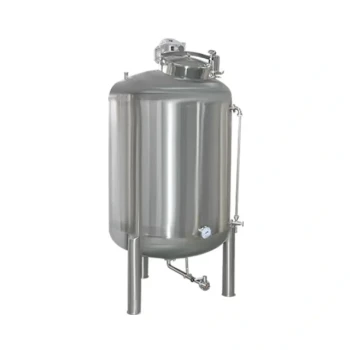
Professional honey storage facilities act as the critical link between raw harvest and global distribution. They regulate market access by allowing for strategic timing of sales and ensure product quality by maintaining strict environmental controls that preserve the honey’s biochemical integrity and sensory characteristics. By leveraging these facilities, distributors can bypass the pressure of immediate post-harvest sales and enter the market when pricing and demand are most favorable.
Professional storage facilities stabilize the honey supply chain by decoupling the harvest cycle from market availability. This ensures that B2B resellers have access to a high-quality, standardized product throughout the year, regardless of seasonal fluctuations.
Maintaining Uncompromising Product Quality
Precision Climate Control and Stabilization
Professional facilities utilize advanced systems to strictly manage environmental humidity and temperature. This precision prevents the honey from absorbing atmospheric moisture, which is the primary cause of fermentation and spoilage.
By maintaining stable conditions, these facilities also prevent uncontrolled crystallization. This ensures the honey retains its desired texture and clarity, which are essential for meeting the aesthetic standards required by retail and industrial buyers.
Preservation of Biochemical Integrity
Specialized storage protects the honey’s most sensitive components, such as diastase enzymes and bioactive substances. Without professional-grade cooling and airtight sealing, heat and oxygen can degrade these markers, lowering the honey’s medicinal and nutritional value.
Preserving the natural color and purity is vital for securing premium market prices. High-end distributors rely on these facilities to ensure the product remains "harvest-fresh" months after the initial collection.
Hygienic Processing and Grading
These facilities serve as centralized hubs for sorting, grading, and filtration. By removing impurities and air bubbles in a controlled, food-grade environment, the facility ensures the honey meets rigorous hygiene standards.
Standardized storage containers and tanks are critical for maintaining traceability. This allows wholesalers to track specific batches from remote apiaries through to the final distribution point, ensuring complete transparency for the end consumer.
Strategic Market Regulation and Access
Timing Optimization and Price Arbitrage
Professional storage allows beekeepers and distributors to hold inventory during periods of oversupply. Instead of being forced to sell at low prices immediately after harvest, they can release product when market prices are most favorable.
This ability to support off-season sales strategies is a major competitive advantage for B2B resellers. It ensures a consistent supply for their clients even when production is dormant, fostering long-term contract stability.
Regulatory Compliance and Export Readiness
A professional facility provides the hygienic infrastructure necessary to obtain government health certifications. These approvals are the "gatekeepers" for entering premium domestic markets or qualifying for international export.
Without the standardized operations provided by these facilities—from extraction to airtight packaging—products often fail to meet the physicochemical indicators required by international law. Storage facilities thus act as the primary engine for global market expansion.
Understanding the Trade-offs
The Cost of Infrastructure vs. Product Loss
Operating a high-tech, temperature-controlled facility involves significant capital expenditure and energy costs. Distributors must weigh these operational overheads against the financial risk of losing entire batches to fermentation or heat damage in substandard conditions.
Standardization vs. Artisanal Variation
While professional facilities ensure consistency and safety, the process of large-scale filtration and blending can sometimes diminish the unique regional profiles of artisanal honey. For wholesalers, the challenge lies in balancing the need for industrial-scale efficiency with the market's demand for "raw" or "unprocessed" characteristics.
How to Leverage Storage Expertise for Your Business
To maximize the value of professional honey storage, your strategy should align with your specific commercial goals.
- If your primary focus is premium market positioning: Prioritize facilities that provide documented proof of enzyme retention and rigorous climate logs to justify higher price points.
- If your primary focus is supply chain reliability: Partner with facilities that offer high-volume storage and ultra-fast fulfillment capabilities to ensure you can meet client demands during the off-season.
- If your primary focus is international expansion: Select facilities that hold recognized food safety certifications (such as ISO or HACCP) to streamline the customs and regulatory approval process.
The integration of professional storage into your supply chain transforms honey from a volatile seasonal commodity into a stable, high-value asset.
Summary Table:
| Feature | Benefit for Wholesalers | Impact on Market Value |
|---|---|---|
| Climate Control | Prevents fermentation and crystallization | Ensures consistent, retail-ready texture |
| Enzyme Preservation | Protects diastase and bioactive markers | Supports premium and medicinal pricing |
| Supply Decoupling | Allows for off-season sales strategies | Optimizes price arbitrage and margins |
| Hygienic Grading | Provides traceability and certification | Facilitates international export access |
Scale Your Honey Distribution with HONESTBEE
Are you looking to enhance your supply chain and secure higher profit margins? HONESTBEE is your strategic partner in professional beekeeping and honey processing. We provide a one-stop sourcing solution tailored for commercial apiaries and B2B distributors.
Our comprehensive portfolio includes:
- Advanced Machinery: Precision honey-filling machines and hive-making equipment.
- Full-Spectrum Tools: A complete array of beekeeping hardware and essential consumables.
- Premium Service: Deep industry expertise, rapid response times, and ultra-fast order fulfillment.
Whether you need to upgrade your processing facility or expand your wholesale inventory, we offer the reliable supply and OEM/ODM support your business demands.
Contact HONESTBEE today to optimize your operation!
References
- Estifanos Feleke. Analyzing market participation, market surplus and market outlet choice among small scale honey producers. DOI: 10.33259/jlivestsci.2025.28-43
This article is also based on technical information from HonestBee Knowledge Base .
Related Products
- Professional Honey Storage Tank with Agitation System
- Stainless Steel Honey Storage and Settling Tank with Double Strainer
- Stainless Steel Honey Storage Tank with Lid for Honey
- Hexagonal Glass Honey Jar with Wooden Lid Integrated Dipper Elegant Functional Storage
- Stainless Steel Honey Tank Stand for Honey Storage
People Also Ask
- What economic role do honey storage tanks play? Boost Your Revenue Through Strategic Inventory Management
- What roles do industrial honey storage tanks and filtration meshes play in processing? Ensure Purity & Consistency
- What is the purpose of a honey storage tank? Streamline Your Honey Processing for Quality & Efficiency
- What are honey storage tanks used for? Essential Features for Quality Preservation and Profit
- How do large honey storage tanks and gravity fall filling systems improve honey packaging efficiency and safety?