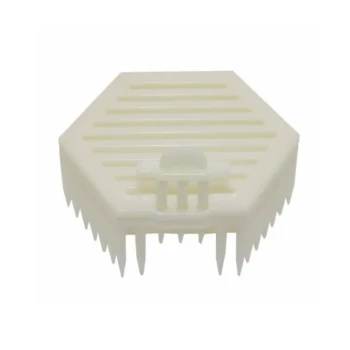
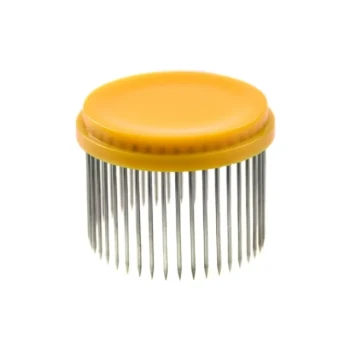
Queen bee transport cages and quarantine inspection tools function as a comprehensive biosecurity checkpoint. By confining the queen—who acts as the primary vehicle for these wingless pests—in a standardized environment, inspectors can utilize high-precision optical tools to visually identify and physically remove bee lice before shipment.
Bee lice rely on hitchhiking on queen bees to traverse geographical boundaries. The combination of international-standard transport cages and rigorous pre-shipment microscopy creates a critical barrier, intercepting the pest at the source before it can infiltrate uninfected apiaries.
The Mechanics of Interception
The Vector: Why the Queen Matters
Bee lice are wingless flies that cannot migrate long distances on their own. Instead, they spread globally by attaching themselves to the heads of queen bees.
Because the queen is the primary vector for transmission, controlling her immediate environment during trade is the single most effective way to stop the spread.
The Role of the Transport Cage
The transport cage serves as an isolation unit that meets international quarantine standards.
While supplementary data notes that cages are generally used to manage aggression or allow feeding, in this specific context, they serve to immobilize the queen for handling.
This confinement is essential, as it presents the queen in a stable, accessible manner for the next phase of the protocol.
The Necessity of Optical Tools
The cage alone is not a filter; it is a stage for inspection.
To effectively block transmission, inspectors must use high-power magnifiers or stereomicroscopes.
These tools allow for the definitive identification of adult bee lice, which might be missed by the naked eye, ensuring they can be removed prior to transport.
Understanding the Limitations
The Cage is Not a Seal
It is important to recognize that a standard queen cage is designed with bars to allow worker bees to feed the queen.
Because the cage allows biological interaction rather than acting as a hermetically sealed container, it does not passively prevent pest entry or exit.
Reliance on Rigorous Protocol
The hardware (cages and microscopes) is only as effective as the inspection process itself.
The primary reference emphasizes that prevention relies on the identification and removal of lice.
If the optical inspection is skipped or performed rapidly without high-power magnification, the cage itself will not prevent the lice from traveling with the queen to the new destination.
Ensuring Biosecurity Integrity
If you are managing the transfer of genetic stock or regulating apiary imports, apply the following guidelines:
- If your primary focus is Exporting: Ensure every queen is caged and subjected to stereomicroscopic examination to physically remove hitchhikers before the package is sealed.
- If your primary focus is Importing: Mandate that all incoming shipments use cages meeting international standards and are accompanied by certification of pre-shipment optical inspection.
Effective quarantine is not about the container, but the visibility and verification that the container facilitates.
Summary Table:
| Component | Role in Biosecurity | Function for Pest Control |
|---|---|---|
| Transport Cage | Isolation Unit | Immobilizes the queen for detailed physical examination and handling. |
| Optical Tools | Verification Stage | High-power magnification enables identification of wingless pests (hitchhikers). |
| Rigorous Protocol | Active Prevention | Ensures the physical removal of lice before geographical transfer occurs. |
| Export Standards | Source Control | Prevents the departure of infected stock via certified pre-shipment checks. |
Secure Your Apiary’s Health with HONESTBEE
Maintaining biosecurity is paramount for commercial apiaries and distributors. At HONESTBEE, we empower your operations by supplying a full spectrum of professional beekeeping tools, from international-standard queen bee transport cages to advanced inspection equipment.
Whether you are a distributor looking for high-quality wholesale supplies or a large-scale commercial operation needing specialized honey-filling and hive-making machinery, we provide the hardware necessary to protect your genetic stock and optimize production.
Ready to elevate your beekeeping standards? Contact us today to explore our comprehensive wholesale offerings and see how we can support your business's growth and biosecurity integrity.
References
- Jamie Ellis, Catherine M. Zettel Nalen. Bee louse, bee fly, braulid, Braula coeca Nitzsch (Insecta: Diptera: Braulidae). DOI: 10.32473/edis-in845-2010
This article is also based on technical information from HonestBee Knowledge Base .
Related Products
- Professional Queen Cage with Sliding Gate and Feeder Plug
- Professional Queen Bee Introduction and Transport Cage
- Professional Multi-Compartment Queen Cage with Sliding Lid
- Durable Galvanized Steel Spring Queen Bee Cage
- JZBZ Style Professional Battery Box with 20 Shipping Cages
People Also Ask
- Why are specialized queen bee cages used for the banking of mated queen bees? Maximize Commercial Apiary Storage Efficiency
- What is the mechanism of action for using temporary queen bee cages? Master Successful Queen Introduction
- How is a queen bee released from a queen cage? Ensure Safe Colony Integration & Hive Success
- What is the step-by-step process for installing a queen bee's cage onto a frame? Ensure Hive Acceptance Safely
- What technical precaution must be taken regarding the mesh or grill side of a queen bee cage? Ensure Queen Survival