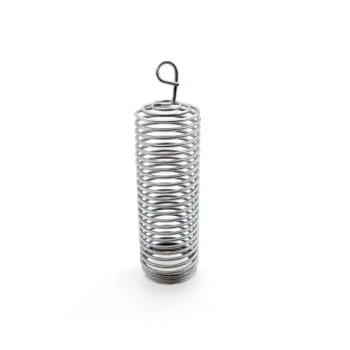
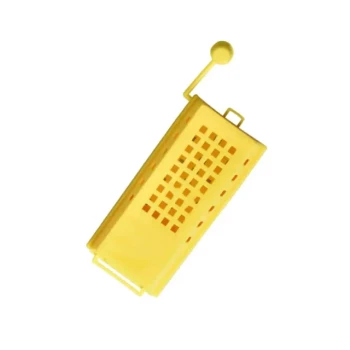
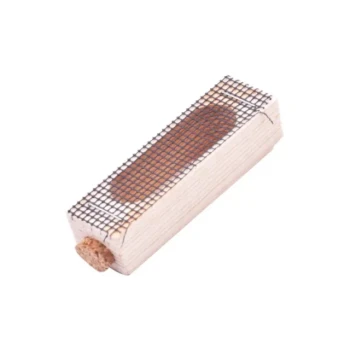
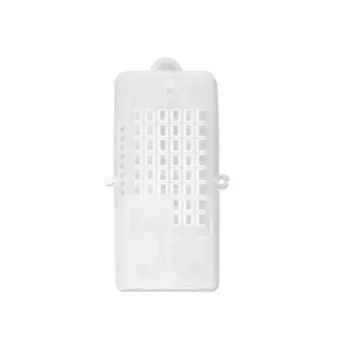
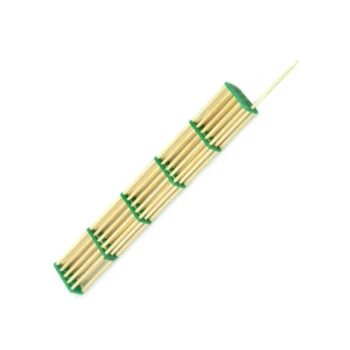
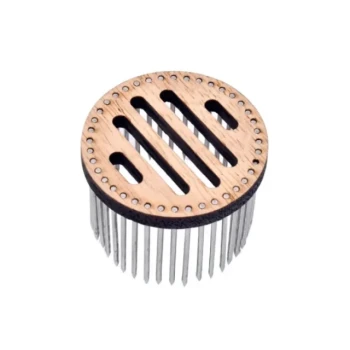
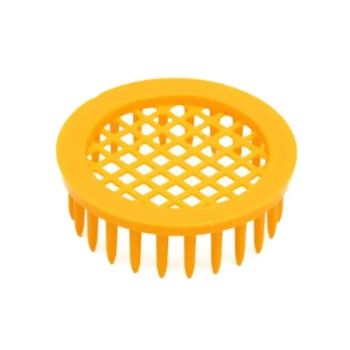
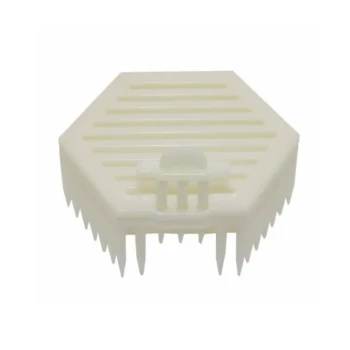
Queen cages serve as a precision tool for temporal control in apiary science. By physically confining the queen to a specific comb for a pre-determined window, these devices force the synchronization of egg-laying. This ensures that every resulting larva on that frame develops at an identical rate, creating a uniform biological dataset.
By restricting the queen's movement, queen cages eliminate age-related variables within the hive. This creates standardized batches of larvae, which is essential for accurate scientific data collection and effective, chemical-free parasite management.
The Mechanics of Synchronization
Controlled Isolation
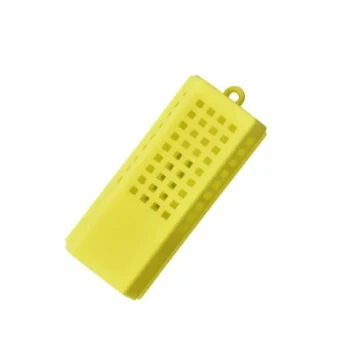
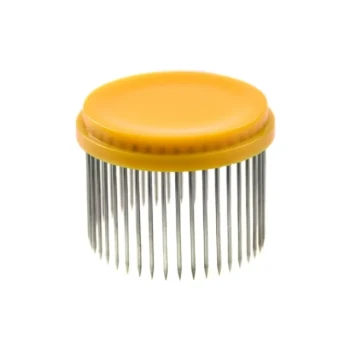
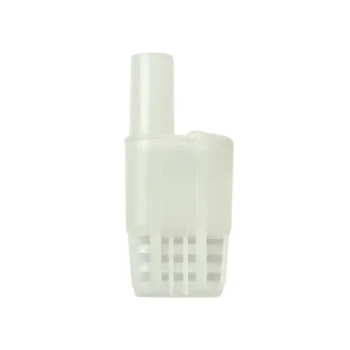
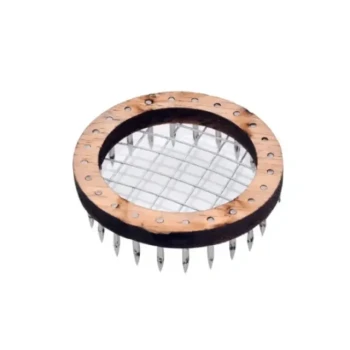
The fundamental mechanism involves using a physical barrier—often a wire mesh or excluder cage—to restrict the queen to a single frame or specific area of a comb.
Defining the Time Window
Operators confine the queen for a specific, limited period, ranging from as little as 5 hours to 48 hours.
Eliminating Developmental Variance
Because all eggs are laid within this tight timeframe, the resulting larvae emerge and mature simultaneously. This effectively removes age variation as a confusing variable in downstream analysis.
Critical Applications in Research
Standardizing Biological Samples
In advanced studies, such as proteomic analysis, even slight differences in larval age can skew results. Synchronized laying ensures the sample set is biologically identical, guaranteeing the accuracy of experimental data.
Developmental Sensitivity Testing
Researchers use synchronization to conduct dose-response tests, such as determining the effects of pesticides. By ensuring all subjects are the exact same age, scientists can confirm that reactions are due to the chemical, not the developmental stage.
Pathogen Susceptibility Studies
Larvae may have different resistance levels to pathogens depending on their maturity. Cages allow researchers to test susceptibility to diseases like chalkbrood on a uniform population, eliminating bias.
The Role in Varroa Mite Management
Observing Parasite Behavior
Synchronization is crucial for observing Varroa mite parasitism at specific moments, such as the cell-capping period. Researchers can predict exactly when capping will occur across the entire frame, allowing for targeted observation of mite entry.
Biological Control and Organic Standards
Beyond observation, queen isolation facilitates brood interruption techniques. This biological method reduces the need for chemical treatments, helping producers meet high-quality international hygiene standards and support organic beekeeping.
Understanding the Trade-offs
Specificity vs. Stress
While shorter confinement periods (e.g., 5 hours) yield higher precision for molecular studies, they require more intensive management. Longer periods (e.g., 48 hours) are sufficient for general biological batches but introduce a slightly wider age variance.
Management Intensity
Using queen cages for synchronization or brood interruption is a labor-intensive process compared to chemical treatments. It requires precise timing and physical manipulation of the hive, making it more common in research and high-value organic production than in large-scale commercial operations.
Making the Right Choice for Your Goal
To select the correct synchronization protocol, you must define the level of precision required by your end goal.
- If your primary focus is High-Precision Research: Utilize short confinement windows (approx. 5 hours) to prepare samples for sensitive molecular or proteomic analysis.
- If your primary focus is Disease or Pesticide Testing: A standard 48-hour confinement is typically sufficient to create uniform batches for dose-response or chalkbrood susceptibility studies.
- If your primary focus is Organic Management: Use queen isolation for brood interruption to control Varroa populations without compromising chemical-free certification.
Mastering the use of queen cages allows you to transform a chaotic biological environment into a controlled laboratory standard.
Summary Table:
| Application | Confinement Window | Primary Objective | Use Case |
|---|---|---|---|
| High-Precision Research | 5 Hours | Maximum developmental uniformity | Molecular & Proteomic Analysis |
| Sensitivity Testing | 24 - 48 Hours | Identical age batch creation | Pesticide & Pathogen Studies |
| Organic Management | Variable | Brood interruption | Chemical-free Varroa Control |
| General Apiary Science | 48 Hours | Standardized biological datasets | Larval development observation |
Elevate Your Apiary Operations with HONESTBEE Professional Equipment
At HONESTBEE, we understand that precision is the foundation of both groundbreaking research and successful commercial beekeeping. As a dedicated partner to commercial apiaries and global distributors, we provide a comprehensive wholesale range of high-quality beekeeping tools, specialized hardware, and essential consumables.
Whether you need precision queen cages for research synchronization, advanced honey-filling machines for production, or specialized hive-making equipment, our portfolio is designed to enhance your efficiency and meet international standards.
Ready to scale your beekeeping business or supply your research lab with industry-leading gear?
Contact HONESTBEE Today to explore our wholesale offerings and discover how our expertise can support your growth.
References
- Melissa A. Y. Oddie, Bjørn Dahle. Cell size and Varroa destructor mite infestations in susceptible and naturally-surviving honeybee (Apis mellifera) colonies. DOI: 10.1007/s13592-018-0610-2
This article is also based on technical information from HonestBee Knowledge Base .
Related Products
- Durable Galvanized Steel Spring Queen Bee Cage
- Professional Queen Cage with Sliding Gate and Feeder Plug
- Classic Wooden and Mesh California Queen Cage
- Professional Queen Bee Introduction and Transport Cage
- Professional Multi-Functional Queen Bee Cage
People Also Ask
- Why are specialized queen bee cages used for the banking of mated queen bees? Maximize Commercial Apiary Storage Efficiency
- What is the mechanism of action for using temporary queen bee cages? Master Successful Queen Introduction
- What is the step-by-step process for installing a queen bee's cage onto a frame? Ensure Hive Acceptance Safely
- What is the optimal placement for a queen bee cage? Essential Strategies for Successful Re-queening
- What are the advantages and disadvantages of introducing a queen bee by embedding the cage? Boost Your Queen Acceptance