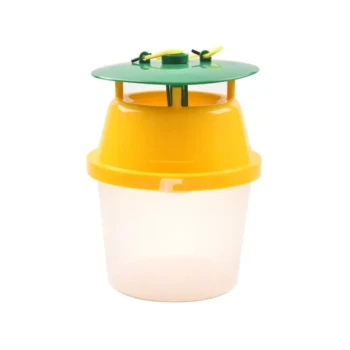
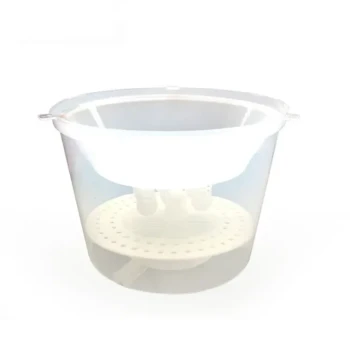
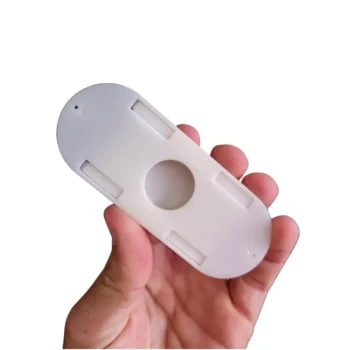
Specialized Dead Bee Traps serve as essential, quantitative instruments for the long-term monitoring of honeybee colonies. Installed directly at hive exits, these devices capture and concentrate bees that have succumbed to natural causes or poisoning, allowing researchers to generate objective mortality baselines that are critical for assessing the risks associated with pesticide exposure.
Core Insight: By converting random field observations into hard data, Dead Bee Traps provide a secured feedback loop. They prevent the loss of physical evidence to nature, enabling precise calculations of daily mortality rates that separate "normal" background loss from acute chemical or biological events.
The Mechanics of Objective Monitoring
Securing the Data Source
To evaluate colony health accurately, you must have access to the physical evidence of mortality.
Specialized traps are designed specifically to prevent birds and other scavengers from removing dead bees from the hive area. Without these traps, a significant portion of the mortality data would literally be eaten, rendering field counts inaccurate.
Establishing a Reliable Baseline
Field research requires a clear understanding of what "normal" looks like to identify anomalies.
By allowing for daily cleaning and counting of collected individuals, these traps help researchers establish a mortality baseline. This objective data set acts as a control, making it possible to mathematically detect spikes in death rates.
Assessing Health and Toxicity
Quantifying Pesticide Risks
The primary application of these traps is to measure the impact of agricultural chemicals.
They are critical tools for assessing both acute and chronic mortality risks associated with pesticide exposure. By collecting the specific individuals that died, researchers can correlate death counts with chemical application timelines or analyze the carcasses for toxic residues.
Physiological Feedback Mechanisms
Beyond simple counts, the collected bees represent a biological feedback mechanism for the colony.
This quantitative collection provides insight into the colony's physiological response to stressors. It helps distinguish between sudden environmental shocks (like poisoning) and ongoing health issues (like pathogen infestations).
Understanding the Trade-offs
Mortality vs. Morbidity
While Dead Bee Traps are excellent for counting losses, they are lagging indicators—they only tell you after the bees have died.
They do not inherently diagnose the cause of death without further laboratory analysis. A pile of dead bees indicates a problem, but it does not immediately differentiate between a pesticide event and a viral outbreak.
The Need for a Holistic System
Relying solely on dead bee counts provides an incomplete picture of colony health.
Comprehensive protection requires complementary professional equipment, such as samplers for detecting Varroa mite infestation rates or microscopic tools for observing viruses like Deformed Wing Virus. Low loss rates are best achieved when traps are used as part of a systematic monitoring approach, not as a standalone solution.
Making the Right Choice for Your Monitoring Goals
To effectively protect your apiary or conduct valid research, you must match the tool to the specific threat you are investigating.
- If your primary focus is Pesticide Risk Assessment: Prioritize the use of Dead Bee Traps to secure daily mortality counts and preserve biological samples for toxicology screening.
- If your primary focus is Epidemic Prevention: Combine the use of traps with microscopic tools and mite samplers to detect sub-lethal infestations before they result in mass mortality.
Systematic monitoring using the right hardware is the single most effective method for transforming reactive beekeeping into proactive colony protection.
Summary Table:
| Feature | Function in Health Monitoring | Benefit to Researchers/Beekeepers |
|---|---|---|
| Scavenger Prevention | Secures carcasses from birds/insects | Ensures accurate, non-biased mortality counts |
| Baseline Generation | Establishes daily "normal" death rates | Enables mathematical detection of acute toxicity events |
| Toxicology Sampling | Collects bees for residue analysis | Identifies specific chemical causes of colony decline |
| Stress Indicators | Distinguishes acute vs. chronic loss | Provides biological feedback on colony stressors |
Secure Your Apiary’s Future with HONESTBEE
Accurate data is the foundation of healthy, productive colonies. At HONESTBEE, we empower commercial apiaries and distributors with the professional tools needed to transform reactive hive management into proactive protection.
Our comprehensive wholesale portfolio includes everything from specialized dead bee traps and Varroa mite samplers to high-efficiency honey-filling machines and specialized hardware. Whether you are looking to equip a large-scale research project or supply your distribution network with the industry's most reliable consumables, we provide the expertise and hardware to ensure your success.
Ready to elevate your beekeeping operations?
Contact us today to discuss your wholesale needs
References
- Pilling Edward, Ingo Tornier. A Four-Year Field Program Investigating Long-Term Effects of Repeated Exposure of Honey Bee Colonies to Flowering Crops Treated with Thiamethoxam. DOI: 10.1371/journal.pone.0077193
This article is also based on technical information from HonestBee Knowledge Base .
Related Products
- 30 cm Plastic Entrance Hole Bee Pollen Trap and Collector
- Plastic Beetle Blaster Trap Beekeeping Tools and Supplies
- Black Plastic Beetle Barn Hive Beetle Trap for Beehives
- Reusable Clear Small Hive Beetle Traps for Beehives Beetle Trapping Tools
- Plastic Bee Pollen Trap Strips Comb Catcher Collector
People Also Ask
- What are the design principles and advantages of pollen traps in the collection of bee pollen? Boost Your Apiary Yield
- Why is frequent harvesting of bee pollen from traps necessary for quality control? Ensure Freshness and Prevent Mold.
- How often should bee pollen be harvested from a trap and why? Master Freshness and Prevent Spoilage
- What function do pollen traps serve in quantitative collection? Boost Your Apiary's Data & Production Efficiency
- What is the primary function of bee pollen traps? Optimize Your Pollen Harvest with Advanced Extraction Efficiency