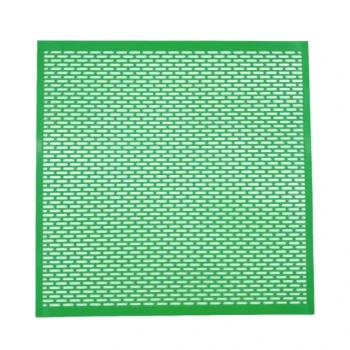
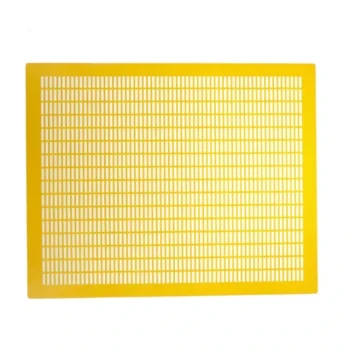
A Queen Excluder acts as a precise mechanical filter within the hive architecture, fundamental to separating reproductive activities from food storage. It functions by placing a grid with specifically sized apertures between the brood chamber and the honey supers; these gaps are large enough for worker bees to traverse with nectar but too narrow for the larger queen bee to pass through.
By strictly confining the queen to the lower brood chamber, the Queen Excluder ensures that the upper honey supers remain a sterile environment dedicated solely to honey storage, preventing biological contamination from the brood cycle.
Ensuring Biological Purity
To maintain high standards of hygiene and quality, the physical separation of colony functions is essential.
Preventing Brood Contamination
The primary role of the excluder is to act as a barrier against the queen's egg-laying expansion. Without this device during the nectar flow, the queen may move upward into the honey supers to lay eggs.
This results in larvae and pupae developing inside the honeycombs. The presence of brood in the harvesting frames introduces biological impurities that compromise the honey's definition as a vegetarian product and degrade its purity.
Creating an Undisturbed Ripening Zone
Beyond simple separation, the excluder facilitates a specialized environment in the upper chambers.
By reserving the honey supers strictly for storage, the device allows worker bees to focus on dehydrating and ripening the honey. This separation ensures the nectar is processed in an area free from the traffic and debris associated with nursing developing larvae.
The Impact of Material Selection
The physical material of the excluder plays a subtle but critical role in chemical purity, particularly in the aggressive micro-climate of a hive.
Resistance to Oxidation
The internal environment of a beehive is characterized by high humidity and the presence of organic acids.
Low-quality metal excluders are susceptible to metal fatigue and rust under these conditions. Corrosion products can leach into the honey, altering its chemical composition and potential flavor profile.
Maintaining Chemical Neutrality
To prevent this, high-quality excluders utilize plasticization or chrome plating.
These treatments provide robust anti-oxidation properties. They ensure the device maintains stable physical characteristics, preventing metal contamination and ensuring the honey remains accurate enough to serve as a bio-indicator for environmental monitoring.
Streamlining Operational Efficiency
The quality of honey is also defined by how cleanly it can be extracted from the comb.
Facilitating Clean Extraction
When honey frames are free of brood, the harvesting process is significantly more efficient.
Beekeepers can remove frames for extraction without the risk of damaging the colony's future generation. This isolation allows for simpler physical clarification processes later, as there are fewer wax debris or larval fragments to filter out.
Enhancing Commercial Grade
The use of an excluder directly supports the "two-chamber system," which is standard for commercial operations.
By guaranteeing that the harvested product is free from brood, the honey achieves higher transparency and purity metrics. This distinction is often the deciding factor in grading evaluations and determining the final market value of the product.
Understanding the Trade-offs
While the benefits to purity are clear, relying on a Queen Excluder requires attention to detail.
Reliance on Precision Sizing
The effectiveness of the system rests entirely on the accuracy of the grid apertures. If the gaps are marginally too wide, the queen will breach the containment; if too narrow, the flow of worker bees (and thus nectar) to the supers will be throttled.
Management Rigidity
Implementing an excluder commits the apiary to a strict two-chamber management style. It requires vigilance during inspections to ensure the queen is not accidentally trapped above the excluder, which would reverse the intended effect and ruin the honey crop with brood.
Making the Right Choice for Your Goal
To maximize the quality of your production, align your equipment choices with your specific objectives:
- If your primary focus is Commercial Grade Purity: Prioritize excluders with chrome plating or plasticization to eliminate the risk of rust contamination in the final product.
- If your primary focus is Processing Efficiency: Utilize excluders to enforce a strict separation of brood and food, ensuring that filtration and settling stages require less intervention.
Ultimately, the Queen Excluder is not just a barrier, but a quality control tool that transforms a hive from a simple colony into a structured production facility.
Summary Table:
| Feature | Role in Quality Control | Impact on Honey Production |
|---|---|---|
| Biological Barrier | Prevents queen from laying eggs in supers | Guarantees brood-free, vegetarian-standard honey |
| Material Coating | Chrome plating or plasticization | Prevents rust, oxidation, and metal contamination |
| Zonal Separation | Creates a dedicated nectar ripening zone | Enhances honey clarity and lowers debris levels |
| Operational Flow | Supports the two-chamber system | Increases extraction efficiency and market grading |
Elevate Your Apiary's Standards with HONESTBEE
Maintaining commercial-grade honey purity requires precision-engineered equipment. At HONESTBEE, we specialize in supporting commercial apiaries and distributors with a comprehensive range of high-quality beekeeping tools. From chrome-plated queen excluders that prevent chemical contamination to advanced honey-filling machines and specialized hardware, our portfolio is designed to maximize your operational efficiency.
Partner with HONESTBEE to secure the best in wholesale beekeeping machinery and consumables.
Contact our expert team today to discuss your bulk equipment needs!
References
- SJ Bhusal, RB Thapa. Response of Colony Strength to Honey Production: Regression and Correlation Analysis. DOI: 10.3126/jiaas.v27i0.706
This article is also based on technical information from HonestBee Knowledge Base .
Related Products
- High Performance Plastic Queen Excluder for Beekeeping and Apiary Management
- Professional Plastic Queen Excluder for Modern Beekeeping
- Lightweight Durable Plastic Queen Excluder Scraper for Beekeeping
- Metal Queen Bee Excluder for Beekeeping
- Premium Wood Framed Metal Wire Queen Bee Excluder
People Also Ask
- What are the characteristics of a plastic queen excluder? Key Benefits for Cost-Effective Beekeeping
- What are the operational and cost advantages of using plastic queen excluders over metal or wire excluders in commercial hive management? Discover how they reduce labor, prevent wing damage, and lower total costs.
- What types of queen excluders are available for beekeepers? Choose the Right Tool for Your Hive
- Why are standardized hive frames and queen excluders essential for maintaining honey purity and quality? Scale Your Purity
- Do plastic queen excluders work? A Cost-Effective Solution for Modern Apiaries