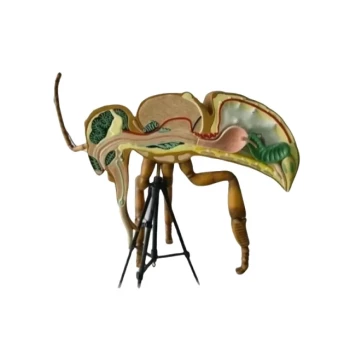
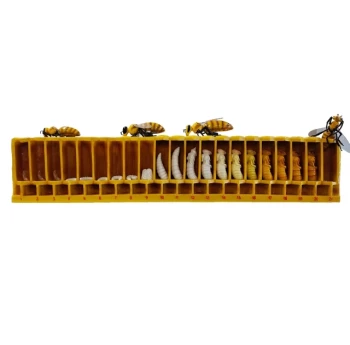
A reference collection serves as the definitive physical standard for scientific accuracy. It provides a verified library of bee specimens and pollen slides that researchers use to cross-reference against new samples. This direct comparison is the primary mechanism for confirming taxonomic identity and ensuring that ecological data is based on biological fact rather than estimation.
By establishing a verifiable baseline, reference collections transform subjective observation into objective data. They are the safeguard that ensures long-term ecological studies maintain consistency and scientific integrity.
The Foundation of Taxonomic Identification
Establishing a Physical Baseline
A reference collection acts as a concrete source of truth. It provides a static, physical benchmark against which variable field samples can be measured.
Verifying Adult Specimens
Researchers verify the identity of emerged adult bees by comparing them directly to the reference library. This side-by-side analysis is often necessary to resolve ambiguities found in field observations.
Analyzing Pollen Morphology
Pollen identification relies on examining specific morphological features on glass slides. The reference collection provides verified slides, allowing researchers to accurately match unknown pollen grains to specific plant sources.
Ensuring Scientific Integrity
Detecting Minute Differences
General observation often fails to distinguish between closely related species. Reference collections allow researchers to scrutinize and detect the minute morphological differences that separate valid species.
Consistency in Long-Term Monitoring
Ecological projects often span several years and involve multiple researchers. The collection ensures that identification criteria remain constant over time, preventing data drift.
Validating Research Outcomes
The credibility of ecological research rests on accurate data. These collections provide the proof required to defend taxonomic decisions and support the validity of the study’s conclusions.
Understanding the Constraints
The Maintenance Requirement
A physical baseline requires physical preservation. Unlike digital data, these collections are tangible assets that must be maintained to prevent degradation and ensure they remain useful for comparison.
The Need for Expert Interpretation
Access to a collection does not automate identification. The utility of the reference library still depends on a researcher's ability to accurately perceive and compare morphological features against the baseline.
Maximizing Research Value
To leverage a reference collection effectively in your ecological projects, consider your specific objectives:
- If your primary focus is accurate identification: Use the collection to validate every ambiguous specimen, prioritizing physical comparison over field guides or photographs.
- If your primary focus is long-term data consistency: Establish your reference baseline at the very beginning of the project to ensure all subsequent data is calibrated to the same standard.
Ultimately, a well-curated reference collection is the bridge between raw biological fieldwork and reliable, reproducible scientific conclusions.
Summary Table:
| Key Role | Primary Function | Research Benefit |
|---|---|---|
| Physical Baseline | Provides a verifiable standard for comparison | Transforms observations into objective data |
| Taxonomic ID | Resolves ambiguities in adult specimens | Ensures accurate species-level classification |
| Pollen Analysis | Matches unknown grains to verified slides | Identifies exact floral resources and interactions |
| Data Consistency | Maintains criteria across long-term studies | Prevents data drift between different researchers |
| Validation | Offers proof for scientific conclusions | Increases the credibility of ecological findings |
Elevate Your Apiary Standards with HONESTBEE
Precise identification and scientific integrity are the pillars of professional beekeeping. At HONESTBEE, we support commercial apiaries and distributors by providing the professional-grade tools and machinery necessary to maintain world-class standards.
Whether you are scaling your operations with our honey-filling machines or outfitting your facility with specialized beekeeping equipment and hardware, we offer a comprehensive wholesale portfolio designed for growth and efficiency. From essential industry consumables to unique honey-themed merchandise, we deliver the quality your business deserves.
Ready to scale your commercial beekeeping business? Contact our expert team today to discover how our machinery and wholesale solutions can optimize your production.
References
- David W. Roubik, Rogel Villanueva‐Gutiérrez. Invasive Africanized honey bee impact on native solitary bees: a pollen resource and trap nest analysis. DOI: 10.1111/j.1095-8312.2009.01275.x
This article is also based on technical information from HonestBee Knowledge Base .
Related Products
- Plastic Bee Pollen Trap Strips Comb Catcher Collector
- 30 cm Plastic Entrance Hole Bee Pollen Trap and Collector
- Removable Plastic Pollen Trap With Ventilated Tray for Bees Pollen Collector
- Heavy-Duty Ergonomic Grip Galvanized Pollen Shovel
- High-Performance Langstroth Bee Hives for Global Professional Beekeeping
People Also Ask
- For what reasons do beekeepers collect bee pollen? Boost Hive Health and Unlock New Revenue Streams
- What are the design principles and advantages of pollen traps in the collection of bee pollen? Boost Your Apiary Yield
- What are the ideal weather conditions for installing a bee pollen trap? Ensure Colony Safety with Expert Timing
- Why is frequent harvesting of bee pollen from traps necessary for quality control? Ensure Freshness and Prevent Mold.
- What are the primary functions of a standard pollen trap in research? Maximize Data Accuracy in Bee Nutrition Studies