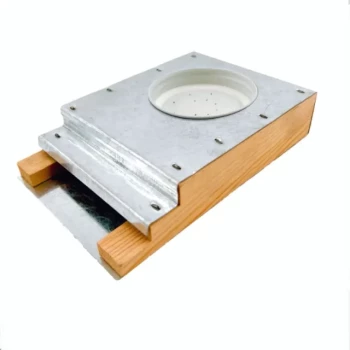
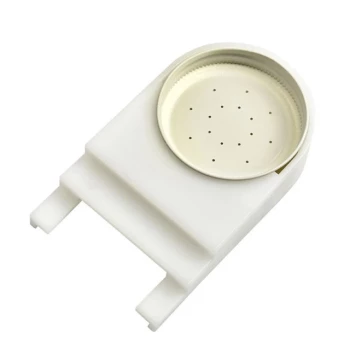
The specialized bee feeder acts as the physiological trigger for high-performance colony output. Its primary role is to provide a continuous, uninterrupted supply of sugar syrup or nutritional supplements, which directly stimulates the nurse bees to activate their hypopharyngeal and mandibular glands. This glandular stimulation is the biological prerequisite for secreting the massive quantities of royal jelly required for successful queen rearing.
By stabilizing the colony’s nutritional intake, the feeder maintains a positive "rearing drive" regardless of external environmental conditions. It ensures that the production of royal jelly—and the subsequent development of larvae—remains consistent, voluminous, and standardized.
The Biological Impact on Production
Stimulating Glandular Activity
The nurse bee is the production engine of the hive, but it requires fuel to operate. The feeder delivers the specific nutritional load necessary to develop the nurse bee's hypopharyngeal and mandibular glands.
Without this consistent artificial input, these glands will not secrete sufficient royal jelly. The feeder converts raw sugar syrup and supplements into the biological capacity to feed larvae.
Ensuring "Rearing Drive"
Bees are naturally conservative; if they sense a resource shortage, they will halt reproduction to save the colony. A specialized feeder creates an artificial environment of abundance.
This continuous food source tricks the colony into maintaining a high "rearing drive." It signals to the bees that it is safe to invest energy into rearing queens and feeding larvae rather than hoarding resources for survival.
Buffering Against Scarcity
Natural nectar and pollen flows are unpredictable and often weather-dependent. A specialized feeder acts as an insurance policy against these fluctuations.
It guarantees that larval development continues uninterrupted even when natural resources are scarce. This allows for strict adherence to production schedules, which is critical for commercial queen rearing or standardized royal jelly harvesting.
Standardization and Consistency
Stabilizing Larval Development
Quality control in queen rearing relies on uniform growth rates. By providing a steady diet via the feeder, you ensure that every larva receives the same nutritional support.
This consistency prevents "runts" or under-developed queens. It ensures that the biological foundation of the colony remains strong, leading to better acceptance rates during grafting and healthier resulting queens.
Supporting Mass Production
For operations focused on harvesting royal jelly, volume is the key metric. The feeder supports the use of high-capacity grafting frames by ensuring there is enough food to fill dozens of queen cups simultaneously.
If the nurse bees are undernourished, they cannot fill the artificial queen cups effectively. The feeder bridges the gap between the colony's natural capabilities and the artificial demand of mass production tools.
Understanding the Trade-offs
Dependence on Supplement Quality
While feeders stimulate quantity, the quality of the royal jelly is heavily influenced by what you put in the feeder. Relying solely on sugar syrup without proper nutritional supplements can result in volume without vital micronutrients.
Management Intensity
Using specialized feeders requires rigorous management protocols to prevent spoilage or fermentation of the syrup. Poorly maintained feeders can introduce bacteria to the hive, counteracting the benefits of the supplemental feeding.
Making the Right Choice for Your Goal
- If your primary focus is Royal Jelly Harvesting: The feeder is your volume knob; ensure it is constantly replenished to maximize glandular secretion and cup filling.
- If your primary focus is Queen Breeding: Use the feeder to ensure biological consistency, guaranteeing that every virgin queen has the nutritional reserves for optimal development.
The specialized bee feeder is not just a food container; it is a control mechanism that allows you to decouple your production success from the unpredictability of nature.
Summary Table:
| Key Role | Biological/Operational Impact | Benefit to Beekeepers |
|---|---|---|
| Glandular Stimulation | Activates hypopharyngeal and mandibular glands | Maximizes royal jelly secretion capacity |
| Rearing Drive | Creates an artificial environment of abundance | Prevents resource hoarding; sustains production |
| Weather Buffering | Offsets unpredictable natural nectar flows | Ensures strict adherence to production schedules |
| Standardization | Provides uniform nutritional support | Prevents under-developed queens and 'runts' |
| Mass Production | Supports high-capacity grafting frames | Facilitates simultaneous filling of dozens of queen cups |
Maximize Your Colony's Potential with HONESTBEE
Elevate your commercial apiary's efficiency with precision-engineered equipment from HONESTBEE. As a leading global supplier for distributors and commercial beekeepers, we understand that high-performance queen rearing and royal jelly production require more than just bees—they require the right tools.
Our comprehensive wholesale range includes everything from specialized bee feeders and hive-making machinery to advanced honey-filling systems and premium industry consumables. Whether you are scaling up production or seeking standardized hardware, HONESTBEE delivers the quality and reliability you need to thrive in the competitive beekeeping market.
Ready to optimize your production and drive superior yields?
Contact Us Today to Discuss Wholesale Solutions
References
- V.N. Albarracín, Ricardo de Oliveira Orsi. Acceptance percentage of larvae from different genetic groups of Apis mellifera in the queen production.. DOI: 10.1111/j.1550-7408.1963.tb01652.x
This article is also based on technical information from HonestBee Knowledge Base .
Related Products
- HONESTBEE Professional Entrance Bee Feeder Hive Nutrition Solution
- HONESTBEE Entrance Bee Feeder Professional Hive Nutrition Solution for Beekeeping
- Professional Hive Top Bee Feeder for Beekeeping
- HONESTBEE Professional Hive Top Bee Feeder Feeding Solution
- Professional Hive Front Entrance Bee Feeder
People Also Ask
- What types of bee feeders are available for beginners? Start with the Simple Entrance Feeder
- What are the advantages and disadvantages of using an entrance feeder for bees? Balance Convenience and Hive Security.
- How does a bee entrance feeder work? A Simple Guide to Convenient Hive Feeding
- What is a bee entrance feeder and what are its drawbacks? Essential Guide to Hive Security and Feeding Efficiency
- How to make an entrance feeder for bees? A DIY Guide for Safe & Effective Feeding