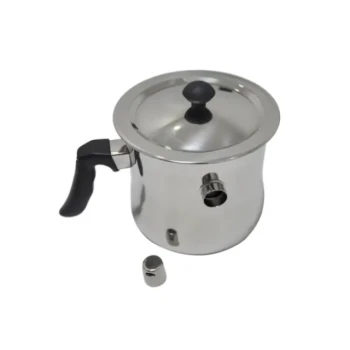
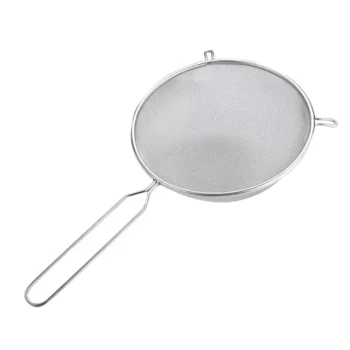
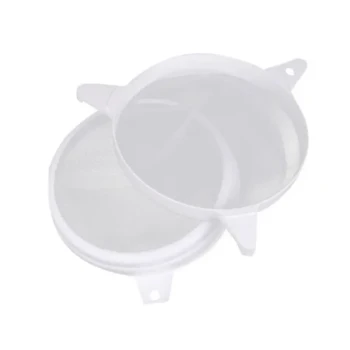
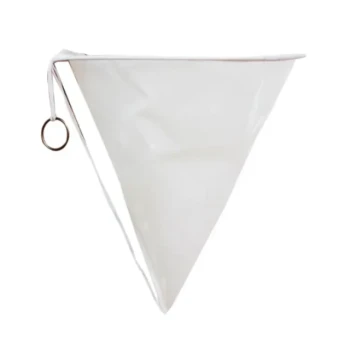
A specialized Beeswax Filter serves as the critical gatekeeper in the refinement process, tasked with mechanically intercepting fine residues and suspended impurities within liquefied wax. By executing high-precision filtration immediately after melting, this component ensures the final product achieves the purity and color consistency required for high-grade commercial applications.
The Core Transformation Melting alone is not enough; raw wax is full of organic debris that degrades quality. The specialized filter bridges the gap between low-value crude wax and high-premium industrial raw materials by stabilizing the wax's physical properties and visual appearance.
The Mechanics of Purification
Interception of Impurities
The primary function of the filter is to act as a barrier against contaminants suspended in the liquid wax.
Once the wax is melted, the filter mechanically traps solid particles that would otherwise mar the final product. This includes organic waste such as cocoon shells, bee debris, and larval remains.
Refinement of Physical Properties
Beyond simple debris removal, the filter plays a massive role in standardizing the wax.
High-precision filtration significantly improves color consistency, ensuring the wax looks uniform rather than patchy or dirty. It also stabilizes the wax's physical and chemical properties, making it reliable for manufacturing use.
Multi-Stage Processing
In professional setups, this is often part of a multi-stage system.
Primary filters (like burlap or coarse mesh) may handle large debris, while specialized fine filters (like fine-pore gauze or dense cotton) capture microscopic residues. This ensures that even dust and fine wood chips are removed from the liquid matrix.
Commercial and Industrial Impact
Unlocking Higher Value
The difference between crude and filtered wax is largely financial.
Beeswax that has undergone high-specification filtration commands higher market premiums in international trade. It transforms what is essentially waste comb into a valuable commodity.
Enabling Specialized Applications
Filtered wax is not just cleaner; it is safer for sensitive applications.
By removing honey residues and organic impurities, the wax becomes suitable for cosmetics, pharmaceutical coatings, and high-quality candles. Without this level of filtration, the wax would be unfit for these industries due to potential spoilage or inconsistent burning.
Understanding the Trade-offs
Flow Rate vs. Purity
There is an inherent tension between the speed of processing and the quality of the output.
Denser filtration media (like dense cotton) capture finer particles for higher purity but can significantly slow down the flow of liquid wax. Coarser media (like burlap) allow faster processing but may leave behind sediment that affects the wax's grade.
Thermal Management Risks
The filter relies entirely on the wax remaining in a liquid state.
If the temperature drops during the filtration process, the wax will solidify within the filter media, causing clogs and halting production. Specialized equipment often integrates heating to maintain flow through the filter.
Making the Right Choice for Your Goal
If your primary focus is Industrial Manufacturing:
- Prioritize multi-stage filtration systems that ensure stable physical properties for applications like candle making or cosmetics.
If your primary focus is Laboratory Analysis:
- Utilize fine-pore or dense cotton filtration to eliminate matrix interference and ensure the sample is chemically pure.
If your primary focus is Profitability:
- Invest in high-precision filtration to achieve the color and purity standards required for international market premiums.
Effective filtration is the definitive step that turns a raw beekeeping byproduct into a versatile, high-value industrial resource.
Summary Table:
| Feature | Function in Purification | Impact on Quality |
|---|---|---|
| Debris Interception | Traps cocoon shells, bee remains, and larval waste | Ensures physical cleanliness and safety |
| Property Refinement | Improves color consistency and chemical stability | Standardizes wax for industrial use |
| Multi-Stage Filtering | Moves from coarse mesh to fine-pore media | Achieves high-precision industrial grades |
| Thermal Management | Prevents wax solidification during filtration | Maintains steady flow and process efficiency |
Elevate Your Wax Production with HONESTBEE
Transform your raw comb into premium, high-value industrial materials with professional-grade filtration and processing solutions from HONESTBEE. As a leading supplier for commercial apiaries and distributors, we provide the complete spectrum of beekeeping tools, from high-precision beeswax filters to advanced honey-filling and hive-making machinery.
Our comprehensive wholesale offering ensures your operation has the essential industry consumables and specialized hardware needed to meet international purity standards. Whether you are targeting the cosmetics, pharmaceutical, or high-end candle markets, we provide the expertise and equipment to maximize your profitability.
Ready to scale your commercial apiary?
Contact us today to explore our full machinery and tool portfolio!
References
- Sahin Aydin, Serhat Solmaz. An Ontology for Apiculture Practices (Onto4API): Towards Semantic Interoperability and Knowledge Sharing in the Apiculture Community. DOI: 10.18615/anadolu.1749470
This article is also based on technical information from HonestBee Knowledge Base .
Related Products
- Stainless Steel Triangle Support Honey Strainer and Filters
- Professional Stainless Steel Honey Filtering Machine with Water Bath Heating for Beekeeping
- Stainless Steel Double Layer Honey Strainer Sieve Filters
- Beeswax Melter for Candle Making Honey Bee Wax Melter
- Electric Double Wall Honey Filtering Machine Purifier Equipment for Honey Processing Plant
People Also Ask
- Why is stainless steel preferred for honey strainers? Ensure Purity and Durability for Your Honey
- What can I use to strain honey? A Beekeeper's Guide to Choosing the Right Filter
- What is the easiest way to strain honey? A Simple Guide for Hobbyist Beekeepers
- What is the primary function of a honey strainer in beekeeping? Achieve Commercial Purity & Visual Clarity
- Why is straining an essential step in honey processing? Master the Key to Pure, Market-Ready Honey Harvests