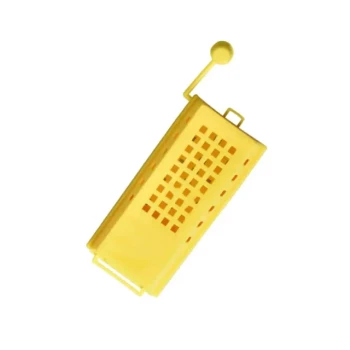
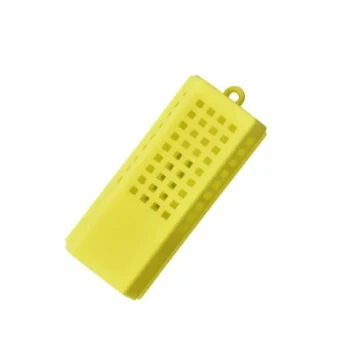
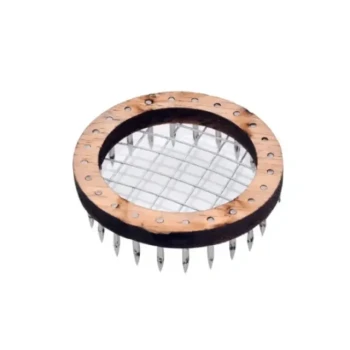
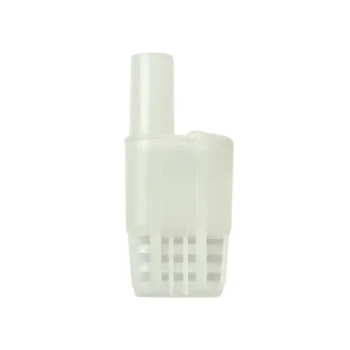
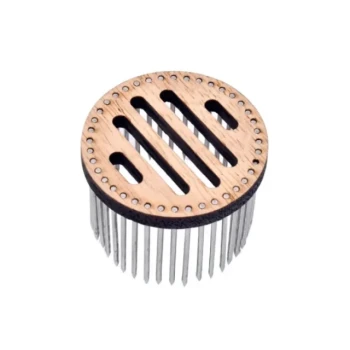
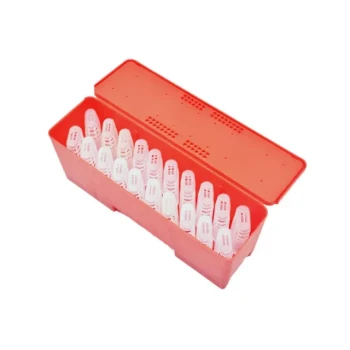
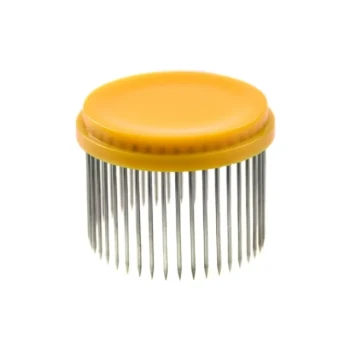
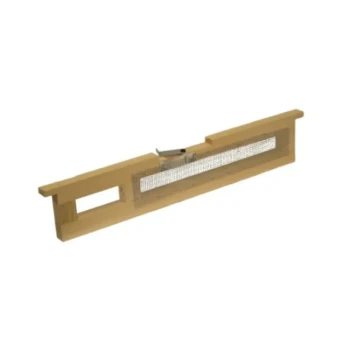
The primary role of a specialized queen bee confinement cage during the irradiation process is to serve as a fixed sample container that ensures the queen remains in a static position. By securing the queen, the cage guarantees she receives a uniform radiation dose, while simultaneously utilizing built-in honey troughs to provide nutritional support and maintain her physiological stability.
By fixing the queen's position and providing constant nutrition, this tool isolates the radiation as the sole experimental variable, eliminating "noise" caused by movement, starvation, or handling trauma.
Achieving Dosimetric Accuracy
The Necessity of a Fixed Position
To achieve scientifically valid results, the radiation dose must be consistent. The confinement cage secures the queen in a precise location.
This prevents movement that could lead to fluctuating exposure levels. Without this fixation, the queen could move into areas of varying radiation intensity, compromising the data.
Standardization of the Sample Container
The cage acts as a standardized vessel for the biological sample. By using a specialized confinement tool, you ensure that every subject is presented to the radiation source in the exact same geometry.
This uniformity allows for the replication of results across different trials and ensures that the dosage calculations remain accurate for every queen processed.
Maintaining Physiological Stability
Preventing Nutritional Stress
A critical feature of these specialized cages is the inclusion of built-in honey storage troughs.
Irradiation processes can be time-consuming, and a queen without food will quickly enter a state of metabolic stress or starvation. The troughs provide immediate access to energy, ensuring the queen remains biologically stable throughout the procedure.
Eliminating External Interference
The cage acts as a physical barrier against mechanical damage.
Direct handling of queens can result in accidental crushing or injury, which might be mistaken for radiation side effects later. By containing the queen, the cage eliminates physical trauma as an external interference factor.
Understanding Operational Constraints
Short-Term Viability Only
While effective for the duration of the irradiation process, these cages are designed for temporary confinement.
They provide energy via honey but lack the complex social and nutritional environment of a full colony. Prolonged storage in this specific type of confinement cage can lead to isolation stress.
The Limitation of Static Feeding
The built-in troughs prevent starvation, but they do not replace the care of nurse bees.
In a natural setting, workers feed the queen royal jelly. The honey provided in the cage serves only as a stop-gap caloric measure to ensure survival during the technical process.
Making the Right Choice for Your Goal
To maximize the effectiveness of your irradiation protocols, consider the following priorities:
- If your primary focus is Data Accuracy: Prioritize cages with rigid fixation mechanisms to ensure the queen cannot change orientation relative to the radiation source.
- If your primary focus is Subject Survival: Verify that the built-in honey troughs are fully accessible and filled prior to the process to prevent metabolic crash.
Success in queen bee irradiation is defined by how effectively you can control the environment to ensure the only variable affecting the queen is the radiation itself.
Summary Table:
| Feature | Role in Irradiation Process | Impact on Results |
|---|---|---|
| Fixed Position | Prevents movement relative to radiation source | Ensures uniform dosage and data accuracy |
| Honey Troughs | Provides immediate caloric support | Prevents metabolic stress and starvation |
| Standardized Vessel | Maintains consistent sample geometry | Allows for replication and standardized trials |
| Physical Barrier | Protects queen from mechanical handling | Eliminates physical trauma as a variable |
Scale Your Apiary Operations with HONESTBEE Professional Equipment
Precision is the backbone of successful beekeeping at scale. At HONESTBEE, we understand the technical demands of commercial apiaries and distributors. Whether you require specialized hardware like honey-filling machines, hive-making machinery, or high-quality beekeeping tools and consumables, we provide the comprehensive wholesale solutions you need to thrive.
Our portfolio is designed to enhance your efficiency, from laboratory-grade queen management tools to honey-themed cultural merchandise. Let us help you eliminate variables and maximize productivity in your business.
Ready to upgrade your equipment? Contact us today for a wholesale consultation!
References
- G. Sawires, Sawsan Abdelmegeed. Morphological Changes and Colony Activity in Honeybee Workers Apis mellifera Produced from Irradiated Queens.. DOI: 10.21608/eajbsa.2016.12841
This article is also based on technical information from HonestBee Knowledge Base .
Related Products
- Professional Bamboo Queen Isolation Cage
- Durable Galvanized Steel Spring Queen Bee Cage
- Professional Queen Cage with Sliding Gate and Feeder Plug
- Professional Multi-Functional Queen Bee Cage
- Professional Queen Bee Introduction and Transport Cage
People Also Ask
- Why are specialized queen bee cages used for the banking of mated queen bees? Maximize Commercial Apiary Storage Efficiency
- What is the mechanism of action for using temporary queen bee cages? Master Successful Queen Introduction
- How does the side ventilation design of a queen bee cage impact the safety of the queen during long-distance transport?
- What should you do if the queen is still in the cage and the worker bees have not accepted her? Protect Your Colony from Queen Rejection
- What technical precaution must be taken regarding the mesh or grill side of a queen bee cage? Ensure Queen Survival