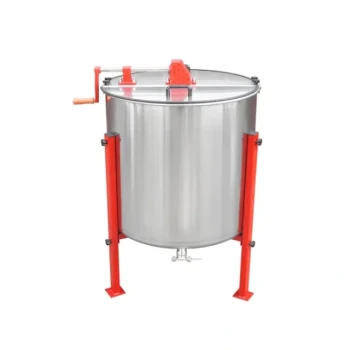
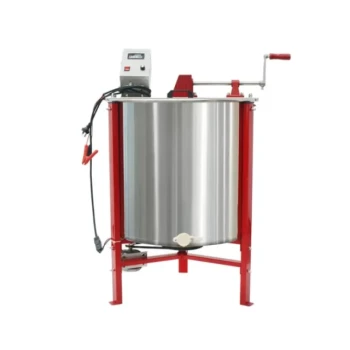
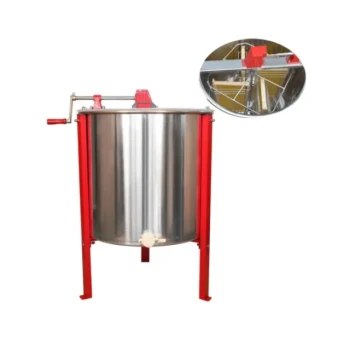
Food-grade stainless steel acts as a chemically inert barrier that safeguards organic honey against contamination and degradation during processing. Its primary function is to prevent oxidation and the absorption of heavy metal impurities, ensuring the honey retains its natural biochemical profile while satisfying the mandatory material standards required for organic certification.
By preventing metal ion migration and chemical reactions, food-grade stainless steel machinery serves as the foundational requirement for organic integrity. It ensures that the transition from raw honeycomb to retail jar occurs without altering the product's natural enzymes or introducing toxic compounds.
Preserving Chemical and Biological Integrity
Preventing Chemical Contamination
The high acidity of honey can cause standard metals to corrode or leach over time. Food-grade stainless steel offers superior chemical stability and corrosion resistance, specifically designed to withstand this environment.
Using this material eliminates the risk of metal ion migration, where microscopic metal particles dissolve into the product. This ensures the honey remains free of heavy metal impurities that would compromise safety and flavor.
Retaining Natural Properties
Organic honey is valued for its specific biochemical properties, including active enzymes and distinct flavor profiles. Stainless steel ensures that the physical processing stages do not trigger chemical changes that could degrade these qualities.
By providing a non-reactive surface, the machinery protects the honey against oxidation. This preservation is critical for maintaining the product's nutritional value and ensuring it meets the expectations of the organic market.
Enabling Hygiene and Standardization
Eliminating Secondary Contamination
Modern stainless steel machinery, particularly automated filling systems, enables enclosed processing operations. This sealed environment protects the honey from external pollutants, dust, and biological contaminants during the critical bottling phase.
High-precision filling machinery further reduces human contact with the product. By automating the dosing and packaging process, you significantly lower the risk of introducing bacteria or foreign particles.
Consistent Filtration and Clarification
Standardized filtration systems made from stainless steel allow for the removal of physical impurities without stripping the honey of its essential pollen or nutrients.
These systems clarify the honey to improve shelf life and visual appeal. Because the machinery is food-grade, this clarification process occurs without the risk of chemical leaching that often accompanies lower-grade filtration materials.
Understanding the Regulatory Landscape
Mandatory Organic Compliance
The use of food-grade stainless steel is not merely a "best practice"; it is often a mandatory requirement for organic production standards. Regulatory bodies utilize material compliance as a baseline for certification.
Equipment that fails to meet these standards can lead to immediate disqualification of the organic label. This applies to every piece of equipment that touches the honey, from the extraction centrifuges to the storage tanks.
Accessing Premium Markets
High-value medicinal honeys and exports to regions like the European Union require rigorous documentation of production hygiene. Using certified stainless steel machinery provides the credibility and traceability needed to pass international audits.
Common Pitfalls to Avoid
Neglecting Component Consistency
A common error is ensuring the main tank is stainless steel while neglecting connecting pipes, valves, or centrifuge frames. Every surface that comes into contact with the honey must be food-grade to prevent contamination points.
Confusing Industrial with Food-Grade
Not all stainless steel is created equal. Using general industrial-grade steel instead of specific food-grade alloys can still result in corrosion or reaction with the honey's acids over time, invalidating your organic status.
Making the Right Choice for Your Goal
When selecting machinery for your organic honey operation, focus on your specific end-market requirements:
- If your primary focus is obtaining organic certification: Prioritize equipment with documented material compliance to prevent metal ion migration and satisfy regulatory audits.
- If your primary focus is entering high-end export markets: Invest in automated, enclosed stainless steel filling systems to guarantee standardized hygiene and prevent secondary contamination.
The correct machinery does more than extract honey; it acts as an insurance policy for your product's purity and your brand's reputation.
Summary Table:
| Feature | Role in Organic Processing | Key Benefit |
|---|---|---|
| Chemical Inertness | Prevents metal ion migration and leaching | Maintains honey's natural biochemical profile |
| Corrosion Resistance | Withstands honey's natural acidity | Eliminates heavy metal contamination risk |
| Enclosed Design | Seals product from external pollutants | Prevents secondary bacterial contamination |
| Material Certification | Meets mandatory organic standards | Guarantees compliance for premium export markets |
| Automated Filling | Reduces human contact and manual handling | Ensures consistent hygiene and standardized dosing |
Secure Your Organic Integrity with HONESTBEE Solutions
As a commercial apiary or distributor, your reputation depends on the purity of your product. HONESTBEE specializes in professional-grade beekeeping tools and machinery designed specifically for high-volume production.
We provide a comprehensive wholesale range, including:
- Food-Grade Stainless Steel Machinery: From extraction centrifuges to honey-filling machines that ensure organic compliance.
- Commercial Equipment: Specialized hive-making hardware and essential industry consumables.
- Retail-Ready Merchandise: Honey-themed cultural products to expand your brand portfolio.
Don't let inferior materials compromise your organic certification. Partner with HONESTBEE to access the precision engineering and high-grade consumables your business deserves.
Contact our wholesale experts today to optimize your production line!
References
- Fatih Araz, İbrahim Hakkı Kadirhanoğulları. Iğdır Yöresinde Organik Arıcılık ve Bal Üretimi Anla. DOI: 10.24925/turjaf.v10i5.886-892.5153
This article is also based on technical information from HonestBee Knowledge Base .
Related Products
- 10L Stainless Steel Electric Honey Press Machine
- Heavy Duty Stainless Steel Honey Processing Machine Decrystallizing Tank
- Stainless Steel Manual 8 Frame Radial Honey Extractor Machine for Beehives
- Commercial 48-Frame Stainless Steel Honey Extractor
- Professional Stainless Steel Honey Filtering Machine with Water Bath Heating for Beekeeping
People Also Ask
- What are the key features and benefits of a stainless steel honey extractor? Upgrade to Professional Purity
- What is a stainless steel honey extractor? Boost Your Apiary's Efficiency with Professional Extraction
- What are the key features of a stainless steel honey extractor? Ensure Purity & Longevity for Your Honey
- How do specialized organic beekeeping tools impact production efficiency? Maximize honey yields and ensure compliance.
- What are the advantages of selecting a stainless steel honey extractor over a plastic one? Pro Beekeeping Guide