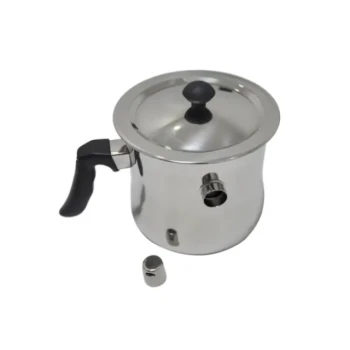
Specialized refrigeration equipment or liquid nitrogen serves as the primary mechanism for standardizing larval mortality in the Freeze-Killed Brood (FKB) assay. By rapidly lowering the temperature within a confined circular area, this method creates a controlled zone of dead, capped larvae, providing a uniform stimulus to measure the colony's hygienic response speed without mechanically damaging the brood cells.
The Core Insight The true value of using liquid nitrogen lies in its ability to simulate natural larval death without rupturing the larval skin. This ensures that worker bees are triggered by the scent of the dead brood itself rather than leaking fluids, offering a far more accurate measurement of a colony’s genetic social immunity and disease resistance.
The Mechanics of the Assay
Establishing a Controlled Kill Zone
In the FKB assay, the "specialized equipment" often takes the form of a cylinder, such as a PVC pipe or an industrial-grade metal tube. This device is pressed into the honeycomb to isolate a specific circular patch of capped brood.
Containment of the Cryogenic Agent
The cylinder serves a dual purpose: it defines the test area and physically constrains the liquid nitrogen. This prevents the cryogenic liquid from evaporating across the comb or spreading to surrounding cells, ensuring that only the targeted larvae are euthanized while the rest of the hive structure remains effectively undamaged.
Delivering a Uniform Stimulus
Liquid nitrogen is poured into the cylinder to induce rapid, deep freezing. This guarantees that every larva within the ring is killed instantly and simultaneously, creating a standardized "starting line" for the experiment that manual methods cannot replicate.
Why Freezing Superior to Mechanical Methods?
Preventing Hemolymph Leakage
A critical advantage of using liquid nitrogen over mechanical methods (like pin-killing) is the preservation of the larva's physical integrity. Mechanical puncture causes hemolymph (insect blood) to leak, which provides a strong, artificial olfactory cue that makes it "easy" for bees to identify the damage.
Testing True Olfactory Sensitivity
Because freezing kills the larva without puncturing the capping or the skin, no fluids leak out. The worker bees must detect the death through the subtle chemical signatures of decay or the absence of vital signals.
Selecting for High-Performance Genetics
This method separates superior colonies from average ones. Only colonies with highly sensitive hygienic behaviors will detect and remove the freeze-killed brood quickly, making this the gold standard for breeding programs focused on disease resistance.
Understanding the Trade-offs
Logistical Complexity
While scientifically superior, the FKB method requires access to liquid nitrogen and specialized safety gear for handling cryogenic materials. This makes it more cumbersome and expensive to perform in the field compared to simple pin-test methods.
Potential for Collateral Damage
If the cylinder is not sealed properly against the comb or if the liquid nitrogen is over-applied, thermal damage can bleed into surrounding healthy brood. This introduces variables that can skew the calculation of the Hygienic Behavior (HB) value.
Making the Right Choice for Your Goal
The use of liquid nitrogen is not merely about killing larvae; it is about ensuring the data you collect is genetically significant.
- If your primary focus is breeding for disease resistance: Rely on the liquid nitrogen FKB assay to ensure you are selecting for olfactory sensitivity rather than a response to leaking fluids.
- If your primary focus is standardized data collection: Use the FKB method to eliminate human error associated with the variability of manual puncture force and depth.
- If your primary focus is rapid field screening without equipment: Acknowledge that while pin-killing is easier, it may produce false positives regarding the colony's true hygienic nuance.
Use the FKB assay when you need an uncompromising, noise-free assessment of a colony's natural ability to detect and remove compromised brood.
Summary Table:
| Feature | Freeze-Killed Brood (FKB) | Mechanical Pin-Killing |
|---|---|---|
| Mechanism | Rapid cryogenic freezing via Liquid Nitrogen | Physical puncture with a needle |
| Larval Integrity | Remains intact; no fluid leakage | Skin ruptured; hemolymph leakage |
| Detection Type | Subtle olfactory chemical cues | Strong, artificial fluid cues |
| Genetic Accuracy | High (measures true social immunity) | Moderate (may result in false positives) |
| Complexity | High (requires cryogenic gear) | Low (simple field tools) |
Maximize Your Colony’s Health with HONESTBEE
Precision in testing is the first step toward a thriving apiary. At HONESTBEE, we empower commercial apiaries and distributors by providing the industry’s most comprehensive range of beekeeping tools, specialized machinery, and essential consumables. Whether you are scaling up your operation with our honey-filling machines or seeking specialized hardware for genetic selection programs, we deliver the quality you need to succeed.
Ready to upgrade your beekeeping infrastructure? Contact us today to explore our wholesale offerings and see how our expertise can streamline your production and enhance your breeding outcomes.
References
- М. Д. Каскинова, А. Г. Николенко. Genetic markers for the resistance of honey bee to Varroa destructor. DOI: 10.18699/vj20.683
This article is also based on technical information from HonestBee Knowledge Base .
Related Products
- Solar Beeswax Melter Easy Solar Wax Melter for Beeswax
- Heavy-Duty Ergonomic Grip Galvanized Pollen Shovel
- HONESTBEE AC Powered Wire Embedder with Alligator Clips
- 5 Gallon Pail Opener Bucket Opener Tool for Honey Bucket
- Professional Plastic Honey Dipper for Easy Honey Drizzling
People Also Ask
- How does a solar melter work to process beeswax? The Eco-Friendly Way to Pure Wax
- What is a solar wax melter and how does it work? Harness the Sun for Pure Beeswax
- What are the benefits of using a solar wax melter? Harness the Sun for Pure, Cost-Effective Beeswax
- What is the purpose of a solar wax melter in beekeeping? Sustainable Wax Processing for Modern Apiaries
- How does a solar-powered frame wax melter work? Harness the Sun for Sustainable Beekeeping