Potassium Hydroxide (KOH) and vortex mixers function as a critical chemical and mechanical team used to isolate pollen grains from honey for laboratory analysis. Specifically, a 10% KOH solution chemically decomposes the sticky honey matrix and cleans the pollen surfaces, while the vortex mixer mechanically ensures the grains are fully suspended and accessible for processing.
Core Takeaway Ideally, pollen identification requires clean, isolated grains free from the obscuring sugars and waxes found in raw honey. The combination of KOH and vortexing serves as the essential pretreatment step in the acetolysis method, chemically stripping away lipids and dissolving sugars to prepare the sample for microscopic examination without damaging the pollen's structure.
The Chemical Role of Potassium Hydroxide (KOH)
Decomposing the Honey Matrix
Raw honey is a dense, viscous substance composed primarily of sugars. To analyze the pollen trapped inside, this sugar matrix must be removed.
A 10% KOH solution is introduced to the sample to chemically break down and dissolve the honey. This reduces the viscosity and eliminates the sugary medium that would otherwise obscure the view under a microscope.
Removing Surface Impurities
Pollen grains in nature are often coated with sticky oils and lipids (fatty substances). These coatings can hide the unique surface textures required for accurate species identification.
The KOH solution acts as a defatting agent, effectively removing lipids and other impurities from the surface of the pollen grains. This "cleaning" process reveals the grain's structural details.
The Mechanical Role of the Vortex Mixer
Ensuring Full Suspension
Simply adding a chemical solution is often insufficient for viscous materials like honey. A vortex mixer creates a rapid, spiraling motion within the test tube.
This mechanical agitation forces the pollen grains into full suspension, preventing them from clumping together or settling at the bottom before the chemical reaction is complete.
Facilitating Chemical Interaction
For the KOH to work effectively, it must contact every part of the sample. The vortex mixer maximizes the surface area of the honey exposed to the KOH solution.
This ensures a uniform reaction, allowing the KOH to thoroughly decompose the matrix and clean the pollen grains efficiently.
Distinguishing Laboratory Analysis from Production
Important Context: Analysis vs. Extraction
It is vital to distinguish between pollen extraction for analysis (where KOH is used) and honey extraction for consumption (where it is not).
Standard honey extraction involves mechanical presses, uncapping, and centrifugation to separate honey from beeswax for food production. These processes rely on physical force and temperature control, never chemical additives like KOH.
The Scope of KOH Usage
The use of Potassium Hydroxide is strictly a laboratory procedure known as acetolysis.
This method renders the honey unfit for consumption; its sole purpose is to prepare a clean slide for scientific research or quality control to determine the floral source of the honey.
Making the Right Choice for Your Goal
When setting up your workflow, clarify whether your objective is food production or scientific analysis.
- If your primary focus is Laboratory Pollen Analysis: Ensure you use a 10% KOH solution combined with vigorous vortexing to fully dissolve sugars and strip lipids before microscopic review.
- If your primary focus is Commercial Honey Production: Rely strictly on mechanical extraction methods like centrifuges and filters, and never introduce chemical agents like KOH into the food supply.
Success in palynology depends on balancing chemical strength with mechanical agitation to reveal the hidden identity of the pollen grain.
Summary Table:
| Component | Primary Role | Function in Process |
|---|---|---|
| 10% KOH Solution | Chemical Agent | Dissolves sugars, removes lipids/fats from pollen surfaces. |
| Vortex Mixer | Mechanical Agitator | Ensures full suspension and maximizes chemical contact. |
| Combined Effect | Pretreatment | Prepares clean, isolated pollen grains for acetolysis and microscopy. |
| Application | Lab Analysis Only | Used for floral source identification, not for food production. |
Elevate Your Beekeeping Operation with HONESTBEE
Whether you are conducting precise laboratory analysis or scaling up your commercial honey production, HONESTBEE provides the professional-grade tools you need to succeed. We specialize in catering to commercial apiaries and global distributors, offering a comprehensive wholesale range of:
- Advanced Machinery: From high-efficiency honey-filling machines to durable hive-making equipment.
- Beekeeping Essentials: A full spectrum of professional tools, machinery, and industry consumables.
- Cultural Merchandise: Unique honey-themed products to diversify your brand.
Ready to enhance your efficiency and product quality? Contact HONESTBEE today to discuss our wholesale offerings and discover how our industry expertise can grow your business.
References
- Marco A. Prado, Juliana Hernández. Effect of climate seasonality and vegetation cover on floral resource selection by two stingless bee species. DOI: 10.1007/s13592-021-00881-7
This article is also based on technical information from HonestBee Knowledge Base .
Related Products
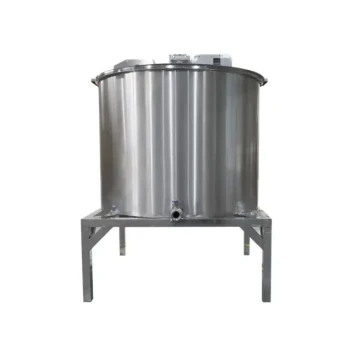
- Double Wall Honey Heating Stirring Homogenizer Mixing Machine with Various Capacity
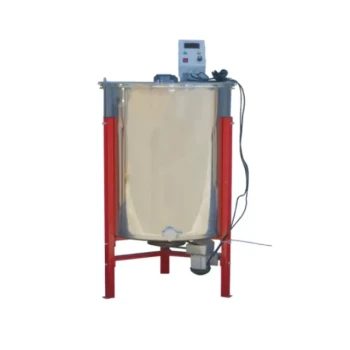
- Electric 4 Frame Tangential Honey Extractor
- electric honey extractor honey centrifuge 3 frame honey extractor stainless steel honey frame extractor
- Professional 4 Frame Self Reversing Electric Honey Extractor for Beekeeping
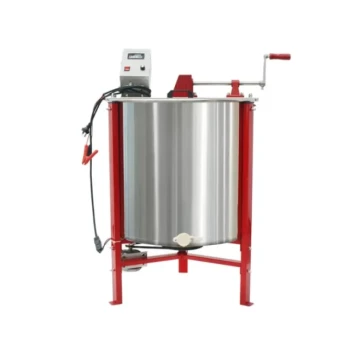
- Manual Hand Crank 4 Frame Honey Extractor Centrifuge for Beekeeping
People Also Ask
- What impact do homogenizers or oscillating equipment have on honey microbial detection? Ensure Testing Accuracy
- Why is thorough mechanical stirring and homogenization emphasized in honey processing? Ensure Sample Accuracy
- How do heating equipment and homogenizers liquefy crystallized honey? Expert Guide to Professional Honey Processing
- How does the honey mixer handle different types of honey? Master Viscosity for Perfect Blends
- What are the main components of the honey mixer? Engineered for Gentle, Efficient Honey Processing