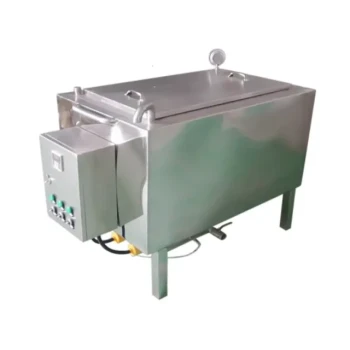
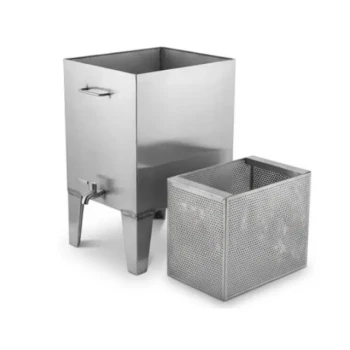
Industrial-grade beeswax processing machines fundamentally alter hive energy dynamics by converting raw wax into standardized comb foundations. This mechanical intervention acts as a biological force multiplier, drastically reducing the metabolic energy bees must expend on wax secretion and redirecting that caloric output toward honey production.
By acting as a bridge between mechanical processing and biological efficiency, these machines enable a circular resource economy within the apiary. They allow beekeepers to transform raw or recycled wax into high-quality templates, minimizing colony fatigue and maximizing production output.
The Link Between Machinery and Biological Energy
Reducing Metabolic Overhead
In a natural setting, bees consume significant amounts of honey and nectar to secrete the wax scales needed for comb construction.
Industrial processing machines bypass this biological bottleneck by refining raw wax into pre-constructed foundations.
By providing these templates, you eliminate the need for bees to build the comb from scratch, significantly lowering the colony's energy expenditure.
Redirecting Energy to Production
The energy conservation provided by machine-made foundations has a direct impact on yield.
When bees are relieved of the intensive task of massive wax secretion, the colony can redirect its finite energy reserves toward foraging and honey collection.
This shift ensures that the hive’s caloric intake is converted into stored honey rather than structural building materials.
Streamlining Apiary Management
Enabling Circular Utilization
Supplementary data indicates that these machines are the cornerstone of a circular utilization strategy within an apiary.
Beekeepers can collect old wax, refine it through the machine, and re-press it into fresh foundation sheets.
This capability drastically reduces the operational costs associated with purchasing new consumables from external suppliers.
Ensuring Structural Standardization
The primary value of industrial-grade processing lies in its ability to produce foundations with stable physical and chemical properties.
Raw wax creates variable results, but refined foundations provide a clean, standardized base for the bees.
This uniformity ensures efficient honeycomb construction, making hive inspections and management more predictable for the beekeeper.
Operational Considerations and Trade-offs
The Requirement for Precision
To achieve these energy savings, the resulting wax products must be of high quality.
If the machine fails to refine the wax into a template with stable properties, the bees may reject the foundation or build poorly.
Success relies on the machine's ability to produce a foundation that mimics the bees' natural requirements while providing the structural rigidity needed for industrial management.
Making the Right Choice for Your Goals
Integrating industrial beeswax processing is a strategic decision that affects both biology and economics.
- If your primary focus is Maximizing Yield: Utilize these machines to provide consistent foundations, ensuring colony energy is spent on honey accumulation rather than comb building.
- If your primary focus is Cost Reduction: Leverage the machine's ability to refine and re-press old wax to create a self-sustaining, circular supply chain that minimizes external purchases.
Ultimately, the use of industrial processing machinery transforms beeswax from a metabolic expense into a renewable operational asset.
Summary Table:
| Impact Area | Mechanical Intervention | Strategic Benefit |
|---|---|---|
| Biological Energy | Pre-constructed foundations | Redirects bee energy from wax secretion to foraging and honey collection. |
| Resource Economy | Raw wax purification & recycling | Creates a circular supply chain, drastically reducing external consumable costs. |
| Management | Structural standardization | Ensures uniform comb construction for predictable and efficient hive inspections. |
Scale Your Production with HONESTBEE
At HONESTBEE, we empower commercial apiaries and distributors by providing the industrial-grade infrastructure needed for a modern, efficient bee business. Our comprehensive wholesale offering includes the full spectrum of beekeeping tools—from beeswax processing and honey-filling machines to hive-making hardware and essential industry consumables.
By integrating our specialized machinery into your operations, you can transform metabolic overhead into high-value honey output and achieve a self-sustaining circular economy.
Ready to enhance your apiary's efficiency? Contact us today to explore our wholesale machinery and equipment solutions!
References
- August Easton‐Calabria, Nola J. Oner. Beyond Pollination: Honey Bees (Apis mellifera) as Zootherapy Keystone Species. DOI: 10.3389/fevo.2018.00161
This article is also based on technical information from HonestBee Knowledge Base .
Related Products
- Electric Commercial Beeswax Melter for Factory Use
- Manual Beeswax Flat Sheet Machine for Beeswax Processing
- Electric Beeswax Flat Sheet Machine with Operating Tray for Wax Processing
- Fully Automatic Beeswax Embossing Machine Foundation Mill
- Electric Flatting and Embossing Machine with Tray for Beekeeping
People Also Ask
- Why might a commercial beekeeper prefer an electric beeswax melter? Maximize Profit with Speed & Scale
- What safety precautions should be taken when melting beeswax? A Guide to Flammable Wax Handling
- What types of beeswax melters are available for different scales of beekeeping? Solar vs. Electric Melters Compared
- What are the three popular methods for melting beeswax? Safely Process Your Wax with Ease
- How do you melt beeswax without making a mess? Master Safe & Clean Techniques