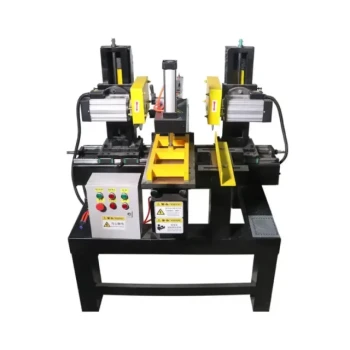
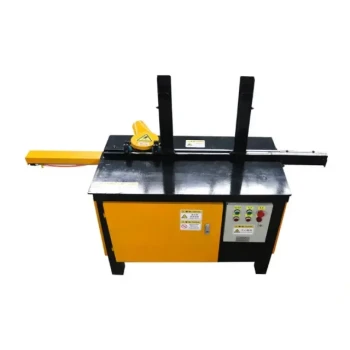
Hive-making machines fundamentally transform apiary construction by shifting production from manual craftsmanship to automated precision processing. By ensuring that all components—including hive bodies, gates, and stands—possess highly uniform dimensions, these machines enable the perfect interchangeability of frames and boxes. This technical consistency drastically reduces the logistical complexity and labor costs typically associated with equipment maintenance and turnover in large-scale operations.
Core Insight: The primary value of hive-making machinery is not just speed, but the creation of a standardized hardware ecosystem. This precision eliminates component mismatching, enabling seamless interchangeability that is essential for the mechanized workflows of modern commercial beekeeping.
The Power of Absolute Standardization
Eliminating Logistical Friction
The most immediate technical advantage is the production of components with highly uniform dimensions. In a manual setup, slight variations prevent frames from fitting different boxes. Machine-produced interchangeability allows beekeepers to move equipment freely between hives, streamlining logistics and reducing the labor required for component management.
Facilitating Mechanized Operations
Standardization serves as the foundation for industrial-scale management. Uniform hive dimensions allow for the integration of mechanized honey extraction systems and automated handling equipment. This compatibility is critical for operations that rely on stacking, palletizing, and industrial transport of colonies across different regions.
Streamlining Maintenance and Turnover
When every part is identical, maintenance becomes a simple replacement task rather than a repair project. This reduces the downtime associated with equipment failure. Furthermore, the ability to mass-produce standardized parts in-house reduces long-term procurement costs and reliance on external suppliers for replacement hardware.
Enhancing Biological Efficiency
Optimizing "Bee Space"
Professional hive-making machines utilize high-precision woodworking technology to maintain exact internal dimensions, specifically the bee space. Maintaining this precise gap is crucial for colony health, as it prevents bees from cementing frames together with propolis or building unplanned comb (burr comb), thereby increasing honey production efficiency.
Species-Specific Environmental Control
Advanced machines can be configured to create habitats aligned with the specific biological characteristics of different species, such as Western or Eastern honeybees. This precision improves internal airflow and humidity management. Proper environmental regulation within the hive maximizes the production potential of the colony.
Supporting Organic Standards
In organic production environments, these machines facilitate the processing of chemical-free wood. The precise physical design achieves structural integrity without relying on chemical treatments. This mechanical precision can help reduce reliance on pesticides for insect prevention, protecting the purity of the honey at the source.
Understanding the Trade-offs
The Requirement for Specialized Infrastructure
Transitioning to machine-based construction requires a shift from general woodworking to specialized industrial-grade equipment. While this ensures dimensional precision, it necessitates an upfront investment in specific machinery designed solely for apiary components, rather than multipurpose tools.
Dependency on Material Consistency
To achieve the high-precision tolerances described, the raw material input (wood) must often meet higher standards of consistency than what might be acceptable for hand-built hives. The efficiency of the machine is maximized only when the raw lumber is uniform, which can influence material sourcing strategies.
Making the Right Choice for Your Goal
When integrating hive-making machinery into your operation, consider your specific production targets:
- If your primary focus is Operational Efficiency: Prioritize machines that guarantee strict dimensional uniformity to enable the use of automated extraction and stacking equipment.
- If your primary focus is Colony Health: Select machinery capable of micro-adjustments to ensure the exact "bee space" required for your specific bee species to prevent burr comb.
- If your primary focus is Rapid Scalability: Focus on high-throughput industrial machines that allow for in-house mass production to meet infrastructure demands quickly.
Ultimately, the technical superiority of hive-making machines lies in their ability to turn variable woodworking tasks into a predictable, scalable industrial process.
Summary Table:
| Technical Advantage | Impact on Apiary Operations | Primary Benefit |
|---|---|---|
| Absolute Standardization | Ensures interchangeable frames and boxes | Reduces logistical friction and labor costs |
| Precision 'Bee Space' | Maintains exact internal gaps (no propolis/burr comb) | Increases honey production and colony health |
| Mechanized Compatibility | Uniform dimensions for stacking and transport | Enables industrial-scale automated extraction |
| Biological Optimization | Tailored airflow and humidity management | Maximizes production potential per colony |
| In-house Mass Production | Rapid creation of replacement hardware | Reduces dependency on external suppliers |
Scaling Your Beekeeping Business? Let HONESTBEE Power Your Growth!
As a leading provider for commercial apiaries and global distributors, HONESTBEE delivers the industrial-grade machinery you need to achieve absolute precision. From high-throughput hive-making machines and honey-filling systems to a complete spectrum of wholesale beekeeping tools and hardware, we provide the infrastructure required for modern, mechanized operations.
Why partner with HONESTBEE?
- Standardization: Guarantee perfect interchangeability across your entire equipment inventory.
- Comprehensive Range: Access everything from specialized machinery to essential consumables and honey-themed merchandise.
- Efficiency: Reduce manual labor and maintenance downtime with our specialized hardware solutions.
Ready to elevate your production efficiency and biological output? Contact us today to explore our wholesale offerings and see how we can streamline your commercial success.
References
- Emily Elsner‐Adams. How to become a beekeeper: learning and skill in managing honeybees. DOI: 10.1177/1474474016682345
This article is also based on technical information from HonestBee Knowledge Base .
Related Products
- High-Efficiency Pneumatic Bee Hive Making Machine for Rapid Box Assembly
- Mini Desktop Bee Hive Frame Forming Making Machine
- Beehive Handle and Frame Rest Cutting Machine: Your Specialized Hive Machine
- Beehive Machine Double End Saw for Precision Hive Component Manufacturing
- Automatic High-Speed Bee Hive Box Stapling Machine
People Also Ask
- How does the introduction of professional beehive-making machinery benefit sustainable beekeeping? Scale Your Apiary
- Why is specialized beehive-making machinery critical for low-defense breeding? Enhance Selection with Precision Tools
- How does the introduction of specialized beehive making machinery contribute to increasing the scale of regional beekeeping industries?
- What is the importance of specialized beehive making machinery in a circular bio-economy? Build Local Sustainability
- Why is specialized beehive-making machinery essential? Scale Your Apiary with Precision Industrial Standards