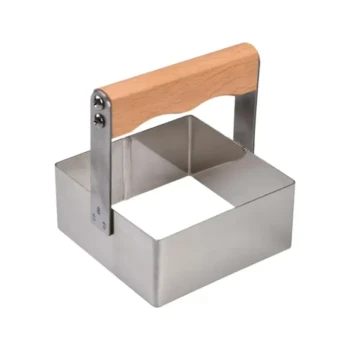
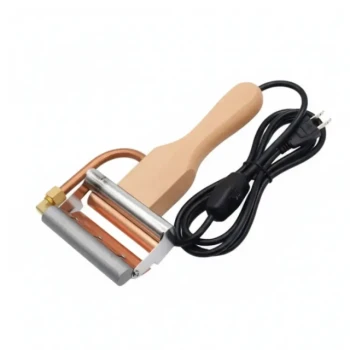
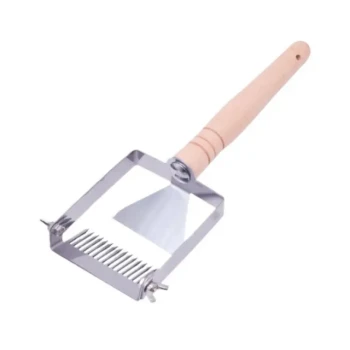
The primary technical requirements for these tools center on high-precision dimensional accuracy and biological safety. The cutting tool must be capable of removing a section of the honeycomb that corresponds exactly to the sensor's specific dimensions. Furthermore, the tool must operate with enough control to excise this material without causing physical harm to the larvae or pupae residing in the comb.
The ultimate goal is to balance secure mechanical installation with biological preservation. The cutting process must create a precise void for the sensor between the wire frame and the honeycomb to ensure accurate data collection while maintaining the colony’s physical structure.
Achieving Mechanical Precision
Exact Dimensional Matching
The cutting tool must excise a section of the wax structure that matches the sensor's footprint without deviation.
This precision is necessary to ensure the sensor fits snugly into the created void, preventing gaps that could alter internal hive readings.
Integration with Hive Hardware
The cut must allow the sensor to be positioned securely between the existing wire frame and the honeycomb.
This specific placement is critical for stabilizing the device within the nest, ensuring it remains fixed during hive inspections or movement.
Prioritizing Biological Integrity
Avoiding Brood Damage
The most critical operational requirement is the protection of the colony's future generation.
The tool must be designed or operated in a way that strictly avoids contact with or damage to the larvae and pupae developing within the cells.
Minimizing Physical Disruption
To gather valid data, the environment must remain as natural as possible.
The tool must minimize disruption to the colony's physical structure, ensuring that the temperature and humidity data collected from the center of the nest remains accurate and representative.
Understanding the Trade-offs
Structural Modification vs. Data Accuracy
Installing a sensor requires the deliberate removal of hive structure, which is inherently invasive.
However, this modification is the only way to place the sensor in the center of the nest where data is most valuable, necessitating a tool that cuts cleanly to reduce the impact of this intrusion.
Secure Fit vs. Installation Risk
A tighter fit leads to better data conductivity and sensor security.
Achieving this tight fit increases the technical difficulty of the cut, raising the risk of accidental damage to the surrounding wire frame or biological contents if the tool is not handled with extreme care.
Optimizing the Installation Process
To ensure the success of your sensor deployment, align your tooling approach with your specific objectives:
- If your primary focus is data fidelity: Prioritize tools that offer the highest dimensional precision to ensure a tight, gap-free interface between the sensor and the comb.
- If your primary focus is colony welfare: Select tools that offer fine manual control or depth guards to guarantee zero impact on the larvae and pupae.
Precision in the cutting process is the bridge between advanced monitoring and sustainable beekeeping.
Summary Table:
| Requirement Category | Key Technical Focus | Impact on Hive Operations |
|---|---|---|
| Mechanical Precision | Exact dimensional matching | Ensures snug sensor fit and prevent reading gaps |
| Biological Safety | Larvae & pupae protection | Minimizes colony loss and maintains brood health |
| Structural Integrity | Wire frame alignment | Secures device placement during hive inspections |
| Data Fidelity | Minimal environmental disruption | Guarantees accurate temperature/humidity readings |
Elevate Your Beekeeping Operations with HONESTBEE
Precise data collection starts with professional-grade equipment. At HONESTBEE, we specialize in supporting commercial apiaries and distributors with a comprehensive range of wholesale beekeeping tools and machinery. Whether you need specialized hardware like hive-making and honey-filling machines or essential consumables and honey-themed cultural merchandise, we provide the industrial-strength solutions you need to scale.
Ready to optimize your colony management? Contact us today to explore how our full-spectrum portfolio can enhance your productivity and deliver the high-performance tools your business demands.
References
- Daniel de Freitas Brasil, Breno Magalhães Freitas. Internal ambience of bee colonies submitted to strengthening management by adding broods. DOI: 10.1590/s0100-69162013000500002
This article is also based on technical information from HonestBee Knowledge Base .
Related Products
- Heavy Duty Stainless Steel Honeycomb Cutter
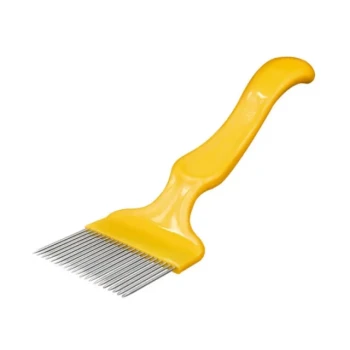
- Professional Honey Uncapping Fork Tool with Customizable Tine Options
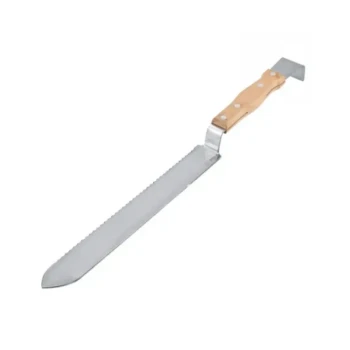
- Professional Z-Shaped Multi-Function Uncapping Knife for Beekeeping
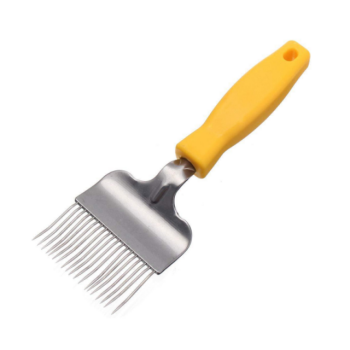
- Professional Bent Tine Honey Uncapping Fork with Ergonomic Grip
- Professional Wide Blade Honey Scraper for Beekeeping and Honey Processing
People Also Ask
- How is a comb cutter used to produce cut comb honey? Master the Art of Precision Harvesting
- Why is the comb-cutting technique preferred for Apis cerana queen rearing? Boost Success with Natural Bee Biology
- What is the cut comb honey method? A Guide to Pure, Artisanal Honey Production
- How is the cut comb method used to harvest honey? Master the Art of Premium Unprocessed Honey Production
- What is cut comb honey, and how is it prepared? Experience Honey in Its Purest Form