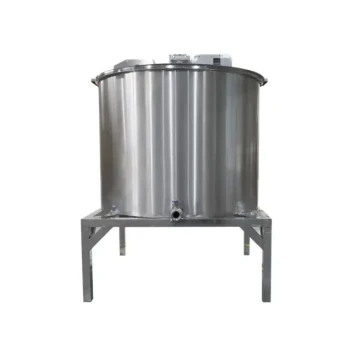
Strict material purity and chemical inertness are the technical baselines for machinery and consumables in organic honey production. Specifically, processing equipment must be constructed from food-grade stainless steel to prevent metal ion migration, particularly during filtration and storage. Furthermore, all hive components—acting as the primary consumable infrastructure—must be made from natural materials free of toxic chemical coatings or synthetic treatments to comply with international regulations.
The integrity of organic honey certification relies on maintaining a contaminant-free environment from the apiary to the bottle. Equipment standards are not just about efficiency; they are designed to prevent chemical leaching and ensure compliance with rigorous frameworks, such as European Union organic regulations.
Material Standards for Processing Equipment
The Necessity of Food-Grade Stainless Steel
For organic certification, the machinery used in extraction, filtration, and storage must typically be constructed from food-grade stainless steel.
This material is mandated because it is chemically inert. It prevents "metal ion migration," a chemical reaction where machinery materials leach into the acidic honey, compromising its purity.
Hygienic Piping and Filling Systems
Beyond the storage tanks, the transport and bottling systems require hygienic-grade piping.
Automated filling machinery should utilize high-precision quantitative pumps. These components ensure a sterile packaging environment and prevent contamination during the final stage of production.
Requirements for Hives and Consumables
Natural Material Composition
The "consumables" in beekeeping often refer to the hive components themselves, which degrade and are replaced over time.
To meet organic standards, these beehives must be constructed from natural materials. Synthetic materials, such as polystyrene hives often used in conventional beekeeping, are generally restricted or heavily regulated in organic systems.
Prohibition of Toxic Treatments
The wood or natural material used for hives cannot be treated with standard preservatives.
Regulations explicitly forbid toxic chemical coatings, paints, or pressure treatments. Any substance applied to the hive must be non-toxic to ensure no chemical residues transfer to the wax or honey.
Operational Standards for Tooling
Minimizing Biological Stress
Technical standards for organic tools extend beyond materials to their impact on the bees.
Professional beekeeping tools must be designed to minimize stress on the colony during management and extraction. High stress levels can affect the health of the hive, which is a key metric in organic animal welfare standards.
Prevention of External Contamination
Tools used during the harvest must ensure a "closed loop" of hygiene.
This equipment acts as hardware support to prevent external contaminants—such as soil, debris, or non-organic feeds—from entering the honey flow during the extraction process.
Understanding the Trade-offs
Durability vs. Purity
Using natural, untreated materials for hives presents a significant maintenance challenge.
Unlike pressure-treated wood or plastic, natural hive components rot and degrade faster when exposed to the elements. This necessitates more frequent replacement cycles and higher long-term operational costs to maintain organic compliance.
Capital Investment vs. Efficiency
Implementing food-grade stainless steel and high-precision automated pumps requires a substantial upfront capital investment compared to food-grade plastics or galvanized metals.
However, this investment serves dual purposes: it meets the strict regulatory requirement for "inert" materials and, as noted in high-volume contexts, significantly increases bottling efficiency and consistency.
Making the Right Choice for Your Operation
Ensuring your technical setup meets organic standards requires balancing regulatory compliance with operational realities.
- If your primary focus is Equipment Procurement: Prioritize food-grade stainless steel for all contact surfaces to eliminate the risk of metal ion migration and ensuring audit compliance.
- If your primary focus is Apiary Management: Audit your hive suppliers to ensure all woodenware is untreated and composed entirely of natural materials, as this is a common failure point in certification.
By aligning your machinery and consumables with these rigorous standards, you safeguard the chemical integrity and market value of your organic product.
Summary Table:
| Component Type | Technical Standard | Primary Purpose |
|---|---|---|
| Processing Machinery | Food-grade stainless steel (304/316) | Prevent metal ion migration and chemical leaching |
| Hive Construction | Natural wood or untreated organic materials | Comply with chemical-free infrastructure regulations |
| Piping & Filling | Hygienic-grade materials & precision pumps | Maintain a sterile environment during bottling |
| Protective Coatings | Non-toxic, natural-based treatments only | Eliminate chemical residue transfer to wax or honey |
| Beekeeping Tools | Low-stress design & hygienic surfaces | Minimize biological stress and external contamination |
Elevate Your Organic Honey Production with HONESTBEE
Navigating the rigorous technical requirements for organic certification demands high-performance equipment and high-purity consumables. HONESTBEE specializes in supporting commercial apiaries and distributors with a comprehensive range of professional solutions designed to meet international standards.
Why Choose HONESTBEE?
- Advanced Machinery: From food-grade stainless steel honey-filling machines to automated hive-making equipment.
- Premium Tools & Hardware: A full spectrum of beekeeping tools engineered for durability and hygiene.
- Certified Consumables: Essential industry consumables that safeguard the integrity of your honey.
- Global Wholesale Supply: We provide the scale and reliability required by large-scale operations and distributors.
Ready to upgrade your infrastructure or streamline your supply chain? Contact us today to discover how our tailored equipment solutions can enhance your efficiency and ensure organic compliance.
References
- Marta Cosmina, Stefania Troiano. Attitudes towards honey among Italian consumers: A choice experiment approach. DOI: 10.1016/j.appet.2015.12.018
This article is also based on technical information from HonestBee Knowledge Base .
Related Products
- Commercial Rotary Honey Filling Machine for Production
- Economy Small Honey Filling Machine Honey Bottle Filler Packaging Machine
- Fully Automatic Honey Filling Packaging Machine for Processing Line
- Precision Durable Efficient HONESTBEE Rotary Honey Filling Machine
- Double Wall Honey Heating Stirring Homogenizer Mixing Machine with Various Capacity
People Also Ask
- What role do commercial honey filling machines play in honey distribution? Scaling Efficiency and Quality Control
- What technical support do commercial-grade filling machines provide? Convert Honey NTFPs into Marketable Commodities
- What is the significance of specialized honey filling equipment? Scaling from Beekeeping to Commercial Success
- Why is professional honey filling machinery critical for honey production? Scale Your Apiary's Profit & Efficiency
- Why is high-capacity honey filling machinery necessary for Giant Honey Bees? Solve the Apis dorsata Volume Crisis