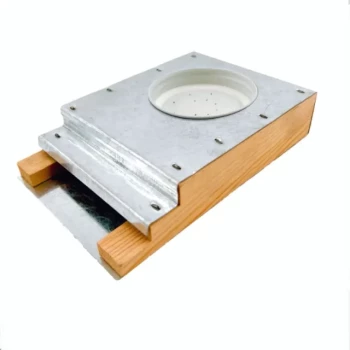
The closed feeding method relies on three specific tools designed to integrate directly with the hive structure. These are the hive-top feeder, the entrance hive feeder, and the in-hive feeder, each distinguished by its specific placement relative to the colony.
Core Takeaway Effective closed feeding requires selecting a tool based on seasonal conditions and the desired proximity to the colony. While all three options deliver nutrients, their placement—ranging from the external entrance to the internal frames—dictates their efficiency and ease of access.
Detailed Breakdown of Feeding Tools
To effectively implement closed feeding, you must understand the specific location and application of each available tool.
The Hive-Top Feeder
This tool allows for feeding from the highest point of the apiary structure.
It is specifically placed on the top of the uppermost box. This positioning generally allows for feeding a large volume of syrup directly above the colony.
The Entrance Hive Feeder
This device connects to the exterior of the hive, making it the most visible option for the beekeeper.
It is positioned at the base of the hive’s entrance. It is crucial to note that this specific tool is identified as a better option for warm months, likely due to the temperature of the syrup or accessibility issues in the cold.
The In-Hive Feeder
This tool integrates directly into the internal environment of the hive.
It is placed near the inner cover or frames. This location ensures the feed is in close proximity to the bees, allowing for easy access without the bees needing to travel far from the cluster.
Operational Trade-offs
When selecting a tool, you are balancing accessibility against seasonal constraints.
Seasonal Limitations
Not every feeder is appropriate for year-round use.
The primary reference explicitly limits the entrance hive feeder as a preferred option for warm months. Using it outside of this window may be inefficient or detrimental to the colony.
Accessibility vs. Integration
The placement of the feeder dictates how you interact with the hive.
Hive-top and entrance feeders are located on the perimeter (top or bottom), whereas the in-hive feeder sits near the frames. This internal placement implies a closer integration with the colony's daily activity but may require different handling to access.
Making the Right Choice for Your Goal
Select your equipment based on the current season and the colony's immediate needs.
- If your primary focus is seasonal warm-weather feeding: Use the entrance hive feeder at the base of the hive.
- If your primary focus is top-down delivery: Install a hive-top feeder on the uppermost box.
- If your primary focus is internal accessibility: Place an in-hive feeder near the inner cover or frames.
By aligning the specific feeder placement with the hive's configuration, you maximize the effectiveness of the closed feeding method.
Summary Table:
| Feeder Type | Placement Location | Best Seasonal Use | Key Advantage |
|---|---|---|---|
| Hive-Top Feeder | Uppermost box | Versatile | Large volume syrup delivery |
| Entrance Feeder | Hive entrance base | Warm months | Easy visibility and monitoring |
| In-Hive Feeder | Near frames/inner cover | Cold/Versatile | Maximum accessibility for bees |
Scale Your Apiary Operations with HONESTBEE
At HONESTBEE, we understand that commercial success in beekeeping requires durable, efficient, and seasonal-ready equipment. Whether you are a large-scale commercial apiary or a global distributor, we provide a comprehensive wholesale catalog of premium beekeeping tools and machinery.
From high-capacity hive-top feeders to specialized honey-filling machines and hive-making hardware, we supply everything your business needs to thrive. Partner with us to access professional-grade consumables and honey-themed cultural merchandise tailored for the global market.
Ready to upgrade your equipment? Contact us today to discuss wholesale solutions and bulk pricing.
Related Products
- Rapid Bee Feeder White Plastic 2L Round Top Feeder for 8 or 10-Frame Bee Hives
- White Plastic 0.5L Beekeeping Entrance Feeder for Bees
- HONESTBEE Entrance Bee Feeder Professional Hive Nutrition Solution for Beekeeping
- HONESTBEE Professional Entrance Bee Feeder Hive Nutrition Solution
- Boardman Entrance Bee Feeder Durable Galvanized Steel and Wood Construction for Beekeeping
People Also Ask
- What should be done with feeders and equipment after feeding bees? Essential Steps for Apiary Health
- What should be done if feed in a feeder is not consumed by the bees? Prevent Hive Mold with Prompt Feed Management
- What is the necessity of specialized internal or entrance feeders? Secure Your Hive with Professional Feeding Tools
- How do bee feeders work to preserve colony health during nectar shortages? Essential Guide for Beekeepers
- How quickly does a medium to strong colony usually empty a feeder? A Beekeeper's Guide to Hive Health