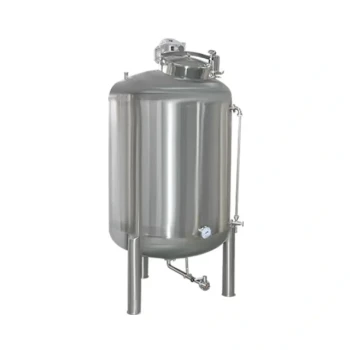
Product stability and marketability are the ultimate goals. Advanced filtration and storage systems are essential because they mechanically remove physical contaminants like wax debris and air bubbles while thermally stabilizing the honey. This combination ensures the final product remains transparent, fluid, and chemically stable, preventing spoilage risks during packaging and distribution.
By integrating precise impurity removal with constant temperature control, these systems transform raw harvest into a shelf-stable product that meets rigorous commercial standards for clarity and safety.
Ensuring Visual and Physical Purity
Removing Particulate Matter
Raw honey naturally contains hive debris, wax particles, and other microscopic impurities. Advanced filtration systems, often utilizing multi-stage or dual-filtration methods, accurately strip these contaminants from the liquid. This physical treatment is a baseline requirement for meeting food safety standards.
Eliminating Air Bubbles
Turbulence during extraction often introduces air into the honey, resulting in a cloudy appearance. Industrial-grade systems employ degassing units or fine filtration to remove these bubbles. This step is critical for ensuring the high transparency and visual appeal expected in commercial retail.
Achieving Consistency
Without advanced filtration, different batches of honey can vary significantly in texture and clarity. Automated systems standardize the product, ensuring that every packaged unit delivers the same sensory experience regarding fluidity and visual consistency.
Stabilizing Honey Through Advanced Storage
Preventing Crystallization
Honey has a natural tendency to solidify or crystallize over time, which can complicate packaging and deter consumers. Industrial storage systems utilize constant temperature control to maintain the honey in a liquid state. This thermal regulation preserves the honey's physical fluidity throughout the storage and distribution phases.
Inhibiting Fermentation
Temperature fluctuations can accelerate chemical changes that lead to fermentation. By maintaining a stable environment, storage systems protect the honey's chemical properties. This stability is essential for preserving the flavor profile and extending the product's shelf life.
Understanding the Risks: The Moisture Factor
The Danger of Hygroscopy
Honey is highly hygroscopic, meaning it aggressively absorbs moisture from the surrounding environment and equipment surfaces. This is a critical vulnerability in the processing workflow. If honey absorbs excess water, it becomes susceptible to fermentation and spoilage.
The Necessity of Dry Equipment
Using advanced machinery is effective only if strict dryness protocols are followed. Cold filtration sieves and containers must be completely dry before use. Even residual moisture on processing equipment can raise the honey's water content above safety standards, compromising the commercial quality of the entire batch.
Making the Right Choice for Your Goal
To optimize your honey processing workflow, align your equipment choices with your specific production targets:
- If your primary focus is Commercial Presentation: Prioritize advanced filtration and degassing units to remove air bubbles and wax for maximum transparency.
- If your primary focus is Shelf-Life Stability: Invest heavily in temperature-controlled storage systems to prevent crystallization and strictly manage equipment dryness to avoid fermentation.
Success in honey processing requires a balance of rigorous mechanical filtration to ensure purity and precise thermal management to guarantee longevity.
Summary Table:
| System Component | Primary Function | Commercial Benefit |
|---|---|---|
| Multi-Stage Filtration | Removes wax debris and particulates | Ensures visual clarity and food safety |
| Degassing Units | Eliminates air bubbles | Enhances transparency and market appeal |
| Thermal Storage Tanks | Maintains constant temperature | Prevents crystallization and solidification |
| Moisture Control | Inhibits hygroscopic absorption | Prevents fermentation and spoilage |
| Automated Standardization | Consistent texture and flow | Delivers uniform sensory experience per batch |
Elevate Your Honey Production with HONESTBEE
To compete in the commercial honey market, you need more than just raw harvest—you need precision. HONESTBEE specializes in supporting commercial apiaries and distributors by providing a comprehensive wholesale range of professional beekeeping machinery and tools.
From advanced filtration systems and specialized honey-filling machines to durable hardware and honey-themed merchandise, we deliver the tools you need to ensure every drop of honey is transparent, stable, and market-ready. Our expertise helps you minimize spoilage risks and maximize the value of your yield.
Ready to scale your operation with industrial-grade reliability? Contact HONESTBEE today for a customized equipment solution
References
- Yaneth Patricia Romero Álvarez, William A. Niebles. Technological Surveillance Study on the Development of Beekeeping Technologies. DOI: 10.70082/esiculture.vi.1616
This article is also based on technical information from HonestBee Knowledge Base .
Related Products
- Professional Honey Storage Tank with Agitation System
- Stainless Steel Honey Storage and Settling Tank with Double Strainer
- Stainless Steel Honey Storage Tank with Lid for Honey
- Professional Stainless Steel Honey Filtering Machine with Water Bath Heating for Beekeeping
- Professional Stainless Steel Honey Filter with Support Handle
People Also Ask
- What economic role do honey storage tanks play? Boost Your Revenue Through Strategic Inventory Management
- What roles do industrial honey storage tanks and filtration meshes play in processing? Ensure Purity & Consistency
- What is the purpose of a honey storage tank? Streamline Your Honey Processing for Quality & Efficiency
- What are honey storage tanks used for? Essential Features for Quality Preservation and Profit
- How do large honey storage tanks and gravity fall filling systems improve honey packaging efficiency and safety?