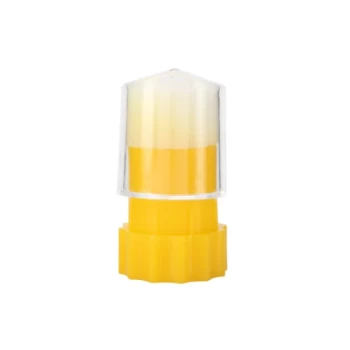
Artificial queen cell cups act as the primary biological trigger in royal jelly production, serving as the essential "hardware foundation" that transforms a hive’s natural behavior into a scalable manufacturing process. By accurately simulating the physical structure of natural queen cells, these consumables trick nurse bees into secreting massive quantities of royal jelly to feed larvae, allowing beekeepers to arrange these cells at high densities to exponentially increase yield per colony.
By mimicking nature to induce a strong feeding instinct, artificial cups allow producers to alter a colony's natural regulation, shifting it from raising a single queen to sustaining a mass-production system for royal jelly.
The Mechanism of Biological Inducement
Simulating the Natural Environment
The primary function of the artificial cup is deception. It replicates the specific geometry and physical environment of a natural queen cell.
Triggering the Nursing Instinct
When a beekeeper grafts a larva (typically 1-2 days old) into this artificial cup, the colony perceives it as a future queen. This induces nurse bees to exhibit a powerful feeding instinct, prompting them to secrete and deposit royal jelly into the cup.
Breaking Natural Limitations
In a wild hive, bees rarely build many queen cells at once. Artificial cups bypass this biological limit, forcing the colony to support a significantly higher number of "potential queens" simultaneously.
Scaling from Hive to Factory
High-Density Arrangement
The primary reference highlights that these cups allow for a high-density arrangement on the hive frame. This concentration is impossible in nature but essential for commercial viability.
Altering Colony Regulation
By introducing these cups in bulk, you effectively reprogram the colony's resource allocation. The bees shift their energy toward royal jelly secretion rather than standard brood rearing or foraging.
The Foundation of Mass Production
These cups provide the hardware foundation for large-scale output. They transition the process from sporadic, low-volume collection to a stable, industrial-level workflow with harvest cycles typically running every 48 to 72 hours.
Standardization and Workflow Efficiency
Consistent Yield Measurement
Because every cup is identical, the environment for every larva is standardized. This allows for precise yield weighing and ensures that production data is consistent across different hives.
Optimized for Extraction
Whether the collection is manual or semi-mechanical, the uniform shape of artificial cups facilitates the lossless extraction of jelly. They serve as reliable vessels that hold the product securely until harvest.
Understanding the Trade-offs
Material Compatibility
While artificial cups simulate structure, the material (wax vs. industrial plastic) matters. The material can influence the chemical properties or pH of the immediate environment, potentially affecting larval survival rates.
The Acceptance Factor
Not every cup will be accepted by the colony. If the simulation isn't convincing—due to cup dimensions, material scent, or grafting technique—the nurse bees will clean out the larvae rather than fill the cup with jelly.
Labor Intensity
While the cups enable mass production, they require precise manual grafting of larvae. The "hardware" is efficient, but it relies heavily on the skilled "software" of the human operator to transfer larvae without injury.
Making the Right Choice for Your Goal
To maximize your royal jelly production, consider how you utilize these consumables:
- If your primary focus is Volume: Prioritize high-density frame arrangements, as the artificial cups allow you to maximize the number of cells per square inch of hive space.
- If your primary focus is Larval Acceptance: Monitor the material of your cups carefully, ensuring the chemical properties do not repel nurse bees or alter the pH environment for the grafted larvae.
Mastering the use of artificial cups is not just about using a tool; it is about effectively hacking bee biology to standardize a precious natural resource.
Summary Table:
| Feature | Function in Royal Jelly Production | Benefit to Beekeepers |
|---|---|---|
| Biological Mimicry | Replicates natural queen cell geometry | Triggers intensive feeding instinct in nurse bees |
| High-Density Design | Allows numerous cells on a single frame | Exponentially increases yield per hive colony |
| Standardization | Provides uniform shape and volume | Enables consistent harvest cycles and data tracking |
| Hardware Foundation | Supports larvae during the feeding phase | Transforms hive behavior into an industrial workflow |
Maximize Your Royal Jelly Production with HONESTBEE
At HONESTBEE, we understand that high-quality consumables are the backbone of a successful commercial apiary. Our precision-engineered artificial queen cell cups are designed to ensure maximum larval acceptance and optimize high-density royal jelly collection.
Whether you are a commercial distributor or a large-scale producer, we provide the full spectrum of professional beekeeping tools—from hive-making and honey-filling machinery to essential daily consumables. Partner with HONESTBEE to access industrial-grade equipment and specialized hardware that drive efficiency and growth in your beekeeping business.
Ready to scale your output? Contact us today to discuss your wholesale needs!
References
- Yuan Shi, Zhi Jiang Zeng. Changes in Alternative Splicing in Apis Mellifera Bees Fed Apis Cerana Royal Jelly. DOI: 10.2478/jas-2014-0019
This article is also based on technical information from HonestBee Knowledge Base .
Related Products
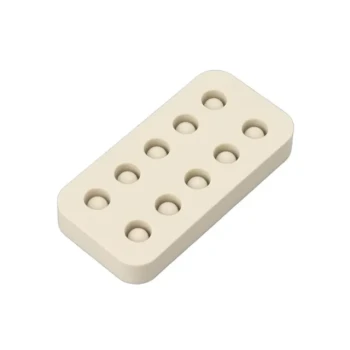
- 10-Cell Silicone Beeswax Bee Queen Cups Forming Mold
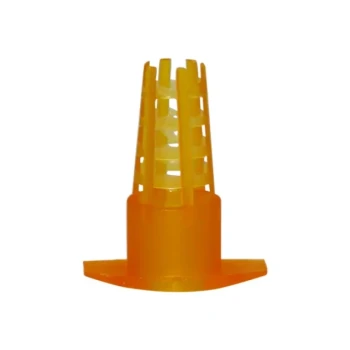
- JZBZ Type Wide Base Plastic Queen Cell Cups for Base Mounting and Queen Rearing
- Brown Nicot Queen Cell Cups for Breeding Queen Bees Beekeeping
- Clear Black Plain Polystyrene Queen Bee Grafting Cell Cups No Lug for Bee Queen Cup
- JZBZ Push-In Queen Cell Cups for Beekeeping
People Also Ask
- How do beeswax queen cell cups function? Optimize Queen Rearing with Biological Mimicry
- What is the biological function of beeswax queen cell cups? Boost Acceptance in Artificial Queen Rearing
- What role do specialized queen rearing tools play in developing mite-resistant honeybee stock? Master Genetic Selection
- What materials are used to make artificial queen cell cups for grafting? Beeswax vs. Plastic Guide
- What roles do specialized queen cell cups play in royal jelly production? Optimize Your Hive's Secretion and Yield