Defining botanical source and harvest year is the primary method for distinguishing high-value honey from generic commodities. Beyond satisfying basic food safety mandates, these specific label attributes serve as verifiable evidence of product quality and origin. They provide the necessary transparency to build consumer trust, allowing producers to position their goods in the premium market rather than competing solely on price.
Core Takeaway Specific labeling transforms honey from a simple sweetener into a traceable, distinct asset. By explicitly stating the floral variety and production timing, producers create a unique product identity that safeguards against counterfeiting and justifies higher market valuation.
Transforming Compliance into Value
While basic labeling is a legal requirement, detailing the botanical source and harvest year shifts the focus from compliance to value creation. This distinction is critical for marketing strategy.
Establishing Product Differentiation
Generic labeling treats honey as a uniform mixture. Specifying the botanical source (floral variety) breaks this perception by highlighting unique characteristics.
This creates a distinct product identity. It allows the consumer to select a product based on specific preferences rather than just a brand name.
Supporting Premium Pricing
High-quality honey production is resource-intensive. Harvest year and source labels provide the evidence required to justify higher prices.
When a consumer sees a specific vintage and origin, they understand they are purchasing a finite resource. This perceived scarcity and specificity support premium tier pricing.
Building Consumer Trust
Modern consumers are skeptical of vague claims. Clear, precise labels reduce ambiguity regarding the product's age and composition.
Providing this level of detail acts as a promise of transparency. It reassures the buyer that the product is fresh and authentic, directly enhancing brand loyalty.
The Mechanics of Traceability and Protection
Beyond marketing, these labels are essential technical tools for supply chain management and legal protection.
Enabling Full-Path Tracking
A harvest year label does not just indicate freshness; it links the product to a specific production cycle. This enables tracking from the specific apiary location to the end consumer.
In the event of a quality issue, this granularity allows for precise recalls rather than blanket withdrawals. It is a fundamental requirement for maintaining organic and quality certifications.
Preventing Counterfeiting and Adulteration
Honey is vulnerable to unauthorized imitation and blending. Detailed labels act as physical evidence of intellectual property.
By binding a product to a specific source and date, it becomes significantly harder for bad actors to pass off substandard or adulterated syrup as that specific batch. The label serves as a visible barrier to market entry for counterfeiters.
Validating Shelf Life and Freshness
The harvest year is the baseline for calculating shelf life. It allows consumers and retailers to technically assess the product's viability.
This prevents the circulation of expired goods. It ensures that the nutritional components and quality attributes advertised on the packaging are still valid at the time of consumption.
Understanding the Trade-offs
While detailed labeling is superior for quality assurance, it introduces operational complexity that producers must manage.
Reduced Inventory Flexibility
Committing to specific harvest years and sources limits blending opportunities. You cannot easily mix a previous year's surplus with a current harvest without losing the specific label claim.
This requires strict inventory segregation. It makes the supply chain less resilient to poor harvest years, as you cannot mask a shortage with generic blending.
Increased Record-Keeping Burdens
Traceability is only as good as the data behind it. Accurate labeling requires robust informatics tools and discipline.
Producers must maintain flawless records linking extraction batches to specific fields and dates. Any error in this data chain can lead to mislabeling liabilities and loss of certification.
Making the Right Choice for Your Goal
The level of detail you place on your label should align with your business strategy and market positioning.
- If your primary focus is Premium Market Positioning: Prioritize the botanical source to highlight unique flavor profiles and justify a higher price point through differentiation.
- If your primary focus is Brand Security and Safety: Prioritize the harvest year and batch tracking to prevent counterfeiting and ensure rapid traceability in case of recall.
Transparency is not just a regulatory hurdle; it is the strongest currency you have in a market defined by trust.
Summary Table:
| Feature | Strategic Benefit | Impact on Market |
|---|---|---|
| Botanical Source | Establishes product differentiation and identity | Justifies premium tier pricing |
| Harvest Year | Baseline for shelf life and freshness verification | Builds deep consumer trust |
| Full-Path Tracking | Enables precise recalls and quality certification | Enhances supply chain security |
| Batch Protection | Prevents counterfeiting and syrup adulteration | Safeguards brand reputation |
Elevate Your Honey Brand with HONESTBEE
Transitioning from generic honey to a premium, traceable brand requires the right infrastructure. HONESTBEE specializes in supporting commercial apiaries and distributors with high-performance honey-filling machines and specialized hive-making equipment designed for precision and scale.
Whether you are looking to enhance your production line efficiency or source industrial-grade beekeeping tools and consumables, we provide the hardware and expertise to secure your market position.
Ready to scale your commercial operation? Contact us today to discover how our wholesale solutions can optimize your honey production and marketing success.
References
- Usif Abulfat Humbatov. IMPROVING THE DELIVERY AND MARKETING OF BEEKEEPING PRODUCTS TO CONSUMERS. DOI: 10.15863/tas.2015.09.29.12
This article is also based on technical information from HonestBee Knowledge Base .
Related Products
- High Quality Honey Dehumidifier Dryer Thickening Machine for Beekeeping
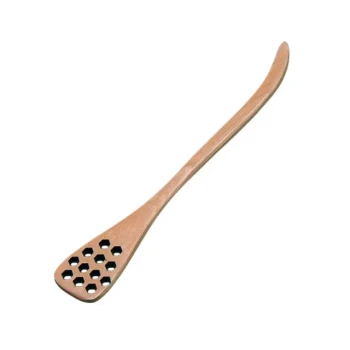
- Modern Honeycomb Pattern Wooden Honey Dipper for Stirring and Drizzling
- Economy Small Scale Honey Dryer Dehumidifier Thickening Machine
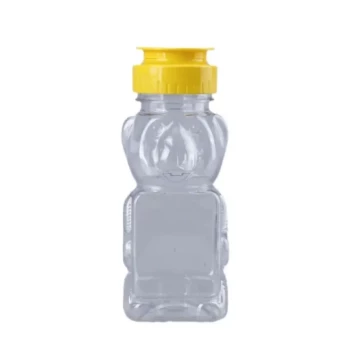
- Classic Honey Bear Jars with Flip Top Dispensing Cap for Liquid Sweeteners
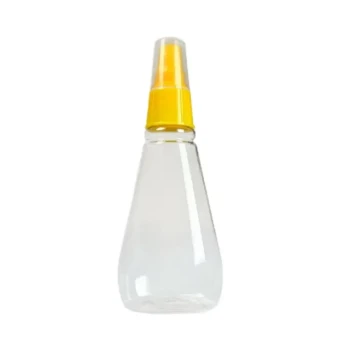
- Inverted Squeezable Honey Jar with No Drip Flip Top Cap for Easy Pouring
People Also Ask
- Can you dehumidify honey? A Beekeeper's Guide to Preventing Fermentation
- How to dry up honey? The Safe Guide to Stabilizing Honey and Preventing Fermentation
- How can the moisture content of honey be reduced? A Guide to Safe, Effective Drying Methods
- How to remove humidity from honey? Protect Your Harvest from Fermentation
- What is the process for using a dehumidifier to lower honey's moisture content? Expert Drying Techniques