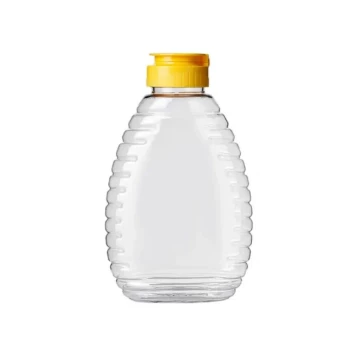
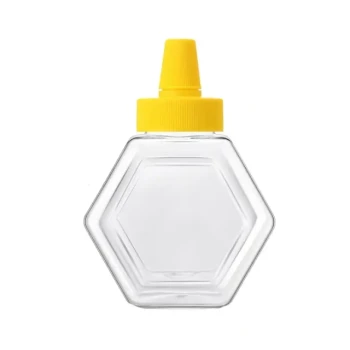
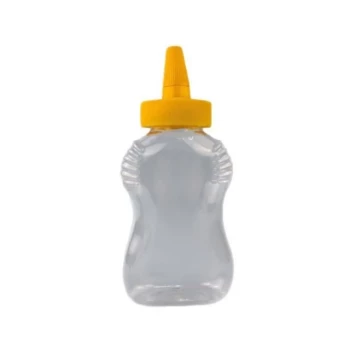
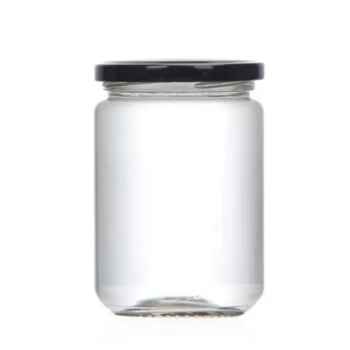
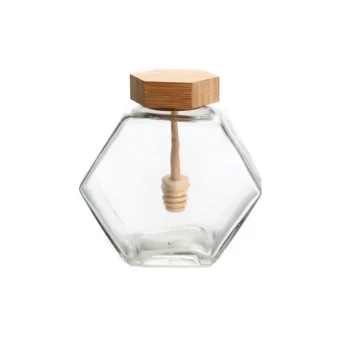
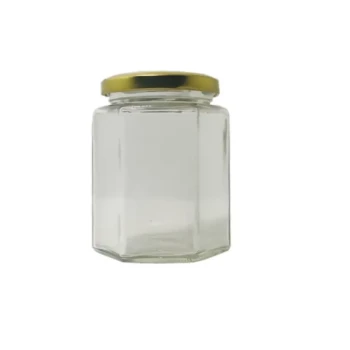
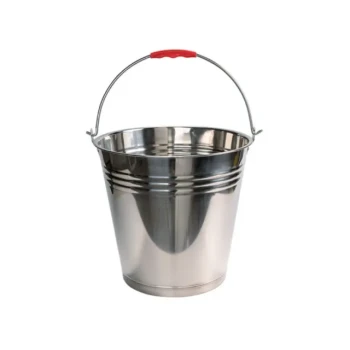
Food-grade half-liter PET containers are the preferred industry standard for honey storage because they combine exceptional chemical stability with high-quality sealing properties. These specific characteristics are required to isolate the honey effectively from external moisture and contaminants, ensuring the sample's integrity remains compromised during transport and storage.
Core Takeaway Honey is a chemically complex, hygroscopic substance that degrades rapidly if exposed to air or reactive materials. Food-grade PET containers provide a chemically inert, moisture-proof barrier that preserves the sample's physicochemical properties, preventing fermentation and minimizing errors during laboratory analysis.
Preserving Physicochemical Integrity
Chemical Stability
The primary reason for selecting food-grade PET is its excellent chemical stability. Honey contains sensitive acidic and phenolic components that can react with inferior packaging materials.
PET acts as an inert vessel, ensuring that the container does not leach chemicals into the sample or alter the honey's natural composition. This stability is vital for maintaining the accuracy of subsequent chemical analyses.
Minimizing Experimental Errors
To obtain reliable data, the sample analyzed in the lab must match the sample collected in the field. PET containers protect critical physicochemical properties, such as electrical conductivity and sugar composition.
By preventing environmental interference, these containers ensure that any variance in data is due to the honey itself, not container-related contamination.
Controlling Moisture and Spoilage
The Hygroscopic Challenge
Honey is highly hygroscopic, meaning it naturally absorbs moisture from the surrounding atmosphere. If a container does not seal perfectly, the honey will pull water from the air, diluting its concentration.
High-quality PET containers offer superior sealing properties that effectively isolate the honey from external humidity.
Preventing Fermentation
Controlling moisture is not just about purity; it is about preservation. If the moisture content rises above 20%, osmophilic yeasts can proliferate within the honey.
This microbial growth leads to fermentation and spoilage, rendering the sample useless for analysis. A sealed PET environment is the first line of defense against this biological degradation.
Logistics and Physical Protection
Robustness in Transport
Samples are often collected in remote production areas and transported over long distances to urban laboratories. PET containers are pressure-resistant and leak-proof, solving the breakage issues common with glass.
This durability ensures that the physical sample survives the journey without loss or cross-contamination.
Barrier Against Contaminants
Beyond moisture, honey must be protected from external particulate matter and microbial contaminants. The airtight nature of these containers blocks the entry of foreign impurities.
This isolation is critical for accurate pollen morphological analysis and ensuring the sanitary quality of the sample.
Understanding the Trade-offs
PET vs. Glass
While PET is preferred for general sampling and transport, industrial-grade glass offers superior inertness for extreme long-term storage. Glass is impermeable to oxygen, whereas plastics may allow minute gas exchange over very long periods.
Temperature Sensitivity
PET is highly effective at room temperature. However, for samples requiring strict temperature control (e.g., constant 4°C) to maintain specific botanical markers, high-end glass may offer slightly better thermal stability, provided breakage is not a risk.
Making the Right Choice for Your Goal
When selecting storage vessels for honey analysis, align your choice with your operational priorities:
- If your primary focus is reliable field-to-lab transport: Use food-grade PET to ensure durability and prevent leaks while maintaining chemical stability.
- If your primary focus is preventing fermentation: Prioritize the sealing quality of the PET container to keep moisture content strictly below critical levels.
Ultimately, the reliability of your analytical data depends entirely on the stability of your storage environment; a high-quality PET container is the most effective tool for minimizing variables between the hive and the lab.
Summary Table:
| Feature | PET Container Benefit | Impact on Honey Quality |
|---|---|---|
| Chemical Stability | Inert material, no leaching | Preserves acidic/phenolic components |
| Sealing Quality | Airtight and moisture-proof | Prevents hygroscopic dilution & fermentation |
| Durability | Pressure-resistant & leak-proof | Eliminates breakage during long-distance transport |
| Barrier Protection | Blocks microbes and particulates | Ensures accurate pollen and sanitary analysis |
| Versatility | Lightweight & cost-effective | Ideal for large-scale field-to-lab logistics |
Elevate Your Apiary Operations with HONESTBEE
At HONESTBEE, we understand that the integrity of your honey samples is non-negotiable for commercial success. As a premier partner for commercial apiaries and global distributors, we provide more than just equipment—we provide reliability.
Our comprehensive wholesale portfolio includes:
- Professional Storage Solutions: High-quality containers designed to preserve physicochemical properties.
- Advanced Machinery: State-of-the-art honey-filling and hive-making machines to scale your production.
- Full-Spectrum Equipment: From specialized beekeeping tools to essential industry consumables and honey-themed cultural merchandise.
Ready to optimize your supply chain and protect your product quality? Contact HONESTBEE today to explore our wholesale offerings!
References
- V. Krishnasree, P. Mary Ukkuru. Quality Analysis of Bee Honeys. DOI: 10.20546/ijcmas.2017.602.071
This article is also based on technical information from HonestBee Knowledge Base .
Related Products
- Food Grade Plastic Honey Bucket Pail for Beekeeping
- Classic Beehive Honey Bottle Jar with Squeeze Dispenser Lid
- Premium PET Squeeze Honey Bottle with Ergonomic Grip and Rotary Dispenser
- Squeezable No-Drip Beehive-Shaped Honey Jars with Flip-Top Cap
- Hexagonal Squeeze Honey Bottle with No Drip Lid
People Also Ask
- What key operational precautions should be taken when using honey buckets and extractors fitted with bottom drain taps?
- What functions do food-grade honey buckets perform? Safeguard Your Harvest and Optimize Apiary Logistics
- Why are food-grade plastic buckets preferred for honey? Protect Quality with Modern Honey Collection Tools
- What is the significance of food-grade plastic honey collection buckets? Boost Quality in Forest Honey Logistics
- What is a honey pail? The Essential Container for Protecting Your Honey's Value