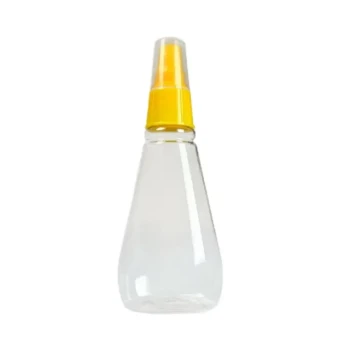
Professional honey collection buckets act as the critical first line of defense in the post-harvest supply chain. They serve as clean, dedicated containment vessels designed to safely transport liquid honey from the apiary to the processing site, effectively isolating the product from external impurities immediately after extraction.
By utilizing dedicated and sanitary vessels, producers prevent contamination before filtration or packaging occurs. This early intervention is essential for maintaining the honey's natural physicochemical properties and meeting high-quality purity standards.
The Role of Containment in Quality Assurance
Securing the Chain of Custody
The primary function of a professional collection bucket is to bridge the gap between the hive and the processing facility. By using dedicated containers—meaning vessels used exclusively for honey and nothing else—producers eliminate the risk of cross-contamination from other agricultural or industrial substances.
Blocking External Impurities
Once honey is removed from the hive, it is vulnerable to the environment. Professional buckets provide a sealed barrier against dust, moisture, and debris during transport. This protection ensures that the raw product retains its natural state, preventing environmental pollutants from degrading the honey before it can be filtered.
Preserving Chemical Integrity
Honey possesses complex physicochemical properties that give it flavor and nutritional value. Professional collection vessels are designed to be chemically inert, ensuring they do not react with the honey's acidity. This preserves the delicate fructose-to-glucose ratios and enzyme activity that define high-quality honey.
Enabling Organic Certification
Adhering to strict equipment standards is often a prerequisite for organic labeling. The use of professional-grade tools supports compliance with organic production standards. This attention to detail assists producers in qualifying for geographical indication labels and elevates the honey's market value from a basic commodity to a premium specialty.
Common Pitfalls to Avoid
Material Incompatibility
Not all buckets are suitable for honey storage. Using general-purpose plastic containers can lead to chemical leaching, where toxins migrate from the plastic into the food product. It is imperative to verify that collection buckets are explicitly rated for food contact to avoid chemical adulteration.
Improper Sanitation
Even a professional-grade bucket can become a source of contamination if not maintained correctly. Residual honey from previous harvests can ferment or attract pests. Rigorous cleaning protocols are necessary to ensure that the bucket remains a sterile environment for each new batch.
How to Apply This to Your Project
Making the Right Choice for Your Goal
- If your primary focus is Purity: Ensure your buckets are made of food-grade materials and are dedicated exclusively to honey transport to prevent chemical cross-contamination.
- If your primary focus is Market Value: Document your use of professional-grade collection tools to support applications for organic certification and premium labeling.
The collection bucket is not merely a storage unit; it is a fundamental instrument in safeguarding the biological integrity of your harvest.
Summary Table:
| Key Feature | Role in Quality Maintenance | Benefit to Producer |
|---|---|---|
| Food-Grade Material | Prevents chemical leaching and toxin migration | Ensures consumer safety and organic compliance |
| Airtight Sealing | Blocks dust, moisture, and environmental debris | Maintains honey density and prevents spoilage |
| Dedicated Usage | Eliminates risk of cross-contamination | Preserves unique floral flavor and aroma profiles |
| Chemically Inert | Resists reaction with honey's natural acidity | Protects enzyme activity and nutritional value |
Elevate Your Honey Production Standards with HONESTBEE
Maintaining the biological integrity of your harvest starts with the right equipment. HONESTBEE specializes in supporting commercial apiaries and distributors with professional-grade beekeeping tools and machinery. From food-safe honey collection buckets to advanced honey-filling machines and specialized hive-making hardware, we provide the comprehensive wholesale solutions you need to scale your operations.
Why partner with HONESTBEE?
- Quality Assurance: All our tools and consumables meet the high standards required for premium honey production.
- Scalable Solutions: We supply everything from essential consumables to heavy-duty machinery for industrial processing.
- Market Advantage: Our equipment helps you qualify for organic certifications and premium labeling, increasing your market value.
Ready to upgrade your apiary’s efficiency and product purity? Contact us today to explore our full wholesale catalog!
References
- Soumaïla Sawadogo, Fabio Berti. Economic Analysis of the Honey Sector in the Area of Nahouri in Burkina Faso. DOI: 10.5281/zenodo.7377993
This article is also based on technical information from HonestBee Knowledge Base .
Related Products
- Food Grade Plastic Honey Bucket Pail for Beekeeping
- Premium Stainless Steel Honey Tank Bucket Pail with Reinforced Handle and Polished Finish
- Plastic Honey Gate Spout with Wing Nut for Beekeeping Honey Bucket
- Classic Honey Bear Jars with Flip Top Dispensing Cap for Liquid Sweeteners
- Classic Beehive Honey Bottle Jar with Squeeze Dispenser Lid
People Also Ask
- What key operational precautions should be taken when using honey buckets and extractors fitted with bottom drain taps?
- What functions do food-grade honey buckets perform? Safeguard Your Harvest and Optimize Apiary Logistics
- Why are food-grade plastic buckets preferred for honey? Protect Quality with Modern Honey Collection Tools
- What is the significance of food-grade plastic honey collection buckets? Boost Quality in Forest Honey Logistics
- What is a honey pail? The Essential Container for Protecting Your Honey's Value