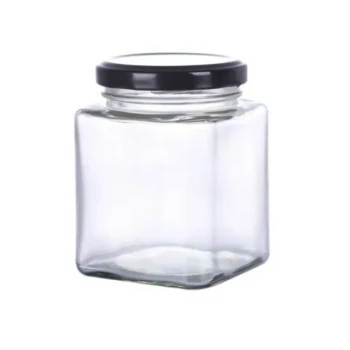
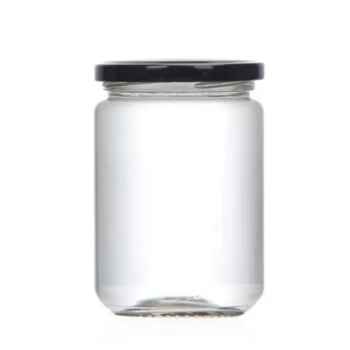
High-sealing glass containers are strictly necessary to ensure the validity of experimental data. During multi-week observation, these containers act as a physical barrier that prevents moisture exchange between the honey and the external environment. Because honey is highly hygroscopic, even minor fluctuations in moisture content can alter viscosity and supersaturation levels, thereby distorting the assessment of crystallization rates.
Core Takeaway Honey naturally absorbs atmospheric moisture, which acts as an uncontrolled variable in experiments. High-sealing glass locks out environmental humidity, ensuring that observed changes in the honey are the result of your controlled parameters—such as temperature and stirring—rather than accidental contamination.
The Critical Role of Moisture Control
The Hygroscopic Challenge
Honey is hygroscopic, meaning it actively attracts and holds water molecules from the surrounding air.
Without a hermetic seal, honey stored over several weeks will inevitably absorb moisture from the environment. This absorption changes the fundamental chemical composition of your sample.
Impact on Crystallization Data
The primary goal of observation is often to track crystallization rates.
Moisture absorption significantly alters the honey's supersaturation levels and reduces its viscosity. These alterations interfere with the natural crystallization process, rendering your data on rate and formation inaccurate.
Isolating Experimental Variables
To conduct a valid scientific observation, you must restrict variables to those you can control.
By using high-sealing containers, you ensure that the only factors influencing the honey are your pre-set conditions, such as temperature and stirring intensity. This isolation allows for a direct causal link between your settings and the observed results.
Advantages of Glass for Observation
Chemical Stability and Inertness
Glass is a non-reactive material, providing superior chemical stability compared to metals or lower-grade plastics.
It ensures that the container itself does not react with the honey's acids or introduce off-odors. This preserves the honey's original physicochemical indicators, ensuring the sample remains pure throughout the multi-week period.
Non-Invasive Visual Inspection
High-transparency glass allows for real-time monitoring without breaking the seal.
Researchers can inspect color changes, viscosity shifts, and layering issues visually. This is crucial because opening a container to check the sample would immediately expose it to air and moisture, compromising the experiment.
Prevention of Fermentation
In addition to skewing crystallization data, moisture absorption can trigger premature fermentation.
High-sealing glass prevents the water content from rising to levels that support yeast activity. This preserves the sample's integrity and prevents spoilage that would force the abandonment of the observation.
Understanding the Trade-offs
Fragility and Handling Risks
While glass offers superior chemical and visual benefits, it is inherently fragile.
In an industrial or busy laboratory setting, the risk of breakage is higher than with stainless steel or high-grade plastics. Protocols must be in place to handle these containers carefully to avoid losing weeks of observation data in a single accident.
Light Sensitivity
High transparency, while excellent for inspection, leaves honey vulnerable to light degradation.
If the observation does not require light exposure, clear glass containers must be stored in dark environments. Extended exposure to light can degrade specific nutrients and alter the honey's color independent of the variables you are testing.
Making the Right Choice for Your Goal
When selecting containers for honey storage and observation, your priority dictates your equipment choice.
- If your primary focus is accurate data collection: Prioritize the seal quality above all else to eliminate moisture exchange and isolate your variables.
- If your primary focus is visual monitoring: Ensure the glass has high light transmittance to allow for detailed inspection of layering and crystallization without opening the jar.
- If your primary focus is long-term sample purity: Rely on the non-reactive nature of glass to prevent chemical leaching or metallic contamination that can occur with other materials.
By controlling the environment, you transform a simple storage container into a precision scientific instrument.
Summary Table:
| Feature | Benefit for Honey Observation | Impact on Data |
|---|---|---|
| Hygroscopic Barrier | Prevents moisture exchange with air | Stabilizes viscosity and crystallization rates |
| Chemical Inertness | No reaction with honey acids | Preserves original physicochemical indicators |
| High Transparency | Allows non-invasive visual inspection | Enables monitoring without breaking the seal |
| Hermetic Sealing | Blocks environmental humidity and yeast | Prevents premature fermentation and spoilage |
Elevate Your Beekeeping Operations with HONESTBEE
At HONESTBEE, we specialize in empowering commercial apiaries and distributors with high-performance solutions. Whether you need precision honey-filling machines to ensure the perfect seal or high-quality beekeeping tools and machinery, we provide the full spectrum of equipment to protect your product's integrity.
From industrial hardware to honey-themed cultural merchandise, our comprehensive wholesale offering is designed to help you scale efficiently and maintain the highest standards of purity.
Ready to upgrade your production? Contact us today to discover how our specialized equipment can optimize your honey processing and storage.
References
- Lucília Carolina Vardenski Costa, Leda Battestin Quast. Influence of temperature and homogenization on honey crystallization. DOI: 10.1590/1981-6723.7314
This article is also based on technical information from HonestBee Knowledge Base .
Related Products
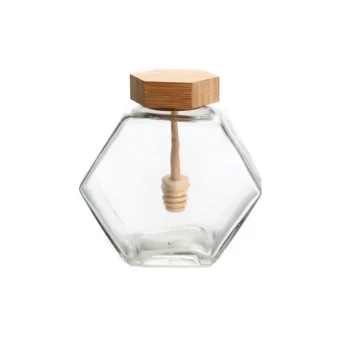
- Hexagonal Glass Honey Jar with Wooden Lid Integrated Dipper Elegant Functional Storage
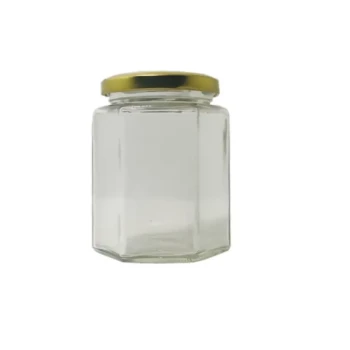
- Hexagonal Glass Honey Jars with Metal Lug Caps Elegant Versatile Packaging
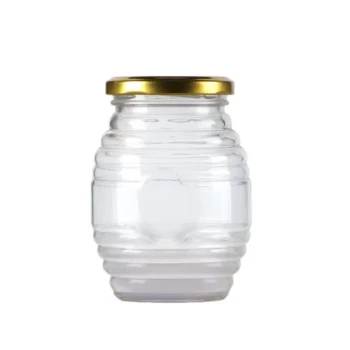
- Classic Glass Honey Jar with Metal Lug Cap for Beehive Storage
- Classic Drum Shaped Glass Honey Jar with Airtight Lid
- Modern Square Glass Honey Jar with Twist Off Lid
People Also Ask
- What are the benefits of glass jars regarding strength and safety for storing honey? Ensure Purity and Long-Term Quality
- What are the advantages of using glass jars for honey storage? Ensure Purity and Premium Appeal for Your Product
- What is the aesthetic appeal of using glass jars for honey? Elevate Your Brand with Premium Packaging
- What are the advantages of glass containers for honey? Elevate Quality and Market Value with Premium Packaging
- What are the benefits of using high-transparency Glass Jars for honey? Elevate Purity and Premium Branding