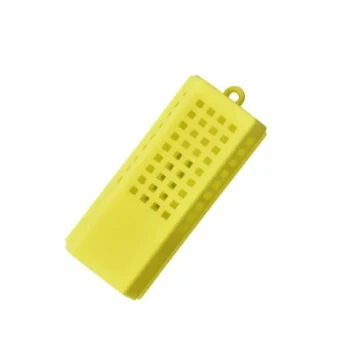
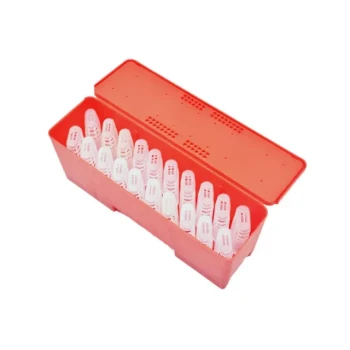
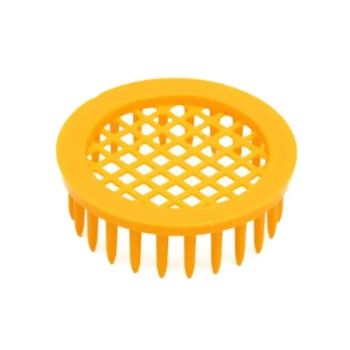
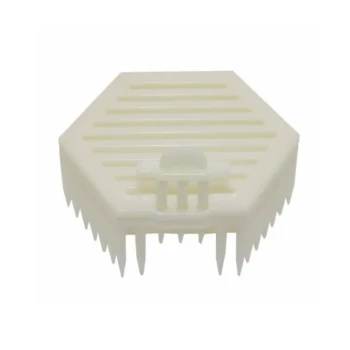
Integrated feeding reservoirs are essential because they function as an autonomous life-support system for the queen bee and her attendants during transit. By holding a stable nutritional medium, such as sugar candy or honey fondant, these built-in compartments ensure a continuous food supply, eliminating the need for manual intervention and significantly reducing the risk of starvation.
The core function of an integrated feeding reservoir is to transform a transport cage into a self-sustaining environment. It safeguards the queen's survival during long-distance logistics by mitigating the risk of starvation without requiring human maintenance.
The Mechanics of Survival During Transit
Continuous Nutritional Access
The primary danger to a queen bee during transport is the interruption of her food supply.
Integrated reservoirs solve this by holding a substantial amount of nutrition directly within the cage structure. This ensures the queen and her attendant bees have immediate, uninterrupted access to food at all times.
Supporting the Attendants
It is critical to remember that the queen cannot feed herself; she relies on her attendants.
The reservoir provides the energy source for the worker bees (attendants). By consuming the sugar candy or honey fondant, the attendants maintain the energy levels required to groom, feed, and regulate the temperature around the queen.
Material Consistency
The design specifically accommodates semi-solid foods like fondant or candy.
Unlike liquid syrups which can spill or drown bees during rough handling, these denser materials stay contained within the reservoir. They provide hydration and carbohydrates in a format that remains stable during shipping.
Operational Efficiency and Mortality Reduction
Eliminating Manual Intervention
Without an integrated reservoir, a beekeeper or shipper would need to intervene to feed the bees.
This design removes that variable entirely. Once the cage is closed, the no-maintenance nature of the reservoir allows the cage to travel through standard logistics channels without being opened, preserving the internal environment.
Reducing Mortality Rates
The correlation between food availability and survival is absolute.
By preventing starvation—the leading cause of loss in transit—integrated reservoirs serve as the primary defense against mortality. They extend the viable travel time, allowing for safer long-distance distribution.
Understanding the Limitations
Finite Capacity
While essential, the reservoir has a physical volume limit.
It provides a continuous source, but not an infinite one. For exceptionally long delays beyond the standard logistical window, the finite amount of candy may eventually be depleted, reintroducing the risk of starvation.
Temperature Sensitivity
The functionality of the reservoir relies on the consistency of the fondant or candy.
Extreme heat can cause the food to melt and become sticky, potentially trapping the bees. Conversely, extreme cold can harden the candy, making it difficult for the attendants to consume.
Making the Right Choice for Your Logistics
To maximize the success rate of your queen shipments, apply these principles:
- If your primary focus is long-distance transport: Ensure the reservoir is filled to capacity with high-quality, slow-releasing fondant to maximize the duration of nutritional availability.
- If your primary focus is minimizing handling risks: Rely on cages with robust integrated reservoirs to eliminate the need for opening the cage between the breeder and the destination apiary.
The integrated feeding reservoir is not just a convenience; it is the fundamental component that bridges the gap between the apiary and the destination, ensuring the queen arrives alive and viable.
Summary Table:
| Feature | Function & Benefit |
|---|---|
| Autonomous Life-Support | Provides continuous nutrition without requiring manual intervention during shipping. |
| Nutritional Medium | Accommodates stable sugar candy or fondant to prevent spills and dehydration. |
| Attendant Support | Fuels worker bees so they can groom and feed the queen throughout the journey. |
| Mortality Reduction | Acts as the primary defense against starvation, the leading cause of transit loss. |
| Logistical Efficiency | Enables long-distance distribution through standard channels with no-maintenance cages. |
Scale Your Queen Rearing Operations with HONESTBEE
For commercial apiaries and beekeeping distributors, ensuring the survival of high-value queens is a non-negotiable priority. HONESTBEE specializes in providing the industry with professional-grade queen transport cages featuring advanced integrated feeding reservoirs, alongside a full spectrum of beekeeping tools and machinery.
Whether you need specialized hive-making equipment, honey-filling automation, or bulk supplies of essential consumables, we deliver the hardware and expertise required to optimize your apiary’s productivity. Protect your investments and enhance your logistics efficiency today.
Contact HONESTBEE for Wholesale Inquiries
References
- Oleksandr Olshanskyi. IMPROVING THE PROFITABILITY OF U.S. APIARIES THROUGH THE USE OF OPTIMIZED QUEEN BEE TRANSPORTATION CAGES. DOI: 10.52058/2786-5274-2025-6(46)-559-570
This article is also based on technical information from HonestBee Knowledge Base .
Related Products
- Professional Queen Cage with Sliding Gate and Feeder Plug
- Professional Multi-Compartment Queen Cage with Sliding Lid
- Professional Queen Bee Introduction and Transport Cage
- JZBZ Style Professional Battery Box with 20 Shipping Cages
- Durable Galvanized Steel Spring Queen Bee Cage
People Also Ask
- Why are specialized queen bee cages used for the banking of mated queen bees? Maximize Commercial Apiary Storage Efficiency
- What is the mechanism of action for using temporary queen bee cages? Master Successful Queen Introduction
- How is a queen bee released from a queen cage? Ensure Safe Colony Integration & Hive Success
- What is the step-by-step process for installing a queen bee's cage onto a frame? Ensure Hive Acceptance Safely
- What technical precaution must be taken regarding the mesh or grill side of a queen bee cage? Ensure Queen Survival