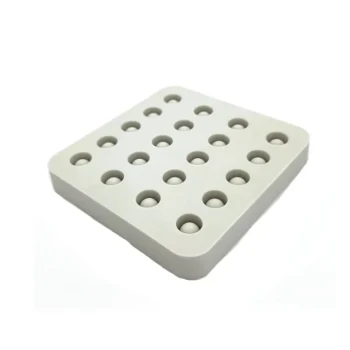
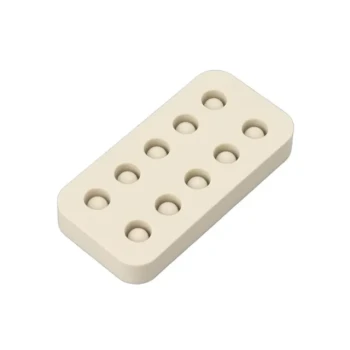
Large-sized artificial royal cells are strictly necessary because they provide the specific volume required to house the excessive larval food distinct to queen development. Without this expanded physical foundation, the larva lacks both the nutritional reservoir and the physical capacity to grow into a reproductively viable queen.
The biological demands of a stingless bee queen larva are fundamentally different from those of a worker. Large artificial cells are the only way to accommodate the significantly higher food intake required for development while preventing the physical deformities caused by spatial restriction.
The Biological Imperative for Volume
Accommodating Excessive Nutrition
Stingless bee queen larvae require a significantly higher volume of provisions than worker larvae. The primary function of the large artificial cell is to serve as a reservoir for this "excessive" larval food.
If the cell is too small, it physically cannot contain the amount of food the larva needs to consume. This leads to immediate nutritional deficiency, stunting the insect's growth potential.
Supporting Natural Body Size
The genetic programming of a queen dictates that she will grow larger than the standard colony population. The artificial cell acts as a physical foundation that supports this inevitable size expansion.
You cannot rear a large organism in a container designed for a smaller one. The wide dimensions of the artificial cell align with the biological reality of the queen’s physiology.
Preventing Developmental Failures
Avoiding Physical Distortion
Space is a critical factor in the structural integrity of the developing bee. When larvae are reared in cramped conditions, they are forced to grow into the shape of their container.
This restriction causes physical distortion, such as bent abdomens or malformed wings. A large-sized cell eliminates this pressure, allowing the larva to develop symmetrically.
Ensuring Full Extension During Metamorphosis
The final stages of metamorphosis are particularly sensitive to spatial constraints. To successfully pupate and emerge as a healthy virgin queen, the insect must be able to fully extend its body.
Large artificial cells provide the necessary headroom and width for this process. This ensures the queen completes her transformation without physical hindrance or stress.
Understanding the Trade-offs: Size vs. Environment
While the physical size of the cell is the foundation, volume alone does not guarantee success. You must also account for the internal micro-environment.
The Risk of Desiccation
A larger cell volume can sometimes lead to increased evaporation if not managed correctly. This is where biological auxiliary consumables become critical.
The Role of Royal Jelly
According to best practices in larval grafting, royal jelly must be placed at the base of the artificial cell. It serves two distinct purposes that cell size cannot address:
- Lubrication: It protects fragile larvae from physical damage during transfer.
- Hydration: It prevents fatal desiccation (drying out) before the larva can begin feeding on the main food store.
Making the Right Choice for Your Goal
To ensure high yields and healthy queens, you must balance physical dimensions with biological support.
- If your primary focus is Queen Morphology: Prioritize wide, large-sized cells to prevent physical distortion and ensure the queen can fully extend during metamorphosis.
- If your primary focus is Larval Survival: Ensure you use royal jelly at the base of the cell to act as a lubricant and prevent dehydration during the grafting process.
By combining the correct physical volume with the proper biological safeguards, you simulate the natural conditions required for a high-quality queen to emerge.
Summary Table:
| Feature | Importance in Queen Rearing | Benefit to Development |
|---|---|---|
| Cell Volume | Houses excessive larval food provisions | Prevents nutritional deficiency and stunting |
| Physical Space | Accommodates the queen's larger body size | Eliminates physical distortion and malformation |
| Spatial Width | Allows for full extension during metamorphosis | Ensures healthy pupation and symmetrical growth |
| Royal Jelly Base | Provides lubrication and hydration | Protects larvae from damage and desiccation |
Elevate Your Queen Rearing Success with HONESTBEE
At HONESTBEE, we understand that precision in queen rearing is the foundation of a thriving colony. We cater specifically to commercial apiaries and distributors, providing a comprehensive range of professional beekeeping tools, from specialized artificial royal cells to high-capacity honey-filling machinery.
Our mission is to empower your business with industry-leading consumables and hardware designed for scale and reliability. Whether you are expanding your stingless bee operation or stocking high-quality merchandise for your apiary, our wholesale offerings ensure you have the competitive edge.
Ready to scale your production? Contact us today to discover how HONESTBEE can supply your operation with the professional equipment and expertise you need to succeed.
References
- Francisco Garcia Bulle Bueno, Denise A. Alves. The queens of the stingless bees: from egg to adult. DOI: 10.1007/s00040-022-00894-0
This article is also based on technical information from HonestBee Knowledge Base .
Related Products
- Brown Nicot Queen Cell Cups for Breeding Queen Bees Beekeeping
- JZBZ Langstroth Queen Rearing Frame for Beekeeping
- JZBZ Push-In Queen Cell Cups for Beekeeping
- High-Efficiency 20-Cell Silicone Mold for Beeswax Bee Queen Cup Production
- Queen Bee Artificial Insemination Instrument Equipment for Instrumental Insemination
People Also Ask
- What role do specialized queen rearing tools play in developing mite-resistant honeybee stock? Master Genetic Selection
- What materials are used to make artificial queen cell cups for grafting? Beeswax vs. Plastic Guide
- What roles do specialized queen cell cups play in royal jelly production? Optimize Your Hive's Secretion and Yield
- How does the standardized depth of queen cell cups affect larval acceptance? Boost Success with 6mm Precision
- Why is a diluted royal jelly solution applied to queen cell cups? Boost Acceptance in Artificial Grafting