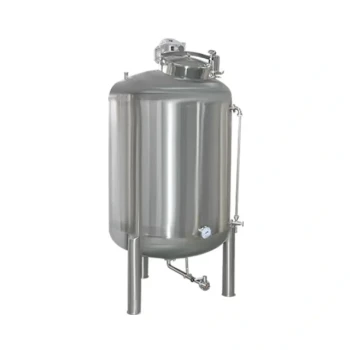
Modern storage facilities and advanced packaging are the primary defense against product degradation and value loss in the honey supply chain. Honey is inherently hygroscopic, meaning it actively absorbs moisture and odors from the environment, which can lead to rapid fermentation and flavor spoilage. Professional facilities and airtight technologies provide the necessary physical barriers to stabilize the product’s chemical properties, extending shelf life and ensuring the honey remains viable for long-distance distribution and large-scale retail.
The core challenge in honey distribution is that the product is biologically active and sensitive to its environment. Advanced storage and packaging are not just containers; they are essential preservation systems required to maintain the chemical integrity, safety, and brand consistency needed for high-end market entry.
Preserving Chemical and Physical Integrity
Combating Moisture and Contamination
Honey is susceptible to absorbing atmospheric moisture and external odors. If moisture content rises too high, naturally occurring yeast can trigger fermentation, ruining the product.
Specialized, food-grade storage containers are essential to block these environmental contaminants. They prevent chemical migration from the packaging material itself and ensure the honey retains its original physicochemical properties.
Regulating Biological Activity
Beyond moisture, honey is sensitive to temperature and light fluctuations. Exposure to heat can degrade biological enzymes and flavor, while uncontrolled cold can accelerate crystallization.
Industrial-grade storage facilities utilize temperature-controlled and light-shielded environments. This infrastructure protects the honey’s biological activity during harvest and storage, ensuring the sensory characteristics remain unchanged throughout the distribution cycle.
Enabling Global Logistics and Scalability
The Power of Standardization
Moving honey from local apiaries to global markets requires rigorous efficiency. Standardized packaging containers offer uniform physical protection, which is critical for stacking and maximizing storage density.
When integrated with specialized equipment, these standardized units significantly reduce breakage rates. They also provide the necessary hardware surface for product traceability, a key requirement for meeting international safety standards.
Automation for Mass Retail
Accessing high-volume channels, such as supermarkets, demands absolute consistency. Automated filling machines are critical for scaling production from bulk raw material to consumer-ready units.
These systems ensure precise sealing and aesthetic uniformity on the shelf. This level of consistency is virtually impossible to achieve manually and is a prerequisite for building a reliable brand image in competitive retail spaces.
Strategic Market Segmentation
Advanced packaging allows producers to diversify their offerings. By utilizing varying specifications, such as 250ml or 500ml bottles, distributors can target specific consumer behaviors.
Small-scale packaging caters to trial purchases or tourism markets, while larger units serve long-term household use. This flexibility allows producers to optimize pricing strategies and maximize visibility across different distribution channels.
Understanding the Trade-offs
Capital Investment vs. Market Access
Implementing industrial-grade storage and automated packaging requires significant upfront capital. Producers must weigh this cost against the potential revenue from premium markets that require these high standards.
Rigidity of Standardization
While standardization improves logistics, it can limit flexibility. Committing to specific packaging ecosystems (e.g., specific stackable crates or bottle shapes) may make it difficult to pivot quickly if market preferences for packaging aesthetics change.
Making the Right Choice for Your Goal
To maximize the value of your honey distribution, align your infrastructure investments with your target market.
- If your primary focus is high-volume retail: Prioritize automated filling and standardized, stackable packaging to ensure shelf consistency and satisfy strict supplier requirements.
- If your primary focus is premium export: Invest heavily in temperature-controlled logistics and high-barrier materials to prevent fermentation and preserve the unique flavor profile during long transit times.
By treating storage and packaging as active preservation systems rather than passive containers, you secure the product's value from the apiary to the consumer's shelf.
Summary Table:
| Feature | Impact on Honey Quality | Distribution Benefit |
|---|---|---|
| Airtight Packaging | Prevents moisture absorption and fermentation | Extends shelf life for global export |
| Climate Control | Preserves enzymes and prevents crystallization | Maintains consistent sensory profile |
| Standardized Units | Reduces physical damage and breakage | Optimizes logistics and storage density |
| Automated Filling | Ensures precise sealing and aesthetic uniformity | Enables high-volume retail market entry |
Scale Your Honey Business with HONESTBEE
Transitioning from local apiaries to global distribution requires more than just high-quality honey—it requires the right infrastructure. HONESTBEE supports commercial apiaries and distributors with the professional tools needed to protect your product and your brand.
Our Value to You:
- Industrial Machinery: High-precision honey-filling and hive-making machines to automate your production line.
- Comprehensive Equipment: A full spectrum of beekeeping tools and hardware designed for durability and scale.
- Essential Consumables: From high-barrier packaging to honey-themed merchandise, we supply everything to reach high-end markets.
Ready to enhance your supply chain efficiency? Contact us today to explore our wholesale solutions and expert equipment range.
References
- Gaurav Kumar, Nasreen Musheer. A study on honey production and marketing in Behat region of district Saharanpur. DOI: 10.22271/j.ento.2022.v10.i4a.9036
This article is also based on technical information from HonestBee Knowledge Base .
Related Products
- Professional Honey Storage Tank with Agitation System
- Hexagonal Glass Honey Jars with Metal Lug Caps Elegant Versatile Packaging
- Stainless Steel Honey Storage and Settling Tank with Double Strainer
- Stainless Steel Honey Storage Tank with Lid for Honey
- Hexagonal Glass Honey Jar with Wooden Lid Integrated Dipper Elegant Functional Storage
People Also Ask
- What economic role do honey storage tanks play? Boost Your Revenue Through Strategic Inventory Management
- What roles do industrial honey storage tanks and filtration meshes play in processing? Ensure Purity & Consistency
- What is the purpose of a honey storage tank? Streamline Your Honey Processing for Quality & Efficiency
- What are honey storage tanks used for? Essential Features for Quality Preservation and Profit
- How do large honey storage tanks and gravity fall filling systems improve honey packaging efficiency and safety?