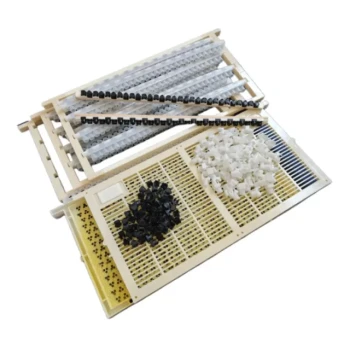
Maximizing larvae acceptance begins with biological preparation. Placing queen rearing frames in a queenless colony for 2 to 24 hours leverages the natural cleaning instincts of worker bees to polish artificial cells. This critical "pre-cleaning" phase removes foreign manufacturing odors and coats the components with the colony’s unique pheromone scent, ensuring worker bees accept and nurture the grafted larvae rather than rejecting them as foreign objects.
Core Takeaway: Pre-cleaning bridges the gap between synthetic equipment and natural hive biology. By integrating the colony's scent into artificial cups, beekeepers significantly increase acceptance rates and the eventual quality of the queen bees produced.
The Biological Mechanics of Pre-Cleaning
Polishing and Structural Refinement
Worker bees are instinctively driven to maintain a pristine environment for brood rearing. When a frame is introduced, bees immediately begin polishing the artificial cell cups, often trimming or refining the edges to more closely resemble natural structures.
This mechanical refinement makes the synthetic material more "familiar" to the nurse bees. It ensures that once grafting occurs, the bees are already primed to treat the cup as a viable cradle for a new queen.
Chemical Integration and Scent Masking
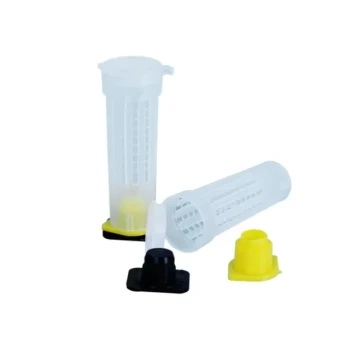
Artificial materials, particularly plastic cell cups, often carry residual odors from manufacturing or storage. Worker bees utilize beeswax and propolis to apply a microscopic layer over the interior of the cups.
This process masks foreign odors and replaces them with the colony-specific pheromone scent. Without this chemical "handshake," the success rate of the graft can plummet as the bees may identify the cup as a foreign contaminant.
The Strategic Role of the Queenless State
Leveraging Physiological Urgency
Placing these frames into a queenless colony creates a state of biological urgency. In the absence of a queen, the worker bees’ instinct to raise a replacement is at its peak.
This heightened state ensures the bees focus their energy on preparing the new cells immediately. A strong population of nurse bees in this environment provides the metabolic heat and attention necessary for high-quality cell preparation.
Impact on Royal Jelly Secretion
A well-prepared cell cup induces worker bees to begin feeding the larvae immediately after grafting. This rapid response is essential for maximizing the secretion of royal jelly.
For commercial operations, this efficiency translates directly into higher yields of royal jelly and larger, more robust virgin queens. It minimizes the "lag time" that occurs when bees are hesitant to accept a new frame.
Understanding the Trade-offs and Pitfalls
The Risks of Timing Errors
Timing is a delicate balance; while some suggest as little as two hours, most experts recommend 14 to 24 hours for full integration. If the frame is left too long, bees may begin to build "burr comb" or bridge the cells, making grafting difficult.
Conversely, skipping the pre-cleaning phase entirely often leads to low acceptance rates. This results in wasted labor and reduced productivity for the breeding cycle.
Material Selection and Quality
The quality of the specialty queen rearing frames and cell bars matters significantly. Low-quality plastics may off-gas more aggressively, requiring longer pre-cleaning periods or even causing permanent rejection.
Distributors should prioritize sourcing frames that use food-grade, low-odor materials. This reduces the burden on the bees and ensures a more consistent result for the end-user.
Optimizing Your Sourcing Strategy for Client Success
Providing your clients with the right tools is only half the battle; providing them with the expertise to use them ensures long-term loyalty. As a distributor, your focus should be on offering a full-spectrum product portfolio that supports these biological requirements.
- If your primary focus is rapid order fulfillment: Ensure your supply chain is optimized for ultra-fast delivery so beekeepers can receive their specialized frames exactly when the biological window for queen rearing opens.
- If your primary focus is technical expertise: Educate your B2B clients on the importance of "pre-cleaning" to help them reduce failure rates and improve the perceived value of the premium equipment you trade.
- If your primary focus is product versatility: Source a variety of cell bar frames and cup materials that allow beekeepers to choose the best option for their specific colony strength and environment.
Empowering your clients with high-quality equipment and the professional knowledge to use it correctly creates a foundation for sustainable industry growth.
Summary Table:
| Feature | Pre-Cleaning Impact | Key Benefit for Beekeepers |
|---|---|---|
| Scent Integration | Removes manufacturing odors; adds colony pheromones | Prevents rejection of artificial cups |
| Physical Polishing | Workers refine cell edges and coat with propolis | Creates a natural environment for larvae |
| Biological State | Leverages queenless urgency in nurse bees | Triggers immediate royal jelly secretion |
| Optimal Timing | Recommended 14 to 24 hours before grafting | Maximizes acceptance without burr comb risk |
Scale Your Beekeeping Wholesale Business with HONESTBEE
Are you looking to provide your clients with professional-grade equipment that ensures high success rates? HONESTBEE is your strategic partner for one-stop sourcing in the beekeeping industry. We cater specifically to commercial apiaries, distributors, and B2B resellers, offering a comprehensive full-spectrum product portfolio.
Why partner with HONESTBEE?
- Comprehensive Wholesale Offering: From specialized hardware like hive-making and honey-filling machines to high-quality queen rearing frames and essential consumables.
- Rapid Fulfillment: We understand the biological windows of beekeeping; our ultra-fast delivery and efficient order fulfillment ensure you never miss a season.
- Deep Industry Expertise: Our products are designed with professional biological requirements in mind, ensuring premium performance for the end-user.
- Dedicated Support: Benefit from our exceptional customer service and premium trading services designed to boost your profit margins.
Empower your customers with the best tools in the industry. Contact HONESTBEE Today to explore our wholesale opportunities and specialized equipment solutions!
References
- Mohammed Ahmed Alshogari, A. M. Raut. Queen Rearing Optimization: Role of Queen Cup Materials and Substrates on Larval Acceptance and Queen Emergence Rate in <i>Apis Mellifera</i> L. DOI: 10.55446/ije.2025.3263
This article is also based on technical information from HonestBee Knowledge Base .
Related Products
- JZBZ Langstroth Queen Rearing Frame for Beekeeping
- Portable Bee Mating Hive Boxes Mini Mating Nucs 8 Frames for Queen Rearing
- Professional Wooden Requeening Frame for Beekeeping
- Jenter Queen Rearing Kit Complete Set for Bee Breeding
- Premium Nicot Style Queen Rearing Kit with Hair Roller Bee Cages
People Also Ask
- Why use finishing colonies for queen cell capping? Secrets to Superior Queen Quality and Performance
- How do queen rearing frames and grafting needles function together? Master the Doolittle Method for High-Quality Queens
- What is the purpose of queen rearing frames? Master Controlled Queen Production for Your Apiary
- What are the functions of queen rearing frames and artificial queen cells? Master Bee Genetic Improvement
- What roles do professional queen rearing frames and artificial queen cells play? Scaling Your Queen Bee Production