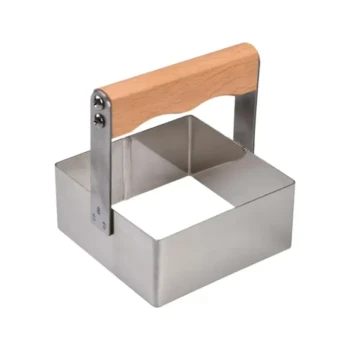
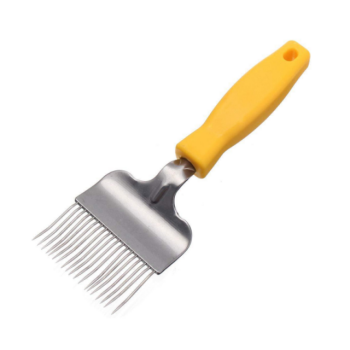
Specialized brood comb sampling tools are essential for extracting honeybee larvae and pupae at precise developmental stages while maintaining the structural integrity of the honeycomb. Because viral infection rates and loads vary drastically depending on the age of the bee, this mechanical precision is the only way to obtain accurate epidemiological data.
Effective epidemiological investigation requires isolating variables. By using specialized tools to collect specific age cohorts without damage, researchers can accurately map vertical transmission patterns of viruses that manifest differently across the bee's lifecycle.
The Critical Role of Developmental Stages
Variability in Viral Loads
Viruses do not affect all members of a colony equally. Pathogens such as Israel Acute Paralysis Virus (IAPV) exhibit significantly different infection rates and viral loads depending on the host's developmental stage.
The Necessity of Age-Specific Data
To study epidemiology effectively, researchers cannot treat the colony as a single homogeneous unit. You must distinguish between the viral load in a larva versus a pupa to understand the disease's progression.
Specialized tools allow for this segregation. They enable the extraction of distinct cohorts, preventing the data "noise" that occurs when developmental stages are mixed during sampling.
Unlocking Vertical Transmission Patterns
Tracing Infection Pathways
A primary goal of these investigations is often to understand vertical transmission—how a virus passes from the parent generation (queen) to the offspring.
This transmission is rarely uniform. It may spike or drop at specific points in the bee's growth cycle.
Revealing Hidden Patterns
Without precise sampling, these transmission patterns remain hidden. Specialized tools allow researchers to pinpoint exactly when and where the virus proliferates within the brood, providing a clear map of vertical transmission dynamics.
Operational Integrity and Common Pitfalls
Preserving Hive Structure
Beyond data accuracy, the physical impact on the hive matters. Specialized tools are designed to extract samples without damaging the delicate honeycomb structure.
Crude sampling methods can destroy the comb, stressing the colony and potentially altering the very variables (such as stress-induced viral susceptibility) the researcher is trying to measure.
The Trade-off of Precision
The primary challenge in epidemiological sampling is the balance between sample volume and sample specificity.
While bulk sampling is faster, it obliterates the nuance required for viral analysis. The "trade-off" here is that specialized tools require more time and care to operate, but this investment is non-negotiable for valid vertical transmission data.
Ensuring Data Validity for Your Research
If your primary focus is mapping viral transmission:
- Use specialized tools to isolate specific age cohorts, as viruses like IAPV manifest differently in larvae versus pupae.
If your primary focus is colony maintenance:
- Utilize these tools to extract necessary biological samples without compromising the structural integrity of the honeycomb.
Precision in sampling transforms raw biological material into actionable epidemiological intelligence.
Summary Table:
| Feature | Specialized Sampling Tools | Conventional/Bulk Methods |
|---|---|---|
| Data Precision | High; isolates specific age cohorts | Low; mixes developmental stages |
| Viral Load Accuracy | Captures age-dependent variations | Provides generalized, noisy data |
| Hive Impact | Preserves honeycomb structure | Risk of structural damage and stress |
| Best Use Case | Epidemiology & Vertical Transmission | General colony health screening |
Elevate Your Apiary Operations with HONESTBEE
At HONESTBEE, we understand that precision is the foundation of a successful commercial apiary. Whether you are conducting vital disease research or scaling your production, our comprehensive wholesale range of beekeeping tools, machinery, and essential consumables is designed to meet the highest industry standards.
We provide everything from specialized hardware to honey-filling machines, ensuring that distributors and commercial beekeepers have the equipment needed to maintain hive integrity and operational efficiency.
Ready to upgrade your equipment? Contact us today to discover how our professional-grade solutions can support your business goals and enhance your apiary’s productivity.
References
- Dilek Muz, Mustafa Necati Muz. ISRAEL ACUTE BEE PARALYSIS VIRUS PREVALENCE IN APIARIES WITH COLONY LOSS IN TÜRKİYE. DOI: 10.31467/uluaricilik.1265816
This article is also based on technical information from HonestBee Knowledge Base .
Related Products
- Heavy Duty Stainless Steel Honeycomb Cutter
- Professional Frame Comb Fork and Lifter for Efficient Handling
- Professional Wide Blade Honey Scraper for Beekeeping and Honey Processing
- Wooden Bee Brush with Double-Row Horsehair Bristles
- Professional Bent Tine Honey Uncapping Fork with Ergonomic Grip
People Also Ask
- How is a comb cutter used to produce cut comb honey? Master the Art of Precision Harvesting
- Why is the comb-cutting technique preferred for Apis cerana queen rearing? Boost Success with Natural Bee Biology
- What is the cut comb honey method? A Guide to Pure, Artisanal Honey Production
- How is the cut comb method used to harvest honey? Master the Art of Premium Unprocessed Honey Production
- What is cut comb honey, and how is it prepared? Experience Honey in Its Purest Form