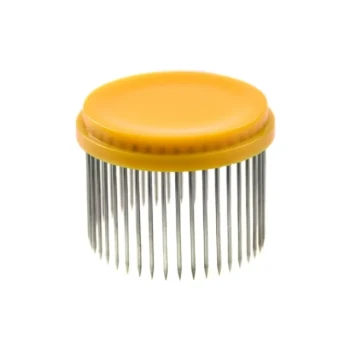
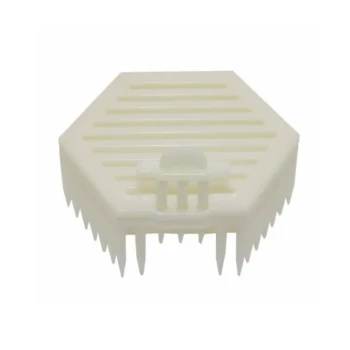
Specialized queen cages are the foundational safety mechanism for colony transition and genetic improvement. They provide a critical physical barrier that prevents worker aggression while facilitating pheromone acclimation, ensuring the high survival and acceptance rates necessary for commercial beekeeping success.
Specialized queen cages mitigate the inherent risks of bee colony management by providing a controlled environment for the queen. By isolating the queen during her most vulnerable stages—rearing, transport, and introduction—these tools protect the financial and genetic investment of the apiary.
Ensuring Acceptance Through Pheromone Management
Gradual Olfactory Integration
The primary function of a specialized cage is to allow pheromone circulation without physical contact. This "slow release" of the queen's scent allows the worker bees to acclimate to her presence, reducing the likelihood of the colony perceiving her as an intruder.
Prevention of Aggressive Rejection
Without a cage, worker bees often exhibit "balling" behavior, where they surround and kill a new queen due to scent mismatch. The cage acts as a physical shield, preventing injury or death during the critical first 24 to 72 hours of introduction.
Stability During Colony Merging
When merging two colonies or introducing a high-value queen, the cage provides a temporary sanctuary. This ensures a stable leadership transition, maintaining the colony’s long-term productivity and preventing the "emergency" queen rearing that can result from a failed introduction.
Streamlining the Rearing and Logistics Chain
Protection of Developing Queen Cells
During the rearing process, specialized protector cages shield developing queen cells from being destroyed by early-emerging rival queens or worker bees. This isolation is essential for maximizing the yield of a single rearing cycle.
Facilitating Safe Long-Distance Transit
For wholesalers and distributors, cages are vital for secure transportation. They are designed to hold the queen and a few "attendant" bees, along with a sugar candy food source, ensuring the queen remains hydrated and nourished during transit.
Precision in Commercial Egg-Laying
In advanced queen rearing, specialized cages can confine a queen to specific areas of the comb. This allows for highly synchronized egg-laying, enabling the collection of larvae of a uniform age without the need for manual grafting, which reduces labor costs and mechanical damage.
Strategic Pitfalls in Cage Selection
Material and Design Flaws
Inadequate cage design can lead to ventilation failures or "leaky" pheromone control, where the queen is attacked through the mesh. Choosing high-quality, professional-grade cages is necessary to ensure the structural integrity required for both shipping and hive placement.
Risks of Improper Candy Depth
If the sugar candy plug in an introduction cage is too thin, the queen may be released prematurely before the colony has accepted her scent. Conversely, if it is too hard or deep, she may remain trapped too long, increasing stress and potentially leading to starvation if attendants are not present.
Neglecting Purity and Hygiene
Reusing cages without proper sterilization can introduce pathogens into a healthy colony. For distributors, providing single-use or easily sanitizable options is a key service that protects the end-user’s biosecurity.
Optimizing Your Sourcing Strategy
Choosing the right equipment is a balance between biological necessity and operational efficiency. As a distributor, your focus should be on providing a comprehensive range of tools that address every stage of the queen's lifecycle.
- If your primary focus is high-volume commercial honey production: Prioritize robust introduction cages that facilitate rapid, high-success requeening to minimize downtime.
- If your primary focus is queen breeding and genetics: Source specialized rearing and cell-protector cages that ensure maximum yield and protection for high-value genetic stock.
- If your primary focus is long-distance shipping and logistics: Invest in lightweight, durable transit cages with integrated feeding chambers to ensure zero-mortality deliveries.
By integrating these specialized tools into your inventory, you provide beekeepers with the precision required to maintain healthy, productive, and genetically superior colonies.
Summary Table:
| Stage | Key Function | Benefit for Beekeepers |
|---|---|---|
| Rearing | Queen Cell Protection | Maximizes yield by preventing rival queen attacks. |
| Introduction | Pheromone Acclimation | Minimizes worker aggression and ensures acceptance. |
| Transit | Secure Logistics | Guarantees safety and nutrition during long-distance shipping. |
| Breeding | Controlled Egg-Laying | Enables uniform larvae collection and reduces labor costs. |
Scale Your Beekeeping Business with HONESTBEE
Elevate your wholesale inventory with HONESTBEE’s professional-grade beekeeping solutions. As a dedicated partner to commercial apiaries and B2B distributors, we provide a one-stop sourcing experience for everything from specialized queen cages and hive-making machinery to essential industry consumables and honey-themed merchandise.
Why partner with us?
- Comprehensive Portfolio: Full-spectrum supply of tools, hardware, and specialized machinery.
- Unmatched Efficiency: Ultra-fast delivery and rapid response times to keep your supply chain moving.
- Expert Support: Deep industry expertise to assist with OEM/ODM requirements and certifications.
- Reliability: High-quality products designed for maximum profit margins and customer satisfaction.
Contact us today to explore our wholesale catalog and secure your supply!
References
- Josueth Alfonso Meza Cisneros, Karla Itzél Alcalá Escamilla. Explorando las demandas de capacitación en apicultura: un enfoque multirregional. DOI: 10.31948/rc.v32i1.3959
This article is also based on technical information from HonestBee Knowledge Base .
Related Products
- Professional Queen Bee Introduction and Transport Cage
- Professional Queen Cage with Sliding Gate and Feeder Plug
- Professional Round Push-In Queen Cage with Metal Tines
- Professional Multi-Functional Queen Bee Cage
- Professional Multi-Compartment Queen Cage with Sliding Lid
People Also Ask
- Why are specialized queen bee cages used for the banking of mated queen bees? Maximize Commercial Apiary Storage Efficiency
- What is the mechanism of action for using temporary queen bee cages? Master Successful Queen Introduction
- How is a queen bee released from a queen cage? Ensure Safe Colony Integration & Hive Success
- What materials are required to install a queen bee's cage into a hive? Essential Tools for Successful Queen Integration
- How long should a queen bee stay in the cage before being released? Ensure a Successful Introduction