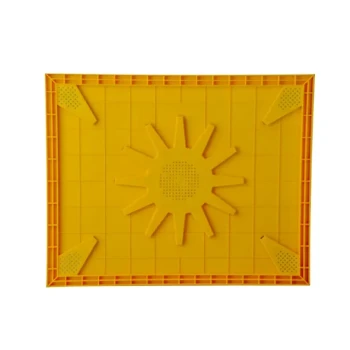
Specialized sticky boards are the primary data recording interface for non-invasive Varroa destructor monitoring. Placed at the bottom of the hive, these adhesive-coated sheets capture mites that fall naturally or are dislodged by worker bees, transforming physical debris into a quantifiable sample. This process provides the hard evidence required to calculate infestation rates and determine the necessity of medical intervention.
Core Takeaway Sticky boards function as the "diagnostic chart" for the bee colony. By physically trapping falling mites over a set timeframe, they provide a standardized, representative sample of the parasite load, allowing beekeepers to make evidence-based decisions on treatment without disrupting the colony's internal operations.
The Mechanics of Accurate Detection
Trapping the Target
The fundamental mechanism of a sticky board is its adhesive layer. Varroa mites frequently lose their grip on bees or are groomed off by workers.
Without a sticky surface, these mites might crawl back onto a host or be carried away by bees cleaning the hive. The adhesive fixes the mite in place immediately upon contact, ensuring that every fallen parasite contributes to the data sample.
Visual Identification and Counting
Industrial-grade sticky boards are often designed with a specific visual aid: a black and white grid.
This grid serves a critical technical function. It allows the technician to scan the board systematically, reducing the cognitive load of counting and preventing double-counting. This design creates a standardized data foundation, ensuring that counts are consistent across different hives and inspection dates.
The Role in Integrated Pest Management (IPM)
Establishing Natural Mite Fall
The primary metric derived from these boards is the "natural mite fall" rate. This is a calculation of the average daily mite drop.
By monitoring this rate continuously, managers can estimate the total mite population within the hive. This data informs the beekeeper when the infestation has crossed a critical threshold, signaling the immediate need for treatment to prevent colony collapse.
Verifying Treatment Efficacy
Sticky boards are essential for validating whether a treatment plan actually worked.
When specialized miticides are applied, the goal is to dislodge or kill the parasites. A sticky board placed during and after treatment captures these "drug-induced" drops. A high count suggests the treatment is effective; a low count (when infestation is known to be high) may indicate resistance or improper application.
Non-Invasive Colony Protection
Monitoring Without Disruption
Traditional sampling methods often require opening the hive or sacrificing a sample of bees (e.g., alcohol washes).
Sticky boards operate externally or at the periphery of the hive ecosystem. They slide onto the bottom board or beneath a screened mesh, allowing data collection to occur without smoking the bees, opening the brood box, or altering the internal temperature.
Physical Isolation
When used in conjunction with screened bottom boards (typically utilizing a 3mm mesh), sticky boards create a physical barrier.
The mesh allows mites to fall through but prevents bees from contacting the adhesive or the waste. This isolation ensures that the sample remains undisturbed by hive activity, providing a clean "snapshot" of the parasite load for the technician to analyze.
Understanding the Trade-offs
The Lag in Data
While sticky boards are non-invasive, they are a lagging indicator rather than an instant one.
Unlike an alcohol wash which gives immediate results, sticky boards typically require exposure for 24 to 72 hours to generate a statistically significant average. They are monitoring tools, not instant diagnostic tests.
Debris Interference
The adhesive does not discriminate between mites and other hive debris.
Pollen, wax cappings, and general hive trash also fall onto the board. In highly active colonies, this debris can obscure mites, making the counting process time-consuming and requiring a trained eye to differentiate between a mite and a wax scale.
Making the Right Choice for Your Goal
To effectively utilize sticky boards in your management strategy, align their use with your specific objectives:
- If your primary focus is Routine Surveillance: Deploy sticky boards for 3-day intervals monthly to establish a baseline "natural fall" trend line for each colony.
- If your primary focus is Treatment Auditing: Insert sticky boards immediately upon applying miticides to quantify the "kill rate" and confirm the chemical is active.
- If your primary focus is IPM Compliance: Use grid-marked boards to ensure your data is standardized and defensible for regulatory or research records.
Successful Varroa management relies not on guessing, but on the precise, quantitative history that only a specialized sticky board can provide.
Summary Table:
| Feature | Benefit for Beekeeping Operations |
|---|---|
| Adhesive Coating | Prevents mites from crawling back to hosts; ensures accurate count |
| Standardized Grids | Simplifies visual identification and prevents double-counting error |
| Non-Invasive Design | Monitors parasite load without disrupting brood or hive temperature |
| IPM Integration | Establishes 'natural mite fall' rates for data-driven treatment |
| Efficacy Audit | Validates the success of miticides by capturing dislodged parasites |
Maximize Your Apiary Productivity with HONESTBEE
Effective Varroa management starts with high-quality data. HONESTBEE provides commercial apiaries and distributors with the professional-grade consumables and equipment needed to scale efficiently. From precision-gridded sticky boards and essential hive consumables to advanced honey-filling machines and hive-making hardware, we supply everything your business needs to thrive.
Partner with us to access a comprehensive wholesale portfolio of beekeeping tools and honey-themed cultural merchandise designed for the modern industry. Contact HONESTBEE today to discuss your bulk supply needs and see how our expertise can streamline your beekeeping operations.
References
- Michael Rubinigg, Joseph A. Cazier. Predicting Varroa: Longitudinal Data, Micro Climate, and Proximity Closeness Useful for Predicting Varroa Infestations (I1.A1). DOI: 10.51269/uytg5962
This article is also based on technical information from HonestBee Knowledge Base .
Related Products
- Langstroth Solid Bottom Board for Beekeeping
- Solid Bottom Board Australian Pine Wood Langstroth Bottom Board for Wholesale
- HONESTBEE Multi Exit Plastic Bee Escape Board for Efficient Honey Harvesting
- Langstroth Screen Bottom Board for Beekeeping Wholesale
- Australian Pine Wood Langstroth Screen Bottom Board for Wholesale
People Also Ask
- What are the functions of solid bottom boards for a beehive? Essential Thermal Protection and Winter Survival Tips
- What is the purpose of a solid bottom board for bee hives? Enhance Hive Health and Winter Survival
- How does climate influence the choice between a solid and screened bottom board? Optimize Your Hive for Local Weather
- What is the primary function of a bottom board in a modern modified beehive system? Essential Foundation Guide
- What are the characteristics of a solid bottom board for a beehive? Boost Colony Health and Thermal Insulation