Standardized five-frame bee hives are the industry benchmark for precision disease management because they provide a uniform spatial environment and consistent colony strength. By eliminating variables like hive volume and initial bee population, these hives allow for the accurate measurement of how different treatments impact colony health. This standardization is critical for professional apiaries to validate the effectiveness of disease control protocols, such as antibiotic applications or probiotic supplements.
The standardized five-frame hive acts as a "controlled variable" that ensures data consistency and operational efficiency, allowing distributors to provide clients with a reliable hardware foundation for both research and large-scale disease prevention.
Establishing a Scientific Baseline for Disease Treatment
Uniformity in Experimental Design
Professionals use five-frame hives to ensure high comparability between treatment groups. By fixing the number of worker bees and the age of the queen, you remove noise from the data.
Eliminating Spatial Variables
Standardized dimensions prevent errors when measuring brood area and colony development. This ensures that the results of a disease intervention are due to the treatment itself, not the hive's physical dimensions.
Consistent Social Structure
This specific colony size provides a measurable pollination pressure and a stable social structure. It allows for the scientific evaluation of honey bees as biological inputs in commercial crop production.
Operational Advantages for Commercial Management
Interchangeability and Rapid Inspection
High-specification designs allow for the seamless interchange of frames and components. This facilitates ultra-fast inspections, allowing beekeepers to detect early signs of larval activity or honey fermentation before they spread.
Supporting Mechanized Operations
A structured spatial layout supports mechanized operations and standardized pathogen monitoring. This consistency is vital for maintaining long-term data integrity across large-scale commercial apiaries.
Efficient Resource Allocation
Using standardized hardware simplifies the relocation of colonies during migratory beekeeping. It ensures that every unit in a fleet is compatible, reducing downtime during peak production periods.
Enhancing Natural Colony Defenses
Microclimate Stability and Pest Control
Precision-manufactured hives minimize cracks and gaps, restricting space for Small Hive Beetles to lay eggs. A stable internal microclimate helps the colony maintain its natural defensive capabilities against environmental stressors.
Assessing Genetic Resistance
Standardized frame counts help balance initial strength in disease resistance studies for American Foulbrood (AFB). This allows researchers to isolate genetic resistance traits rather than focusing on colony size inconsistencies.
Pathogen Monitoring Reference
The structured layout provides a standardized spatial reference for pathogen monitoring. This ensures that monitoring data remains consistent and comparable across different apiary locations over time.
Understanding the Trade-offs of Five-Frame Units
Limited Scalability for Peak Production
While five-frame hives are superior for monitoring and disease control, they require frequent oversight during high nectar flows. Their smaller volume can lead to swarming if not managed with timely additions of supers.
Requirement for High-Precision Manufacturing
The benefits of standardization depend entirely on manufacturing tolerances. Low-quality hardware with inconsistent dimensions can negate the scientific advantages of using a five-frame system.
Maximizing Value for Your B2B Portfolio
To provide the best value to your clients, align your sourcing strategy with their specific operational goals and disease control needs.
- If your primary focus is supporting research institutions or biotech clients: Prioritize sourcing five-frame hives with ultra-high-precision manufacturing to ensure the strictest experimental controls for their studies.
- If your primary focus is large-scale commercial pollination or honey production: Emphasize the interchangeability and rapid inspection benefits of standardized hardware to significantly improve their labor efficiency and order fulfillment speed.
- If your primary focus is specialized disease prevention and biosecurity: Focus on premium hive designs that minimize structural gaps to physically inhibit pest entry and maintain internal microclimate stability.
By offering standardized hardware backed by deep industry expertise and rapid delivery, you empower your clients to achieve predictable, healthy, and profitable colony outcomes.
Summary Table:
| Feature | Benefit for Disease Control | Commercial Advantage |
|---|---|---|
| Uniform Volume | Eliminates spatial variables in trials | Accurate dosing and monitoring |
| Fixed Population | Scientific baseline for health data | Consistent pollination performance |
| High-Precision Fit | Minimizes pest entry (e.g., Hive Beetles) | Durable, interchangeable hardware |
| Standard Layout | Early detection of larval diseases | Rapid inspection & labor savings |
Scale Your Beekeeping Success with HONESTBEE
As a leading partner for distributors, wholesalers, and B2B resellers, HONESTBEE provides more than just hardware; we deliver a competitive edge. Our comprehensive wholesale portfolio includes everything from high-precision five-frame hives and honey-filling machines to specialized beekeeping tools and essential consumables.
Why partner with HONESTBEE?
- One-Stop Sourcing: Access a full spectrum of industry-leading hardware and honey-themed cultural merchandise.
- Rapid Fulfillment: Benefit from ultra-fast delivery and exceptional response times to maintain your supply reliability.
- Deep Industry Expertise: Leverage our professional knowledge to provide your clients with superior disease prevention solutions.
Ready to enhance your inventory with premium equipment and maximize your profit margins? Contact our expert team today to discuss your bulk requirements and custom sourcing needs.
References
- Fatma Mahmoud, Eman Essa. Prophylactic and biocontrol effect of the microencapsulated lactic acid bacteria extracted from honey bee gut against some diseases of the honey bee, Apis mellifera L.. DOI: 10.1186/s41938-025-00850-7
This article is also based on technical information from HonestBee Knowledge Base .
Related Products
- 5 Frame Wooden Nuc Box for Beekeeping
- Wooden Bee Hive Frames for Beekeeping and Wholesale
- Plastic Bee Frame Beekeeping Hive Frames for Wholesale
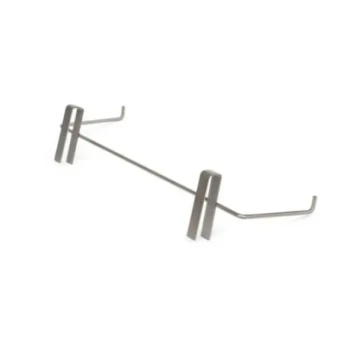
- Heavy-Duty Stainless Steel Clip-On Frame Perch
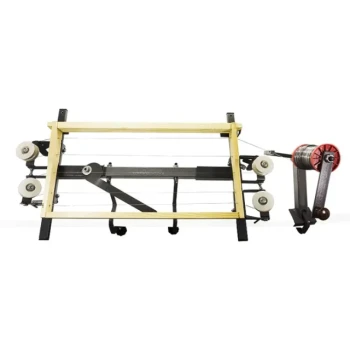
- Mini Desktop Bee Hive Frame Forming Making Machine
People Also Ask
- What are the options for adding frames to a nuc after taking two frames from the parent colony?
- What frames should be moved into the queenless hive when requeening with a nuc? Ensure a Successful Queen Introduction
- What roles do five-frame nucleus boxes and ten-frame Langstroth hive boxes play in colony standardization?
- What is the primary function of five-frame nuclei boxes? Master Early Colony Establishment for Stronger Hives
- What is the typical composition of frames in a nuc? A 5-Frame Blueprint for a Thriving Hive